O Canada!

Investing

On January 20, 2016, Maclean’s published their feature article:

Assume the crash position: How far will the stock market fall?
Canada’s stock market has suffered through a lost decade of returns.
Why the bad times for Canadian investors could continue.

This is what Maclean’s had to say:

“… the glory days for Canada’s stock market—when the S&P/TSX could be relied upon to outperform the U.S. S&P 500, as it did immediately following the financial crisis—are as good as dead. With global markets now faltering, too, Canadian investors are left wondering just how bad things will get… the outlook appears to be getting worse, not better.

Just weeks later, Canada’s stock markets – TSX and Venture Exchange – started to rocket upwards, surpassing other markets around the world. This reversal reminded me of what Bob Dylan said in his song, The Times They Are A-Changin: “For the loser now, will be later to win“. And of course, the adage we all know very well, that is to be: “Fearful when others are greedy and greedy when others are fearful“.

Take a look at these market returns since Maclean’s ‘Death of Canadian Equities’ article was written (Jan 20):

TSX: + 18.80%
TSX Venture: + 56.57%

Dow Jones Industrial Average: + 13.30%
S&P 500: + 13.21%
Nasdaq: + 10.72%

Canada, so far this year, is the clear winner; delivering exceptional returns for its investors. But that goes without saying, time will tell whether Canada’s remarkable stock market rally will continue.

MarketMasters

Robin Speziale is the national bestselling author of Market Masters, which is available at Chapters, Indigo, and Coles as well as Costco and Amazon.ca. He lives in Toronto, Ontario. Learn more about Market Masters.

Top 10 Most Important Investing Books of All Time

Investing


I’ve read 100+ books on investing; countless hours of reading and educating myself on key investing principles. But I came to realize that while there are hordes of books that will endeavor to teach you how to invest in stocks, only a handful of classics matter; the books that will transform you. The list I’m sharing with you is what I believe to be the only books you need to read to establish a foundation for “Do-it-yourself” (DIY) investing. And even if you consider yourself an advanced investor; it never hurts to revisit the sound investing principles found in these tomes.

These are the Top 10 Most Important Investing Books:

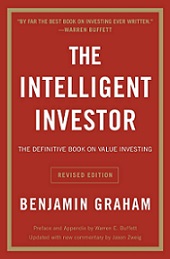
1. The Intelligent Investor, Benjamin Graham

61iBn9crsRL

It was through The Intelligent Investor that I was introduced to value investing, and the important concepts of Margin of Safety, Mr. Market, and Intrinsic Value. Warren Buffett called it “the best book on investing ever written”.

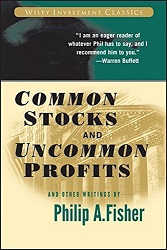
2. Common Stocks and Uncommon Profits, Philip Fisher

51XAPXl-VbL

Philip Fisher opened up my world to growth stocks. It was after I read Common Stocks and Uncommon Profits that I started paying more for stakes in higher quality, and faster growing businesses.

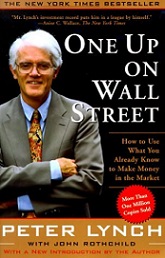
3. One Up On Wall Street, Peter Lynch

51rHrFJEFxL

 There are so many easy-to-implement lessons shared in One Up On Wall Street. But what really stuck with me was Peter Lynch’s focus on ‘buying what you know’. That has saved me from many disasters in the market.

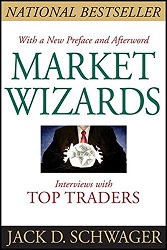
4. Market Wizards, Jack D. Schwager

51IE-eZrxTL

Jack D. Schwager introduced me to some of America’s top traders in Market Wizards. But instead of telling us their favourite stock picks (what they buy) he explained their investment frameworks (why/how they buy).

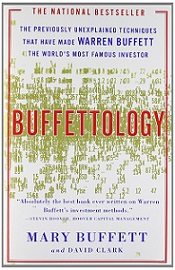
5. Buffettology, Mary Buffett and David Clark

81HyPLgoMBL

There are many books that endeavor to explain how Warren Buffett invests in stocks but most come up short. Buffettology is the book that gets it right.

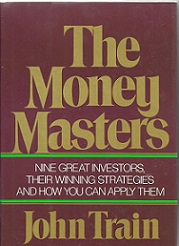
6. The Money Masters, John Train

81jU-6dsg8L

A classic that is fun to read. The Money Masters shares winning strategies from some of the world’s best investors who ever lived. It’s a book that I’ll read every couple of years to brush up on investing essentials.

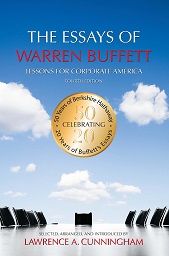
7. The Essays of Warren Buffett, Lawrence A. Cunningham

81WIV+RymeL

Lawrence A. Cunningham saves us the time of sifting through Warren Buffett’s priceless teachings from his annual reports in this comprehensive compilation; The Essays of Warren Buffett.

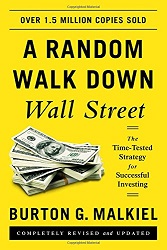
8. A Random Walk Down Wall Street, Burton G. Malkiel

51SyHrmTdTL

 If you’re a DIY Investor you likely believe that the market is not efficient. But Burton Malkiel argues otherwise in A Random Walk Down Wall Street. Even if you don’t agree with the Efficient Market Theory it’s important to understand both sides.

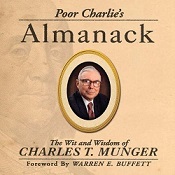
9. Poor Charlie’s Almanack, Peter D Kaufman

8f9c024128a0d931794a3010.L

Warren Buffett’s partner, Charlie Munger, influenced him to invest in companies with strong competitive advantages, albeit at higher prices. Although somewhat scattered and non-linear, Poor Charlies Almanack is chock full of good advice on investing, and life in general.

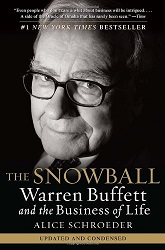
10. The Snowball, Alice Shroeder

51NU2DtQBcL

Alice Shroeder chronicles the most important capitalist of our time in ‘The Snowball’. It goes without saying that Warren Buffett is the reason many people, including myself, are inspired to invest in stocks. He’s a role model. What’s also great about the book are the never-before-seen photos that add to Buffett’s story.


MarketMasters

Robin Speziale is the national bestselling author of Market Masters, which is available at Chapters, Indigo, and Coles as well as Costco and Amazon.ca. He lives in Toronto, Ontario. Learn more about Market Masters.

The Education of a DIY Investor

Investing


When I was 12 years old I made a decision. I was going to be rich. I looked up to successful people and wanted what they had: financial freedom. They seemed to be happier than everyone else. But who was I kidding? Becoming rich would be an uphill battle. I was from a middle-class family of humble means. There was no trust fund. And my parents didn’t have work connections to land me my first job. The odds were stacked against me. But I still made the decision to be rich and started on my wealth-building journey. And the path I chose to get me there: do-it-yourself investing “DIY Investing”.

How I became a DIY Investor:

1. Emulating Successful Investors

I realized that if I wanted to make money by investing in stocks I had to study successful stock investors. Common sense, right? Isaac Newton said it best:

“If I have seen further than others, it is by standing upon the shoulders of giants.”

So, from age 12 to 18, I read around 50 books on the topic.

These were the six most formative investing books for me:

  • The Intelligent Investor
  • Common Stocks and Uncommon Profits
  • One Up On Wall Street
  • Market Wizards
  • Buffettology
  • The Money Masters

I would also study Forbes’ list of the 500 Richest People in the World and Canadian Business’ Richest Canadians. It then all became very clear to me. I could become rich by earning money, saving the proceeds, and investing in stocks as other rich people, such as Warren Buffett had done before me.

2. Earning and Saving

I had opened my first bank account when I was about 8 years old. As you can imagine there wasn’t much there; cash from birthdays, Christmas, and some chores. Maybe $500 in total from what I can remember. I had to earn/save more money fast! So I did what Warren Buffett had done at my age – delivered newspapers. At 12, I joined PennySaver and became a paperboy for three neighborhoods in my hometown of Mississauga. I deposited each paycheque, along with any other money, straight into my savings account.

3. Compounding Money

Once I turned 14, and just started high school, my savings account had grown to about $5,000. At that point, I wanted to invest in stocks. But because of my age I wasn’t eligible to open a brokerage account. So I started with bonds. After returning home from the bank, I placed those newly purchased Canadian Savings Bonds into a small but sturdy wooden box, hiding it safely under my bed. I was so proud. I knew that my bonds would generate interest for me on the principal amount ($5,000). “Compound interest is like magic”, I thought. “And the earlier I started the longer my money would compound (‘work’) for me”. Throughout high school, I would work several odd-jobs (mechanic shop janitor, meat department clerk, and Best Buy associate), all the while saving money from each paycheque, and then buying more bonds.

4. Investing in Stocks (the inflection point)

I turned 18, and was ready to enter University (party time!). In September, 2005, I moved into my “cozy” on-campus dorm room at the University of Waterloo. But even more exciting was that I finally opened my first brokerage account. By investing in stocks I could compound returns through both capital appreciation (i.e., stock price goes up) and dividend income (i.e., quarterly dividends from companies). I had already cashed out of my bonds; $10,000. So I invested that money evenly into 5 stocks, owning a $2,000 stake in each company. I felt like a true capitalist. This is how my idols, Benjamin Graham, Philip Fisher, Peter Lynch, and Warren Buffett, got rich; by investing in stocks. As I earned money though co-op job placements (which I recommend to every young person!), and bought more stocks, my portfolio grew, and grew, and grew. I was on top of the world. And then the financial crisis happened.

5. Capitalizing on Crises

I was 21 years old when the entire world ended in 2008 (or so most people thought at the time). The financial crisis thrust economies around the world into recession. Stock markets collapsed. And my stock portfolio imploded. I suffered around a 50% decline from peak to trough. The financial press was all doom and gloom. “Sell! Sell! Sell!” Most people were scared and converted their stocks to cash. So I invested all of my savings into my existing stock holdings. When I pulled the trigger I was scared stiff. But I’m glad I made that move as my stocks would soon rebound, pushing above pre-financial crisis highs into the years to come. I bought quality stocks on sale. 50% off! Was I a young genius; able to time the market? Nope. I simply learned from Benjamin Graham, the father of value investing, that economies and markets operate in cycles. Therefore, an investor could capitalize on manic markets, rather than become fearful and flee. Indeed, 2009 was a great year to be a value investor. I would make a similar move in February, 2016 to capitalize on a bear market in Canadian stocks where the TSX declined close to -25% from its high in September, 2014. Now I know that the average bear market (on the TSX) has declined -28%, lasting 9 months, while the average bull market has advanced +124%, lasting 50 months. Based on this historical evidence then since 1956, I should eventually be rewarded when I take on “risk” (i.e., investing in cheaper stocks) during bear markets. As Warren Buffett said:

“Be fearful when others are greedy and greedy when others are fearful.”

6. Refining My Portfolio

In 2010, upon graduating from the University of Waterloo, I had about $50,000 in my stock portfolio. More money than any of my friends. This was certainly an inflection point for me as the magic of compounding started to take real effect and I was just about to enter a full time career and earn a much bigger paycheque (plus bonus), which meant more money for stocks. By 2013, three years into my first full time job, my portfolio had grown to about $125,000. However, I realized that I could build wealth faster if I compounded returns at a greater rate. So, at 25, I made it my mission to build a portfolio that actually beat the market. I started watching BNN Market Call, re-reading the best investing books, and magazines (Money Sense, Canadian MoneySaver, and Canadian Business) and following the top investors around the world. From that I re-structured my portfolio into one that I’ve comfortably maintained since.

7. Sticking to My Investment Strategy

From my ‘quarter life crisis’ (age 25) and onwards, I continue to earn, save, and invest in stocks using the same strategy. Now, at age 28, I have built a quarter of a million dollar stock portfolio ($250,000). With a bigger capital base, it’s amazing how much more rapidly my portfolio can compound. For example, a 10% return will thrust my portfolio to $275,000. I say “10%” because over the long run (since 1934), the TSX has delivered a 9.8% annual compound return, despite recessions, bear markets, and world crises. But there’s no guarantee. Nevertheless, $1,000 invested in the Canadian index in 1934 would have grown to $1,595,965 by 2014 with 9.8% compound returns. That’s “magic”.

8. Always Learning and Growing

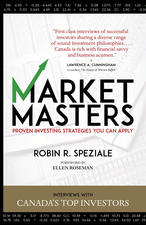
My DIY investing journey has been fulfilling so far. But I also know that I can further improve my odds of success by continuously learning, and improving my investing craft. This is why I recently met with some of Canada’s top investors. 28 in total. They told me how they invest in stocks, bonds, and options; sharing their proven investing strategies. It was enlightening. So I decided to put all of their investment advice into a book – Market Masters. You can now purchase Market Masters in Chapters, Indigo, and Coles stores across Canada as well as on Amazon.ca.


MarketMasters

Robin Speziale is the national bestselling author of Market Masters, which is available at Chapters, Indigo, and Coles as well as Costco and Amazon.ca. He lives in Toronto, Ontario. Learn more about Market Masters.


CoopJobs.ca Launches in Canada

Jobs

Press Release: CoopJobs.ca Launches in Canada – Official Co-op Jobs Site

Before the launch of CoopJobs.ca, an alternative to the generic University or College co-op job board did not exist. This motivated Robin Speziale, a University of Waterloo co-op grad and serial entrepreneur, to launch CoopJobs.ca. “I wanted to create a second avenue for co-op students. It’s discouraging that University and College co-op job boards are offering the same old co-op job opportunities today as when I was enrolled in the co-op program. CoopJobs.ca aggregates thousands of co-op jobs from the web in real time – there are always new co-op job opportunities to be found across Canada, no matter which school you attend” says Robin Speziale.

This highlights another issue that tarnishes the standard co-op job board: each University and College offers differing variations of co-op jobs. For example, University of Waterloo’s JobMine may list a co-op job that is not listed on Laurier University’s co-op job board. Conversely, on CoopJobs.ca, co-op students are met with no such boundaries. “Simply put, CoopJobs.ca is open and accessible to co-op students anywhere and everywhere, unlike the segregated co-op job boards that Canadian University’s and College’s operate”, Speziale adds.

On CoopJobs.ca, co-op students can search for coop jobs by specifying their location and what type of co-op job they are looking for. As well, co-op students can narrow down their co-op search by selecting co-op categories such as City, Province, Company or Industry. Currently, there are plentiful co-op jobs in Toronto, Waterloo, Ottawa, Vancouver, Alberta, and Mississauga.

Robin Speziale, CoopJobs.ca founder, declares “no more will co-op students need to rely on JobMine or any other University or College co-op job board! No more will co-op students cry in their beer over not landing a co-op job! The brand spankin’ new co-op jobs site CoopJobs.ca is here!”

Contact:
Robin Speziale
info@coopjobs.ca
416-795-2366

Wear Your Toronto On Your Sleeve, Buy a HeartBeats T.O. T-Shirt

Startups
HeartBeats T.O. T-Shirt Designs

HeartBeats T.O. T-Shirt Designs

Aside from the popular Startups List, I like to showcase exciting new startups right on the homepage for robinspeziale.com. This week’s hot startup is HeartBeats T.O.

Have you ever wanted to wear Toronto on your sleeve? Now you can, thanks to the Toronto designer behind HeartBeats T.O.

I’m wearing my HeartBeats T.O. as I write this. Check out HeartBeats T.O.’s collection

And order your very own HeartBeats T.O. T-Shirt today:
– send your order request to info@myheartbeatsto.ca or
fill out HeartBeats T.O. official order form

Also, get connected with HeartBeats T.O.:
Become a fan of HeartBeats T.O.
Follow @HeartBeatsTO
email HeartBeats T.O.

Lookout for HeartBeats T.O. Winter line – coming December ’10…

Promotion: FREE e-book – Lessons From The Successful Investor

Marketing

My previous promotion to download Lessons From The Successful Investor free ended October 4, 2010. But as book sales shoot through the roof (1000 downloads on October 7th!), I’m bringing back the promotion. This new coupon code will last until Christmas 2010 – It’s a gift to my future readers! Please find details below:

Free Coupon Code: LB96Y

How to download my e-book FREE

1. Go to http://www.smashwords.com/books/view/23181
2. Click Add to Cart
3. Sign up
4. Input coupon code (LB96Y)
5. Download e-book

In The News: Lessons From The Successful Investor

Media

Since self-publishing my e-book, Lessons From The Successful Investor, reception has been great! Thus far, Lessons From The Successful Investor has been featured in The Globe and Mail, Mississauga News, and moneyville.ca.

The Globe and Mail
Investor blazes his own path

Mississauga News
Grad student publishes e-book

moneyville
23-year-old writes book on investing

Competitive Advantage: How to Find Stocks With Competitive Advantage

Investing

Competitively Advantaged
The successful investor only invests in a business with clear competitive advantage. Warren Buffett depicted competitive advantage as a moat, whereby competitors could not breach it to penetrate a business’s fortress. A business enjoys competitive advantage by creating a strong brand, possessing pricing power, offering niche customer service, or operating in an oligopoly, among others. In effect, a competitively advantaged business attracts and retains loyal customers. For example, Coca Cola is widely consumed as a result of its strong brand recognition. If one were to receive $1 billon from a venture capitalist, would he be able destroy Coca Cola’s market share in the soft drink industry? Absolutely not. Similarly, Wal-Mart is widely known to have the lowest prices in the industry. Consumers flock loyally to Wal-Mart, not Zellers. To stress then is that the successful investor invests in competitively advantaged businesses because he knows consumer loyalty to those businesses is like an addicts addiction; predictable and virtually impossible to break. Moreover, most favourable, however difficult to find, is a business that enjoys several competitive advantages.

Case Study: Competitive Advantage of a Strong Brand
Establishing competitive advantage in the clothing retail industry is incredibly difficult, which is why malls are so popular. Consumers likely visit multiple stores in order to find a top or pair of jeans, demonstrating no loyalty to one store. These clothing retailers then operate much like commodity businesses. However, there are juggernauts in the clothing retail industry. These juggernauts strategically established luxury brand appeal, a clear competitive advantage, to ensure consumer loyalty. For example, some consumers consistently seek Gucci, Coach or Louis Vitton products. Price is no barrier. One will never find a 60% off sale for a Gucci purse because there are people that will pay $500 for a Gucci purse, time and time again.

Case Study: Competitive Advantage of Pricing Power
The successful investor does not invest in a business with little or no pricing power, for he knows one of the most detrimental forces to a business is inflation, which can average 3% annually. A business that can raise its prices annually by more than inflation, such as Starbucks, is then competitively advantaged. Could McDonald’s harness the same pricing power for its coffee that Starbucks enjoys? Absolutely not. And yet, in 2008, common investor sentiment was McDonald’s new McCafe would rapidly entrench on Starbucks core business model. The successful investor shrugged off this negative sentiment, however, for he knew Starbucks customers well, reasoning they would not migrate to McDonald’s coffee based solely on lower prices. The common investor also discounted Starbucks during the financial crisis, forecasting consumers would tighten their belts and forever spend less, in turn declaring Starbucks doomed with its $5 Frappuccino. However, the successful investor simply visited several Starbucks locations to discover business was booming.

Case Study: Competitive Advantage in Niche Customer Service
North West Company Fund manages a portfolio of general department stores that, with the exception of one, most have likely never heard of: Northern, North Mart, AC Value Centre, and Giant Tiger. Aside from Giant Tiger, these department stores operate in the remote, northern regions of Canada. Indeed, North West Company Fund possesses clear competitive advantage in that no other business wants to operate in those remote regions of Canada. From this, North West Company was able to develop a strong relationship with its primarily Native Canadian customers. Further, selling to Native Canadians ensures North West Company almost guaranteed growth since the Canadian government subsidizes the income of Native Canadians. In essence then, North West Company consistently collects that government subsidized income when Native Canadians shop at its stores.

Case Study: Competitive Advantage of the Oligopoly
Canadian banks are undoubtedly the world’s most secure banks. The big five – TD, RBC, CIBC, ScotiaBank and BMO – weathered the storm that was the financial crisis from 2007 to 2009. Canadian banks are secure because its management is disciplined. For instance, investments are cautiously pursued, complex derivatives are largely avoided, mortgage policies are stringent, and most importantly, Canadian banks do not employ cowboys with itchy trigger fingers, unlike U.S. banks. However, Canadian banks charge high fees on accounts, chequing, withdrawals, over draft, trades, and the list goes on. And yet, in Canada, the majority of residents hold their money in either one of the “big five” banks, which is clearly the banks’ competitive advantage. Indeed, the Canadian banking system is essentially an oligopoly, an excellent reality for shareholders of a Canadian bank, not so excellent a reality for customers. Intelligently, the successful investor hedges the impact of high Canadian bank fees by becoming a shareholder in one of the “big five”.