20 Investing Lessons From Lorne Zeiler of TriDelta Financial

Investing

My full interview with Lorne Zeiler of TriDelta Financial originally appeared in my national bestselling book, Market Masters, which is available at Chapters, Indigo, and Coles as well as Costco and Amazon.ca.

***

“This is your brain on drugs.” A study from Laurence Tancredri, entitled “Hardwired Behaviour, What Neuroscience Reveals about Morality,” showed that “there is a resemblance between the brain of someone predicting a financial gain and that of a drug abuser. A dopamine ‘buzz’ is created by the cue, which prompts us to be more aggressive with our money. When acting on the cue fails to produce a reward, the dopamine level still increases dramatically, leaving us in a profound funk. The result: you overreact and prematurely remove your money from the market. If enough people did that, the market would inevitably drop precipitously.”

Lorne Zeiler, vice-president and associate portfolio manager at TriDelta Financial, would also argue that your behavioural drive often dictates your investment decisions. That’s why Lorne travels the country to educate people about their own brains. Don’t do drugs, kids. Seriously, though, this is how Lorne opens his presentation, “What You Don’t Know Can Be Harmful to Your Investment Returns”: “Have you wondered why your investment returns have been below your expectations? Why others seem to be able to take advantage of buying opportunities, while you sit on the sidelines? Have you sold stocks that seem to continue to go up, while holding on to securities that continue to go down in value? This is because emotion often has a much greater impact on investment decisions than most people realize.” You’ll also learn from Lorne why women make better investors than men. Pretty controversial.

Lorne Zeiler’s 20 Investing Lessons:

1) “Just because it’s illogical doesn’t mean it can’t continue to move up. And the market can get more illogical before it comes back to reality.”

2) “The best description I’ve ever heard is when John Maynard Keynes termed it ‘the animal spirits.’ When the animal spirits are there, people get excited, and rationality doesn’t necessarily meet up.”

3) “Retail investors tend to come into the market after it’s already moved up [and] tend to then hold on with the expectation that when things are turning negative, they can ride it out and things will be fine.”

4) “There’s an emotional cycle that people go through in the market. They get to a point of what’s called ‘capitulation,’ where they just can’t take it anymore.”

5) “People are of the expectation that if markets have returned 9% a year, markets are going to continue to return 9% a year. This is called ‘recency bias.’”

6) “When you’re buying stocks, what you’re actually doing is buying a fractional ownership in a company. A lot of people forget that.”

7) “The value of that company really should be based on its future prospects, future cash flows, future dividends, and future market share.”

8) “It is actually very difficult emotionally to go against the herd, even if all of your logic is there, even if you’ve done all your research, and even if you’re very confident in your conviction.”

9) “A sell-off period can have a serious impact on your thought process.”

10) “You never know a bottom until after it’s gone up from the bottom.”

11) “One of the issues with the Efficient Market Theory is that it states that the market reacts to information immediately. But that doesn’t mean it reacts properly.”

12) “I like the fixed-income market in that it tends to be more institutional, and so it tends to react more logically to events going on.”

13) “Studies have shown that in general winners outperform your losers. Stocks that have generally done well are often going to continue to do well but there are a lot of people who will continue to hold onto that losing position, because they don’t want to admit that loss.”

14) “Unless there’s a fundamental reason why not to sell it, then our natural decision is to sell . . . the sell discipline is very key.”

15) “If something fundamentally has changed about the company, then that might also be a reason for you to buy back the stock.”

16) “There’s a low correlation in general between equity and fixed income, in that if equity markets are dropping hopefully your fixed-income portfolio is going up.”

17) “If you are a believer that bond yields are going to drop — for example, quantitative easing is ramping up or people have expectations that rates are going to rise when they’re not — then the greater return potential can generally be achieved by owning a longer-dated bond.”

18) “With corporate bonds there’s something called ‘the spread’ — that’s how much additional yield you make from owning a corporate bond versus a similar-maturity-date government bond.”

19) “The main reason for owning U.S. stocks is that the Canadian market just isn’t sufficient.”

20) “Men tend to trade more. And men tend to be more overconfident in their abilities. Women tend to be more conservative. As a result, they watch their portfolio less, which often results in a better overall return than men.”
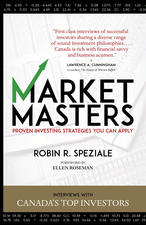
MarketMasters

Robin Speziale is the national bestselling author of Market Masters, which is available at Chapters, Indigo, and Coles as well as Costco and Amazon.ca. He lives in Toronto, Ontario. Learn more about Market Masters.

21 Investing Lessons From Jason Mann of EdgeHill Partners

Investing

become_a_patron_button

Become a Patron Now to Access My Exclusive Content – Top Performers, Portfolio, Watchlist.

My full interview with Jason Mann of EdgeHill Partners originally appeared in my national bestselling book, Market Masters, which is available at Chapters, Indigo, and Coles as well as Costco and Amazon.ca.

***

Jason Mann is all about momentum. At EdgeHill Partners, Jason runs the flagship EHP Advantage Fund. That fund has delivered a 23% compound annual return since its inception. How does Jason deliver such high returns? He employs a quant-based, rules-driven system for stock selection. Additionally, he follows a strictly balanced long/short policy, and maintains 400 to 500 highly liquid positions in the fund at any given time. Through the EHP Advantage Fund, Jason buys undervalued, rising, stable stocks and shorts overvalued, declining, volatile stocks. He actively gears down risk in declining markets and rotates toward more defensive stocks and strategies to preserve capital. Impressively, Jason geared down before the oil crash impacted Canadian markets. In the EHP Advantage
Fund’s fact sheet, there’s a chart that shows a clear divergence starting in August 2014 between the fund and the TSX, whereby the former rose while the latter plunged.

Jason’s idea of “gearing down” means taking very specific steps: reducing net exposure, rotating to more defensive strategies, and reducing beta to zero. This gear-down concept demonstrates that while Jason is full speed ahead in rising and stable markets, he knows when, how, and where to take a detour when there’s a crash up ahead. Jason says, “We aim to participate in bull markets and sit out of bear markets.” All investors should understand and implement risk management in their trading or investing practice, since protecting capital is just as important, or some might argue more important, than growing capital in the market.

In addition to the core long/short investment strategy employed at EdgeHill Partners, Jason also shared with me the other strategies he used while he was a managing director, co-head of the Absolute Return/ Arbitrage Group at Scotia Capital. The Absolute Return Group is responsible for developing and delivering cross-platform alpha-generating ideas for the hedge fund community.

Jason Mann’s 21 Investing Lessons:

1) “The way we run money here is quantitative, or systematic, or rules driven.”

2) “We want to buy the best combination of cheap, rising, and stable stocks.”

3) “Most important though is to determine the price of a company relative to its historical ability to generate cash. That’s what we care about when we measure value.”

4) “Forward estimates are just that — an estimate, just a collection of guesses — whereas backwards looking is a factual representation of what a company has been able to do.”

5) “Value works because the market becomes overly pessimistic about a formerly good company’s ability to ever regain its footing and generate cash flows.”

6) “‘What do you call a stock that’s down 90%? A stock that was down 80% and then got cut in half.’ You can buy something at an 80% discount and still take a lot of pain waiting for that value to play out.”

7) “Because we are both long and short, we can benefit from both sides of that trade.”

8) “Momentum feeds on itself. Think about the manager who manages $100 million, but then receives another $100 million. What do they typically do? They go buy the same stocks they already own.”

9) “The classic definition of momentum is 12-month rolling returns. I ask, ‘What has this stock done over the last 12 months, relative to all the other stocks in the index?’”

10) “[We’ll] score a stock relative to how well it’s done on that measure, relative to all the other stocks, and we want to buy the stocks that have the best price momentum and the cheapest valuation.”

11) “Who would ever buy overvalued, declining, volatile stocks? However, there’s a huge behavioural bias to buy those stocks. They have lottery ticket–like payoffs.”

12) “There is a behavioural bias to trade relatively liquid, small-cap, volatile stocks that can go up or down 10% a day. Holding those stocks in a buy-and-hold-type environment is ruinous to returns on a long-term basis. You can get periodic great returns, and long-term terrible returns.”

13) “We take an amount of risk where the expected volatility and drawdown is going to be in the 10% range.”

14) “Because we’re operating with repeatable human behavioural biases in terms of the market participants, you have a market that rhymes.”

15) “Virtually all investors who are successful over the long run are either very good at instinctively understanding what their own behavioural biases are and what the behavioural biases are out there to take advantage of, or they’ve built a set of rules and processes to constrain their actions, their risks, and their own behavioural biases.”

16) “A bought deal is when a company issues stock to the secondary market at a discount to its trading price. Bought deals are done at a discount. And if that bought deal is liquid, oversubscribed, and borrowable — meaning that we can borrow to hedge our risk — then it’s of interest to us.”

17) “We play volatile stocks where there’s a high probability of a small gain in a short period of time.”

18) “A market that is moving below its 50-, 100-, and 200-day moving average is a warning sign for us.”

19) “The VIX going from a stable state to a rising state indicates an increase in volatility.”

20) “The existence of probability is part of the reason why we run money systematically. It’s to avoid breaking a rule, letting our emotions get to us, buying too much of something, not selling when we should have, failing to take a capital gains loss, doubling down, and so on.”

21) “Stocks that are highly valued have a long way to fall before they get into a category where value investors step in and apply a floor.”

MarketMasters

Robin Speziale is the national bestselling author of Market Masters, which is available at Chapters, Indigo, and Coles as well as Costco and Amazon.ca. He lives in Toronto, Ontario. Learn more about Market Masters.

24 Investing Lessons From Paul Harris, Bill Harris, and Paul Gardner of Avenue Asset Management

Investing

My full interview with Paul Harris, Bill Harris, and Paul Gardner of Avenue Asset Management originally appeared in my national bestselling book, Market Masters, which is available at Chapters, Indigo, and Coles as well as Costco and Amazon.ca.

***

Avenue Investment Management’s office is situated on a quaint street in downtown Toronto. It feels tucked away, but the office is only a fiveminute walk away from the hustle and bustle of the financial district on Bay Street. The “Three Amigos” who run Avenue Investment Management — Paul Harris, Bill Harris, and Paul Gardner — seem to have so much fun working together that I almost imagine them tap-dancing to work every morning. Their office exudes a general sense of happiness, with bright, open spaces, light brick walls, and long wooden floors. Their main meeting room’s wide windows allow the sun to shine through. It was in that meeting room that all Three Amigos came together to answer my questions, and share both their individual and collective experiences in the market.

This is the only multiple-interviewee format in the book. At times, I felt like a referee, guiding the conversation, switching between talkers, and handing out penalties to any of the three who started to dominate the conversation. This interactive format worked, however, as each of the three investors had lots of great information to share. All Three Amigos are masters in their own right, but overlay their niche knowledge with one another to make final investment decisions. This process works a bit like the sounding board that exists between Warren Buffett and Charlie Munger at Berkshire Hathaway, in which both partners reach an investment decision after a constructive process. Paul Harris focuses on financial institutions, technology, and telecom.

Bill Harris’s areas are resources, utilities, and infrastructure. Paul Gardiner covers bonds, real estate, utilities, and telecom. While their mandate is to double portfolios’ values every 10 years, which implies a 7.3% annual compound rate of return, their flagship Avenue Equity Portfolio has exceeded that mandate by tripling over a 10-year period. Paul, Paul, and Bill are as much focused on risk management as they are on their upside returns. As we discussed in the interview, the Three Amigos managed to save their portfolios from a complete crash before the financial crisis in 2008 that decimated banks around the world. They witnessed weakness in the global financial sector and then quickly took action to eliminate that risk from their portfolios.

Paul Harris was actually my first point of contact at Avenue Asset Management. After years of watching BNN’s Market Call, I’ve come to respect Paul’s no-nonsense advice to callers. Also, his fashion sense and swagger rival those of Norman Levine, who you’ll hear from later (but a winner is just too close to call). Paul usually wears a colourful bow tie with a brightly coloured shirt and thick-framed circular glasses to accentuate his face. And his buttery smooth voice makes listening to Paul talk about the markets comforting and reassuring, especially during a period of market turmoil. Unfortunately, family man Paul Harris had to step out halfway through the interview to pick up his daughter, but later supplemented the transcription with additional comments. As well, Paul Gardner was slightly late to the interview, so his answers don’t appear in the first few questions. I was so involved in this conversation that I lost track of time as our conversation went late into the morning.

To clear things up before we get started, Paul Harris and Bill Harris are not related; their identical last names are simply a matter of coincidence — just as it is a coincidence that the other two are named Paul. Perhaps they were fated to be a team.

Paul Harris, Bill Harris, and Paul Gardner’s 24 Investing Lessons:

1) “Part of our success is having all of the stars aligned. If we were all equity heads, it would be hard to succeed because we’d have to look at different investment frames.”

2) “One of our critical advantages is that we understand the capital structure of any company. What happens with any company is that if they get the capital structure wrong, then their debt overwhelms their business and that’s when they can go into bankruptcy.”

3) “Once you’re in the bond world, you can achieve a 10% to 12% rate of return. All you need to determine is whether a company is going to go bankrupt. That’s all. The upside is very easy.”

4) “We just win by not losing. That’s how we survived the financial crisis.”

5) “Picture the TSX as a pie. The trick is to determine the most consistent companies in the TSX. We don’t own things that don’t make money.”

6) “Really good companies don’t change that much over time. [We] identify historically great companies, with great numbers, that we can we buy at a decent price.”

7) “If we need to have some exposure to a sector, then we try to find the best in class and just immunize our risk.”

8) “If you try to compound consistently at 10% or 12%, you will end up hitting air pockets. The problem is that you take up more risk and thus increased probability that you get no return.”

9) “We have a 30-year time horizon. You can double your money, then double it again, and double that again. But you need to give yourself the highest probability that it actually happens.”

10) “We know we’re going to make mistakes, so let’s just leave it at that. . . . If we make a mistake, we can sell.”

11) “If you buy a bond at a discount, there’s an end to the story. It’s called par. Conversely, stocks are indefinite. They can stay there forever. A bond has to have an end. You should know your rate of return, and then at the end of the game you end up at maturity.”

12) “We generally tend to overperform on the downside and underperform on the upside. During market collapses, we go out and find these special situation bonds that can go up and can crush the volatility.”

13) “We don’t care about the index. What we care about is getting you this rate of return between 8% and 10% with the least amount of risk.”

14) “[Generally], balance sheets need to be conservatively financed. Companies should be in profitable markets. Managements need to actually be good at what they do.”

15) “You need 8% to 12% free cash flow yield, and you can get that if you’re super patient.”

16) “You want to invest in companies that can either maintain the rate of return or enhance their rate of return when they reinvest their earnings. However, be cognizant of companies that enhance their rates of return through acquisition strategies or financial engineering.”

17) “Bad people and bad managers keep doing bad things. Good people and good managers generally keep doing good things. It’s a very simple concept.”

18) “You should draw a line under the price, and say, ‘We’ll give it this much time at this price.’ You have to be very vigilant. If the fundamentals start going wrong, the nice thing about public markets is that you have the advantage to sell a bad investment.”

19) “People get all excited about their investments and get to a point where they don’t know why they are investing anymore. So your real work is to come up with a very tight strategy, then stick to it.”

20) “The one thing you must accept is that the world doesn’t end tomorrow. If you look at ’08 and ’09 you would have thought that the world ended, but moments later, it was the bottom of the market.”

21) “The stock market and the economy are not correlated. They’re not. Your portfolio might act completely differently to what’s going on in the economy.”

22) “If you owned a thriving company, you wouldn’t buy it and then sell it the next day based on short-term market prices. When you own shares in a company, you’re technically an owner of that company.”

23) “We have a 20% insurance policy [i.e., cash] inside the portfolio at any one time. So it’s always a drag on performance, but then we have the ability to react at whatever that black swan event is, because we’re going to get impacted by events in different markets at different times.”

24) “It’s nice to know that when you invest in those stocks [companies with an ownership stake] you’re 100% aligned with the owners and management.”

MarketMasters

Robin Speziale is the national bestselling author of Market Masters, which is available at Chapters, Indigo, and Coles as well as Costco and Amazon.ca. He lives in Toronto, Ontario. Learn more about Market Masters.
21 Investing Lessons From David Burrows of Barometer Capital

Investing

become_a_patron_button

Become a Patron Now to Access My Exclusive Content – Top Performers, Portfolio, Watchlist.

My full interview with David Burrows of Barometer Capital originally appeared in my national bestselling book, Market Masters, which is available at Chapters, Indigo, and Coles as well as Costco and Amazon.ca.

***

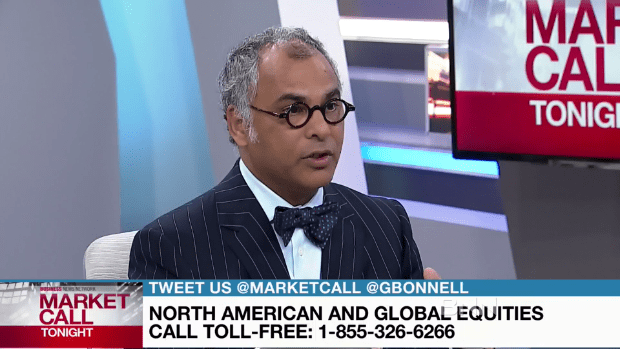
Is that a bird? Is that a plane? No, that’s David Burrows in his helicopter, flying high in the sky, scouring for opportunities in the markets. David may not actually be in the sky, but he is not a bottom-up investor. Which means, in this case, that he doesn’t care as much about individual securities as he does about entire countries, markets, and sectors. At Barometer Capital, David and his team continuously scan and rank over 63,000 global
securities in more than 41 industry sectors with their quantitative analytics machine. David mainly invests in ETFs (exchange-traded funds) based on where he identifies opportunities. Barometer Capital was co-founded by David Burrows in 2001, and today remains an independent partner-owned firm. The firm has $3 billion in assets under management. And David tells me during our interview that Barometer Capital’s equity strategy has earned on average 15% annually over 25 years.

David would fit in well with the Manhattan hedge fund manager crowd. He has a crew-cut, dresses very sharply, and talks as if he was top of his class at Toastmasters. He’s also a good teacher, using his MacBook to show me a set of macro charts to walk me through his investment model. I was intrigued by the “breadth model.” As David explained, expanding market breadth signals an increasing amount of investors, money, and volume, into the market. Logic dictates that the more potential investors that there are in the market, among other factors, the greater the upward pressure on prices. David follows shifts of capital into asset classes, then themes, then sectors, and then individual securities. Those shifts of capital cause that breadth expansion (more volume), which then triggers multiple expansion (higher prices). In other words, for David, the trend is his friend.

There was a pause in our interview when Greg Guichon, chairman of Barometer Capital, poked his head into the room and asked to talk privately with David. While I waited for David to return, I glanced outside the meeting room and into the open office and that’s when I grasped the ingenuity of the Barometer Capital floor space, which is a mini–trading floor. All 10 employees had dual monitors set up with Bloomberg on one screen and MS Office on the other. BNN was playing on a large TV screen hanging over the office space. The BNN host had started to talk about the continued slide in oil prices when David returned to the meeting room to
continue our conversation.

David Burrow’s 21 Investing Lessons:

1) “What moves share prices? One factor of course is at the company level. But 80% of returns come from the impact of capital inflows — breadth expansion (more volume) — into an asset class. That’s when multiple expansion (higher prices) or re-valuation starts.”

2) “You can capitalize on multiple expansion in three areas. First, get to the right asset class. Second, find the right themes and sectors within that asset class. And third, find securities within that universe where companies are changing for the better.”

3) “My focus is on the 80% of the return that comes from getting into the right neighbourhood.”

4) “Capital flows are always moving, and so we move on to the next opportunity, too.”

5) “The big issue that investors succumb to is that they have a tendency to look at what has worked in their recent past, which is their recent experience, and then try to figure out how to make money in it again.”

6) “As you go through a down-cycle in the market, everything doesn’t start selling off on day one. The weaklings sell off in the beginning. But as the sell-off picks up steam, more securities are impacted, until late in the decline where almost nothing’s performing well in the market.”

7) “When the most aggressive folks start to re-allocate to that asset class, theme, or sector, they don’t want to buy ‘Moose Pasture Mines’; they want to buy the securities that they’re most confident in.”

8) “You don’t need to be first. You can wait until multiple expansion begins before you invest in that area.”

9) “I use something called point-and-figure price charts. They’re quantitative in nature. Higher highs and higher lows — that’s an uptrend, and lower highs and lower lows — that’s a downtrend.”

10) “There’s no bear market in history that happened while breadth was expanding.”

11) “I can go back to the 1950s and see that there’s no significant bull market that ever ended before 70 or 80% of stocks participated in an advance. In the NYSE, today, we’re sitting at only about 60% participation.”

12) “We believe ultimately the market gets it right. So forget about what you think should happen . . . No matter how smart you are, sooner or later you will get put in the ditch.”

13) “If the fundamental picture is doing this but the price behaviour is that, it’s not of interest. We want both — one confirming the other.”

14) “We are not ever looking for a ‘broken getting fixed’ security. We are looking for a ‘good getting better’ security.”

15) “When we start to see deterioration in breadth, or volume, whether or not the fundamental data’s still great, it’s time for us to start to reduce our weight.”

16) “We run stops on all of our positions. If something stops working, and it hits our stock, we’re gone.”

17) “In a bull market, investors say, ‘Earnings are growing at 6%, so how can the market be going up 15%? That’s irrational.’ Well, that’s multiple expansion. You want to stay in a position so long as the multiple grows and as long as the earnings grow.”

18) “Once you end up in a bull market, everyone’s scared because of the previous bear market; they want to take profits off the table as soon as things start to work.”

19) “In any transition there’s a period of higher volatility where the buyers and sellers battle it out until one side wins and you either transition higher or lower.”

20) “One should understand what is happening. Don’t try to justify what you think should happen.”

21) “Our job is to make sure we get the best inventory we could have, and the most important job of an inventory manager is to know when something isn’t attractive to mark it down.”

MarketMasters

Robin Speziale is the national bestselling author of Market Masters, which is available at Chapters, Indigo, and Coles as well as Costco and Amazon.ca. He lives in Toronto, Ontario. Learn more about Market Masters.
17 Investing Lessons From Norman Levine of Portfolio Management Corp

Investing

become_a_patron_button

Become a Patron Now to Access My Exclusive Content – Top Performers, Portfolio, Watchlist.

My full interview with Norman Levine of Portfolio Management Corp originally appeared in my national bestselling book, Market Masters, which is available at Chapters, Indigo, and Coles as well as Costco and Amazon.ca.

***

Norman Levine has been around the block. Over his 39 years in the investment industry, he survived the inflationary era in the 1970s, Black Monday in 1987, the technology boom and bust in 2000, the global financial crisis in 2008, and the euro crisis in 2011. Up on Norman’s office wall is an old framed photo of a Bloomberg terminal screen that shows the carnage that occurred on that Bloody Monday, where the Dow Jones Industrial Average dropped 22.61% and the TSX dropped 11.32%. It was an angstfilled, record-breaking day. By the end of October, the TSX had fallen further to post a 22.5% decline. I asked Norman how he reacted on Bloody Monday and over the remainder of that October. His response should be carefully studied, as there’s no doubt that you will experience similar flash crashes in your time as an investor.

It seems that an uncertain market is a profitable market for Norman. You’ll find through numerous examples in the interview — BCE, European stocks, U.S. financials, CCL Industries — that he is an opportunist. Norman sees opportunity before it is obvious to the common investor and captures not only the early leg up but then another string of gains when institutions and retail investors pile into his holdings. Norman swoops in like a hawk as soon as he sees some short-term negative event impact stocks or when he finds stocks that are overlooked and improperly priced. His experience also teaches us that simply buying mispriced stocks will not earn investment glory. One also needs to foresee and then anticipate a catalyst that will propel those stocks out of their low points or holding patterns. Norman is an expert at a challenging skill: finding opportunity.

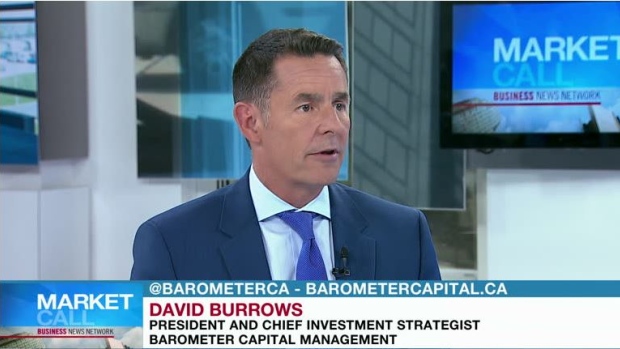
Every time I see Norman, he’s wearing a new suit with a coordinating tie or bow tie and cufflinks. His closet must be the size of my onebedroom condo. Norman tells me, “It’s important to dress well in this business. It really does make a difference.” He sprinkles in some Yiddish when he explains that his “dad used to dress like a shmatte.” I can’t help but glance around his office; there’s so much history packed within Norman’s four walls, not to mention a mini putter machine on the floor, which most likely serves as a relaxing escape from a tough day in the market. I was drawn into Norman’s storytelling as we spoke. Norman has that classic old-style swagger, combined with a hard gaze when he locks onto your eyes. Norman is a remarkable figure in the Canadian markets — it’s hard to fathom that he was fired from his first job as a broker. It just goes to show that you never know what the future holds.

Norman Levine’s 17 Investing Lessons:

1) “If the markets were efficient, you wouldn’t have the volatility. There’s emotions. It’s so critical to understand how people think when they invest. They’re not efficient at all.”

2) “Commodity markets move in decade and even multi-decade cycles.”

3) “Nothing goes straight up and straight down in the market. You get these rallies and people get sucked into them. I would rather lose some opportunity on the way up than lose capital on the way down.”

4) “I would rather see commodities stop going down, probably tread water for a long time, or even form a V, and then buy them when they’re starting to go up again.”

5) “Commodity stocks are not value stocks. And they never will be.”

6) “We don’t buy industries, and we don’t buy countries, we buy stocks. And we look all over the world for them.”

7) “We’ve never invested directly in China, [Russia,] or in India, but that’s subject to change in the future. Basically, their security markets are not mature and do not have the safety standards of markets we like to invest in.”

8) “If you’re a genius in our business, you’re right 60% of the time. So you’re wrong 40% if you’re extraordinary. That’s why you’ve got to have a diversified portfolio. Because you’re going to be wrong a lot.”

9) “For retail investors, I would suggest around 20 stocks. And they should be diversified. Too many people don’t diversify.” 10) “We don’t own any [U.S.] ‘money-centre banks.’ We only own regional banks.”

11) “If you own a value stock that doesn’t have a catalyst, it might go down and out . . . It’s always going to be a value stock, and that’s the trap. People get sucked in to that all the time, saying, ‘Well, the stock is cheap.’”

12) “A lot of people are fixated on return, but smart investors are more interested in protecting their capital, and then a return on that.”

13) “You can’t have a target [price]; a lot of people get hurt by targets. If somebody asked me, ‘What are you going to return for me this year or next year or the next five years?’ I’ll respond, ‘I haven’t got a clue.’”

14) “If you want to short stocks, wait until they’re going down. Follow the trend going down.”

15) “‘Never fight the Fed.’ And generally that’s true. If the Fed says that they want to send interest rates down and keep them down, don’t bet against them. The opposite is also true.”

16) “Most people only know a declining interest rate environment. They have no idea what happens when interest rates go up. Once interest rates start going up, money starts to leave the stock market and heads into fixed income.”

17) “Don’t fall in love with what you own. Most investors fall in love with what they own. It’s a stock. It doesn’t know you own it. It doesn’t care that you own it. Don’t be afraid to sell something because of the capital gains tax.”

MarketMasters

Robin Speziale is the national bestselling author of Market Masters, which is available at Chapters, Indigo, and Coles as well as Costco and Amazon.ca. He lives in Toronto, Ontario. Learn more about Market Masters.
13 Investing Lessons From Kiki Delaney of Delaney Capital Management

Investing

SubscribeSubscribe Now to My FREE Newsletter (Join 5,000+ Subscribers!)

My full interview with Kiki Delaney of Delaney Capital Management originally appeared in my national bestselling book, Market Masters, which is available at Chapters, Indigo, and Coles as well as Costco and Amazon.ca.

***

I was referred to Kiki Delaney through someone I met after my interview with Gaelen Morphet. “Alex, come meet Robin,” said Gaelen to an employee passing by our interview room at the Empire Life offices. “Alex is one of the brightest stars at the firm.” Alex, a relatively junior employee, glowed at the praise. After all, Gaelen is a senior executive. Alex is around the same age as me and we found that we shared the same perspective on the market. So, we decided to meet some weeks later for coffee at Aroma Café in downtown Toronto.

Alex was excited to hear about this book. After reading my list of Market Masters to him I asked Alex, “Am I missing anyone?” to which he said, “Yeah,” and offered a couple of names. Upon further research there on my smartphone, one individual he had mentioned resonated with me: Kiki Delaney. How had I missed Catherine “Kiki” Delaney? Her firm, Delaney Capital Management, boasts $2 billion in assets under management, with a track record that spans more than 20 years. So, my next email, which I hammered out as soon as my meeting with Alex ended, was a direct request to Kiki: “Would you like to be featured in Market Masters? It would be an honour to have you be a part of the project.” I was delighted, and grateful to her and to Alex, when Kiki said yes.

SubscribeSubscribe Now to My FREE Newsletter (Join 5,000+ Subscribers!)

In the meeting room for our interview, a statue of a defiant bull stood tall over a defensive bear. That statue was especially appropriate since negative news seemed to be hitting the global markets on a daily basis in the first half of 2015 — Greece, China, Oil, the Fed, and so on. I stared at that statue and thought, “Will the bull be too weak to continue to assert its market dominance? Will the bull market finally succumb to the tail risks?” I would soon get reassurance from Kiki that those factors should not matter, that investors must continually find value in the market regardless of whether the bull or the bear reigns supreme.

An important concept that Kiki conveyed is to invest in relative value. For example, while the broader market, industry, or peer group can be overvalued, a particular stock within any of those domains can still be fairly valued or undervalued. Sometimes, the market and stocks within that market are mutually exclusive, in that returns of the market are not always perfectly correlated with all of its constituents. For instance, today, while the broader market can be down, some of your stocks may in fact be up. And that inverse correlation, among other factors, could be because those stocks were relatively cheaper than the broader market at the time, and did not join the market sell-off. Separately, Kiki shares her opinion on which is the more challenging asset class to manage in a portfolio: equity(stocks) or debt (bonds).

Kiki succeeded early on in an industry that was even more maledominated than it is now. As a young adult, she moved to Toronto, where there were more opportunities, not just for women, but in general in the job market. Kiki got her start at Merrill Lynch before moving to Guardian Capital, where she managed equity and fixed-income portfolios. Prior to founding Delaney Capital Management (DCM), Kiki was a partner, executive vice-president, and portfolio manager at Gluskin Sheff + Associates. Interestingly, Martin Braun, whom I also interviewed, filled Kiki’s role as Canadian equity manager at Gluskin Sheff.

With the success of DCM, Kiki became one of the most powerful women on Bay Street. In addition to DCM, Kiki is chancellor of OCAD University, a member of the board of trustees for the Hospital for Sick Children, chair of the investment and pension committee at the Hospital for Sick Children, and a member of the Leadership Council of the Perimeter Institute for Theoretical Physics. And she was appointed a member of the Order of Canada in 2006. The Governor General of Canada wrote this of her: “After a steady rise through major investment houses, she launched her own investment counselling firm, one of the first women in Canada to do so.” Kiki Delaney is a trailblazer.

SubscribeSubscribe Now to My FREE Newsletter (Join 5,000+ Subscribers!)

Kiki Delaney’s 13 Investing Lessons:

1) “Some of the best calls I have made involve avoiding disasters.”

2) “It is easier to pick great companies than to make the macro calls required to manage fixed-income portfolios.”

3) “When we look at a company we compare it to others in the same industry and buy the company that is statistically the cheapest. . . . We want companies that are cheap but also are well managed, have a strong growth profile, have a good product, and where there is the catalyst for change to unlock value.”

4) “If the industry fundamentals are strong and the valuations are appealing, then it makes sense to buy more than one company in the sector.”

5) “We look for catalysts for change . . . a catalyst can be a management change, a new product, an acquisition, or a de-leveraging of the balance sheet.”

6) “The reality is that the Canadian market is two-sided. You have on the one hand resource names, and then on the other hand, you have everything else.”

7) “[On the TSX] there’s also a lot of world-class international companies. Funnily, a lot of them reside in Quebec . . . Quebec companies get positive reinforcement. In many cases, the Caisse de dépôt takes a fairly substantial position in underwriting companies to help them expand through very large acquisitions.”

8) “I think companies should buy their stock back when it is fundamentally cheap. Not every month, or every year. I find it troubling that companies have nothing better to do with their cash.”

9) “[We] invest initially no more than 1% in a small-cap company. If it works, it’s probably really going to work, and it’ll be very beneficial. But if it doesn’t work, it will hurt the portfolio to the extent of its 1% exposure.”

10) “As long as a company continues to represent good value and has decent capital gain potential, we will continue to hold it.”

11) “If you can find a relatively undiscovered theme and marry it with a well-managed and undervalued company, you will probably have a winning combination . . . [for example] companies that make significant and highly accretive acquisitions. This has worked really well in a low-interest environment.”

12) “Declining interest rates are positive. Once interest rates start to go up, they do hit a point where they shut off the economy and that clearly is not good for the stock market.”

13) “You have to read as much as you can. And you have to be as informed as you can be. You don’t want to buy cocktail tips. It doesn’t work.”

SubscribeSubscribe Now to My FREE Newsletter (Join 5,000+ Subscribers!)

MarketMasters

Robin Speziale is the national bestselling author of Market Masters, which is available at Chapters, Indigo, and Coles as well as Costco and Amazon.ca. He lives in Toronto, Ontario. Learn more about Market Masters.

20 Biggest Canadian Family Owned Businesses in the World

Investing

Post - CC

SubscribeSubscribe Now to My FREE Newsletter (Join 5,000+ Subscribers!)

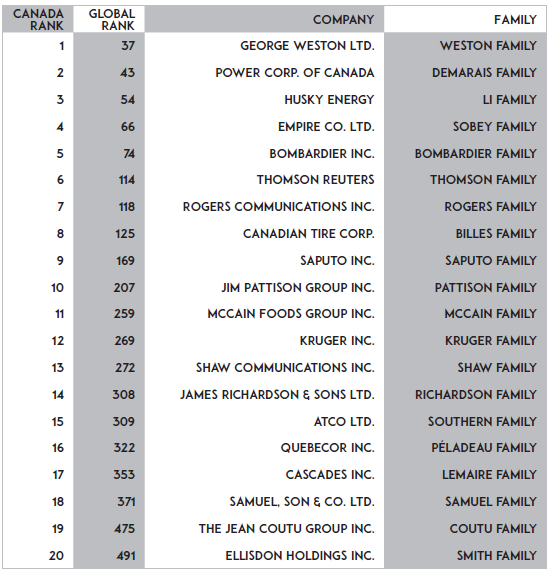
The University of St. Gallen’s Center for Family Business in Switzerland conducts an annual study, the Global Family Business Index, that ranks the world’s five hundred largest family-controlled firms by revenue. The study concluded that “of the world’s five hundred biggest family-owned or -controlled firms, 20 are Canadian.”

Most of these Canadian family owned business are publicly traded on the Toronto Stock Exchange (TSX), meaning that you can invest directly in these companies by purchasing their common stock through a brokerage.

CanadianFamilyOwnedBusinessesStocks.png

Source: Global Family Business Index. Center for Family Business, University of St. Gallen, Switzerland. 2015.

SubscribeSubscribe Now to My FREE Newsletter (Join 5,000+ Subscribers!)

MarketMasters

Robin Speziale is the national bestselling author of Market Masters, which is available at Chapters, Indigo, and Coles as well as Costco and Amazon.ca. He lives in Toronto, Ontario. Learn more about Market Masters.

10 Investing Lessons From Charles Marleau of Palos Management

Investing

become_a_patron_button

Become a Patron Now to Access My Exclusive Content – Top Performers, Portfolio, Watchlist.

My full interview with Charles Marleau of Palos Management originally appeared in my national bestselling book, Market Masters, which is available at Chapters, Indigo, and Coles as well as Costco and Amazon.ca.

***

Charles Marleau was born into the investment world. His father, a prominent capital markets pioneer, groomed him to be a financial whiz kid. When he was 25, Charles started the Palos Management hedge fund with his father. Since its inception in 2001, the Palos Income Fund has beaten the TSX benchmark 11.51% versus 7.69%. In 2014, it was a second-place winner in three categories of the 2014 Canadian Hedge Fund Awards: Best One-Year Return, Best Five-Year Return, and Best Five-Year Sharpe Ratio. The fund’s objective is to deliver trading-enhanced returns, in order to outperform the TSX, but with less risk. It achieves this objective through investing in a core portfolio of select Canadian high-grade and undervalued dividend-paying stocks, preferred stocks, bonds, and convertible bonds. Charles seeks to enhance the returns in his fund by opportunistically engaging in merger arbitrage, pair trades, statistical pair trades, and selling covered calls.

I must have caught Charles in the middle of an important trade, as he hurried our telephone conversation. His advice, therefore, was short but sweet.

Charles Marleau’s 10 Investing Lessons:

1) “What I’m really after is companies that can generate a tremendous amount of cash and grow that cash flow year after year.”

2) “Our ultimate goal has been to always outperform the market with lower volatility — less risk.”

3) “The index is broken up into industries. Our goal on the macro side is to identify which industry in the index will outperform in upcoming years.”

4) “We also make sure that the company can sustainably pay that dividend or distribution. They must have a very strong balance sheet.”

5) “One of the strategies is pair trading . . . we look for companies that have very similar products, and then determine which one we want to own, and which one we’re going to short. We’re removing the market risk or systematic risk.”

6) “At times, a company that we fundamentally like sells off aggressively. We’ll accumulate that company and then short the other company that has weaker fundamentals. The company that we go long on should revert back to its average in the correlation.”

7) “Canadians, as you know, have their wealth in two places: in their houses, and in their RRSP accounts. After that there is really no other disposable cash or investments.”

8) “[For evaluation] we look at how much cash they generate, historical performance, and earning power in the good times and the bad times.”

9) “Exiting a position is probably one of the harder disciplines. We have a good idea of [companies’] historical standard deviation, meaning whether the current price is expensive or cheap compared to the past.”

10) “You should not invest in equity for just three months. You’re investing for the long term to create wealth. People basically look at these stock tickers and make very irrational decisions, rather than looking at the fundamentals and the company’s DNA.”

MarketMasters

Robin Speziale is the national bestselling author of Market Masters, which is available at Chapters, Indigo, and Coles as well as Costco and Amazon.ca. He lives in Toronto, Ontario. Learn more about Market Masters.

19 Investing Lessons From Ryaz Shariff of Primevestfund

Investing

My full interview with Ryaz Shariff of Primevestfund originally appeared in my national bestselling book, Market Masters, which is available at Chapters, Indigo, and Coles as well as Costco and Amazon.ca.

***

Ryaz Shariff journeys through jungles in far-off countries in search of valuable assets. Does that pique your interest? As you’ll learn from our interview, Ryaz is something of an Indiana Jones in the investment world. Some may say that Ryaz is too hands-on in his running of Primevest Capital, but his fund, Primevestfund, has not only survived the prolonged commodities bear market and recent oil price collapse, but has managed
to beat the market since 2005, with a 10% compound annual return.

Being a commodity investor in 2015 is a very lonely proposition. The commodity bear market that started in 2011 has yet to abate, and commodity-era darlings such as Sprott Asset Management have struggled. Ryaz, though, has managed to stay much more versatile. Aside from investing within his core expertise, which is the junior and mid-size mining market, he mandates that his fund remain flexible, which is to say that he adjusts Primevestfund’s investment strategy to reflect the prevailing market conditions. This means taking advantage of non-resource special situations, including large-cap mergers as well as employing short-selling in down markets. Today, over one-third of the fund is in the non-resource sector.

While Ryaz insists that common investors cannot achieve comparable success in the junior and mid-size resource market because they lack “deep domain expertise,” there have always been instances of average-joe stock-pickers who make outsized returns from resource booms. One such example is a family friend of mine, Robert Hirschberg, the owner of a sports apparel company who resides in Toronto. Robert parlayed $20,000 into $15,000,000 by speculating in junior mining stocks throughout the 2002–2007 commodity bull market in Canada. While this anecdotal evidence should bring you some hope, I caution that one should wait until the commodity cycle turns up before investing in this sector or else risk outsized losses. A (grizzly) bear market can be mean. As Ryaz explains
in his most recent fund letter, “As we continue to experience one of the longest resource bear markets in history, we have maintained a disciplined focus on building further expertise within the sector, so when the fund flows return, as is now already becoming evident in small ways, we will be the premier hedge fund in the country to benefit.”

I am not as well-versed in the resource sector as I invest in the nonresource sector of the market. Thankfully, Ryaz was both gracious and accommodating. Our interview was over the telephone, with me in Toronto and Ryaz in Vancouver. Ryaz’s responses were short and to the point.

Ryaz Shariff’s 19 Investing Lessons:

1) “We’d rather invest in exceptional management teams than in ordinary ones. Businesses always have hiccups, but management teams that are exceptional entrepreneurs always figure a way around those issues to create value.”

2) “Most of the names that you find inefficiencies in are ones that the market hasn’t followed or that have been orphaned for some reason.”

3) “Identifying the under-followed small-cap businesses is the first part of the treasure hunt; thereafter, you must figure out what catalysts will drive multiple expansion.”

4) “If management creates value from efficient capital allocation, the asset becomes attractive for larger companies with depleting asset bases to consolidate, at premium values. One of the major challenges of a large company that’s pressured to grow is the replacement of that declining asset base.”

5) “This type of investing [in advanced-stage resource development assets] can be very volatile but there’s no better risk-to-reward relationship if you can get it right.”

6) “We don’t try to forecast commodity prices themselves but rather use long-term consensus estimates to model into these opportunities.”

7) “Commodities are generally the focus in the late stage of economic cycles. When the metals cycle eventually turns, you tend to see multi-fold returns.”

8) “We’re not really looking to forecast when the cycle turns because I don’t believe anyone can. The velocity of money in today’s world is so fast that you can’t really figure out the bottom of cycles, the top of cycles, and the turn of cycles.”

9) “[The ideal energy and production company] has no debt, can maintain their production without going into debt at current low oil prices, and when oil prices move upward, it becomes a go-to name.”

10) “The actual cycle works like this: demand exceeds supply; capital is approved to develop supply; commodity prices increase in value till new supply comes on-line; supply exceeds demand; commodity prices decrease; non-profitable supply comes off-line and then we wait for demand to exceed supply again.”

11) “While demand will be volatile in the short term, the long-term demand will be reasonably sustainable.”

12) “If you can get involved when you see political change occurring within a resource market, then there are usually significant returns to be made.”

13) “The two most important ingredients to look at are the demand/ supply fundamentals and institutional fund flows.”

14) “The resource markets are generally a small market so when institutional funds flow into the sector it can have dramatic effects.”

15) “We always have a hedge in place: the ability to short positions. It’s used to insulate some portion of the systematic risk within the portfolio.”

16) “We’ve had some great wins and they tend to be accentuated by the cyclicality of the sector.”

17) “With resource investments, not only do we want the principal asset undervalued, we also like to see additional ‘blue sky’ in another asset or business line that we get for free.”

18) “Some people argue that those small, single-asset companies are riskier, but I could argue that they’re less risky because we understand those deposits better than a larger company that has 20 different deposits.”

19) “If you look at the history of the Venture Exchange, you’ll see immense upticks and immense downticks. . . . Bear markets tend to have violent moves both up and down.”

MarketMasters

Robin Speziale is the national bestselling author of Market Masters, which is available at Chapters, Indigo, and Coles as well as Costco and Amazon.ca. He lives in Toronto, Ontario. Learn more about Market Masters.

17 Investing Lessons From Martin Ferguson of the New Canada Fund

Investing

SubscribeSubscribe Now to My FREE Newsletter (Join 5,000+ Subscribers!)

My full interview with Martin Ferguson of the New Canada Fund originally appeared in my national bestselling book, Market Masters, which is available at Chapters, Indigo, and Coles as well as Costco and Amazon.ca.

***

Martin Ferguson is the small-cap king of Canada. That said, he’s surprisingly humble about it. Martin’s New Canada Fund has achieved a 13.7% compound annual return over a 10-year period, and an annualized 15-year return of 16.5% compared with the median 10.7% return in the Canadian Small-/Mid-Cap Equity category as tracked by Morningstar. In 2013, the New Canada Fund posted an impressive return net of fees of 49.4%. Assets under Martin’s superb management are above $1 billion.

Surprisingly, though, Martin still didn’t feel worthy of being interviewed. He assumed Jason Donville recommended him to me to be interviewed, but I had known about Martin’s exceptional market performance for years. “I would be pleased to talk to you and answer your questions, if only to determine if I am ‘Master’ material. I value Jason’s opinion on many investment topics but his recommendation [of including me in your book] may be beyond his area of genius,” said Martin.

I responded almost immediately with this list of why I had independently, and irrefutably, included Martin in the Market Masters roster:

• Thirty-three years in the investment industry
• Market-beating returns at Mawer New Canada Fund since its inception
• Best Canadian Small-/Mid-Cap Equity Fund at the 2012 Morningstar Canadian Investment Awards
• Analysts’ Choice Award as the Best Small-Cap Canadian Equity Fund in 2002, 2003, and 2004
• Morningstar Domestic Equity Fund Manager of the Year

Thankfully, Martin finally agreed to be featured in this book. Although his process for picking small-cap stocks is not necessarily unique, it is rigid and scientific and thus not easy to implement on the first go. For example, we discussed the significance of internal cost of capital. Martin primarily employs the return on invested capital or ROIC metric to valuate stocks, and will favour companies where ROIC is greater than their internal cost
of capital. From there he overlays various other models, admittedly more advanced and again increasingly difficult to implement for the beginner investor. The formulas we discussed may seem complex at first. But my recommendation is to work through those formulas with actual stocks (for example, try them with Bell Canada). As the saying goes, practice makes perfect.

During the interview, I asked Martin to compare and contrast his approach to Jason Donville’s preferred ROE (return on equity) valuation method. His reply is food for thought. Finally, you’ll learn that Martin has a golden touch that transforms not only his small-cap stocks into winners, but also his entry-level employees into top performers.

SubscribeSubscribe Now to My FREE Newsletter (Join 5,000+ Subscribers!)
Martin Ferguson’s 17 Investing Lessons:

1) “We focus on companies that can generate a return on invested capital greater than their cost of capital over time. Companies that create cash flow that in turn generate wealth.”

2) “ROIC takes into account the fact that companies can use debt and it also gives an idea of the overall return of the business rather than the equity.”

3) “Cost of capital is determined by the risk of the company. The higher the risk, the higher the cost of capital.”

4) “We have set up our own discounted cash flow models in order to determine intrinsic value. Those models go out 15 years.”

5) “We’re not looking at today’s P/E; we’re looking at its internal rate of return. When you conduct a discounted cash flow analysis on a company, you figure out what cash flows it will generate into the future.”

6) “Management has to allocate capital, grow revenue, control cost, and control risk — four jobs.”

7) “If [management is] not using that cash flow wisely, putting it to low return or inefficient uses, then they can destroy capital so quickly.”

8) “The first thing you must realize is that Canada essentially is a small-cap market. There are very few large-cap companies in Canada.”

9) “I look at companies from $100 million market cap up to about $1.5 billion market cap. And there’s approximately four hundred of those small-cap stocks in the market today.”

10) “Investing is a loser’s game; what we try to do is put probabilities in our favour by sticking to our process, which means valuing companies based on their ability to generate wealth. In this industry there’s no such thing as perfection.”

11) “As a generalization, [commodity companies] are riskier. They are price takers. They sell a commodity. Commodity means undifferentiated product. So, yes, they lack that pricing power.”

12) “A lot of managers won’t invest in a company until they’re a certain size. By the time they grow to a certain size, the run may be done.”

13) “We will work to emphasize those [stocks] that have the best opportunity to provide the highest return on a risk-adjusted basis. [But] as stocks go up in price, and the potential return falls, we actually look at deemphasizing them in our portfolio [and] invest in whatever other sectors look more attractive.”

14) “We hold on average 40 to 60 stocks. To get there, what we consider a full position is a 3% weight. So in other words, in order to create a diversified portfolio, we assume we need about 33 companies.”

15) “We also have what we call ‘confidence weight,’ when we have a higher degree of confidence that any company will do well.”

16) “I believe that there are opportunities in the small-cap area that exceed those in the large-cap area, offset by higher risk.”

17) “If we focus on the companies that have built the business, that are actually generating revenues, that are actually producing cash flows, that are actually generating return, then there’s a lot of opportunity in the small-cap market.”

SubscribeSubscribe Now to My FREE Newsletter (Join 5,000+ Subscribers!)

MarketMasters

Robin Speziale is the national bestselling author of Market Masters, which is available at Chapters, Indigo, and Coles as well as Costco and Amazon.ca. He lives in Toronto, Ontario. Learn more about Market Masters.