The more you learn…

Investing

Subscribe Now to My FREE Newsletter (Join 5,000+ Subscribers!)

A few days ago, I gave away a complimentary copy of this TSX / TSXV Stock Directory (Excel containing every single publicly listed company in Canada. Why? as a DIY Investor, I think it’s crucially important to completely immerse yourself. The stock market is not just an index; it’s so much more than that.

But of course, with thousands of companies in your view, you don’t want to blindly fire some darts at the board and pray for the best. The random walk investing folks might say that that’s good enough, but you probably have your sights set on hitting the winners.

When I wrote the Globe & Mail National Bestselling Book, Market Masters, which was released in 2016, I drew upon 28 interviews with top investors from across Canada. Years later I followed up with some of those original investors and also new ones to record expanded and more in-depth audio interviews.

I interviewed Jason Donville and Jesse Gamble (DKAM), Francois Rochon (Giverny Capital), Gerry Wimmer (Investorfile), Jeff Mo (Mawer New Canada Fund), Jason Del Vicario (Hillside Wealth Management), and many more – 20 investor audio interviews in total, spanning more than 20+ hours of listening time.

All of those interviews were so much fun. There’s loads of lessons to be absorbed from each and every one.

You won’t find these interviews anywhere else. And for the first time in a while, I’m opening up the treasure chest for my subscribers! You can download the 20 audio interviews (MP3) here and listen anywhere.

Subscribe Now to My FREE Newsletter (Join 5,000+ Subscribers!)

Self Made: Number #1 trait that makes the difference

Investing

Subscribe Now to My FREE Newsletter (Join 5,000+ Subscribers!)

First, let’s get something out of the way. This may be an unpopular opinion… but Warren Buffett is not entirely “self made”. There’s no way. His father – Howard Buffett – served as a US congressman. Imagine all of the privilege that brings – status, money, and connections.

Also true is that it’s not what you’ve got; it’s how you use it. Uncle Warren could have simply spent his life on Laguna Beach, sipping on Cherry Cokes and watching the waves all day. He didn’t. He was hard working – and hasn’t stopped into his 90s.

That’s not the answer though. It’s not hard work that’s the number 1 trait of successful people – among both the self made and silver spoon types. If success was entirely predicated on hard work, then every janitor would be rich and successful. They’re not.

The number one trait is the ability, drive, focus, and obsession to capitalize on worthwhile opportunities – and usually that means doing one thing, really well, for a very long time. For Buffett, that was his ability early on to identify mispriced opportunities in stocks – puff on the cigar – toss – and then repeat. That was his money-making system until Charlie Munger came around. But that’s another story.

Speaking of stories, it was a painfully hard read at times, because the book was so long and dense, but “The Snowball” offered a glimpse into Buffett’s crazy obsession with stocks:

Buffett: “I went through the Moody’s Manuals page-by-page. Ten thousand pages in the Moody’s Industrial, Transportation, Banks and Finance Manuals — twice. I actually looked at every business — although I didn’t look very hard at some.”

Warren Buffett was my gateway drug into the stock market, and so as soon as I read that passage, I poured over every single Canadian stock trading on the stock exchange – TSX, and TSX Venture. What a learning experience! Thousands of businesses, in every industry. I quickly became obsessed too.

To this very day, I still think it’s a worthwhile endeavour, and so every year or so I’ll pour over all of our publicly traded Canadian companies. The stock market is not just an index; it’s so much more than that! And that’s why I’m giving you a complimentary copy of this TSX / TSXV Stock Directory (Excel). No strings attached, it’s free. Every single publicly listed company in Canada is in this spreadsheet.

Still don’t think it’s worth your time? Peter Lynch, when asked what his secret was, said:

“So I think it was just looking at different companies and I always thought if you looked at ten companies, you’d find one that’s interesting, if you’d look at 20, you’d find two, or if you look at hundred you’ll find ten. The person that turns over the most rocks wins the game. And that’s always been my philosophy.”

Now that’s obsessed!

I will warn you though; becoming self-made does come at a cost. You might not live as long! Having a silver spoon in your mouth and everything handed to you seems to considerably extend your life. The choice is yours… or is it?

Subscribe Now to My FREE Newsletter (Join 5,000+ Subscribers!)

No One Knew They Were Rich

Investing

Subscribe Now to My FREE Newsletter (Join 5,000+ Subscribers!)

A couple of days ago, I announced my return to writing and also released the long-awaited Capital Compounders 2023.

But to be honest, I also thought about simply outsourcing my newsletter to ChatGPT. Though I came to my senses, realizing that that might not go over too well. You’re not alone if you had to look up what “GPT” stands for… “Generative Pre-trained Transformer”. Are you bullish on AI? Or do you have doubts?

Let’s face it, the past few years have been a roller coaster. Feeling like a non-stop stomach-churning ride that at times made it hard to look at one’s portfolio. Inevitably we’ll hit bumps in the road. That feeling happens to the best of us, including Charlie Munger, Warren Buffett’s long-time partner at Berkshire Hathaway:

I regard Alibaba as one of the worst mistakes I ever made. I got charmed by the idea of their position in the Chinese internet; I didn’t stop to realize they’re still a goddamn retailer. It’s going to be a competitive business, the internet — it’s not going to be a cakewalk for everybody.”

(You can watch Charlie’s full talk at the Feb 15. 2023 Daily Journal’s Shareholders Meeting below)

Charlie’s Alibaba experience shows that investing is ever-challenging – it’s impossible to get every bet right – but also that time can smooth out returns over the long run. You don‘t need a perfect batting average to win the game.

Luckily for Munger, Costco more than makes up for Alibaba. As one of Costco’s largest individual shareholders, with 166,489 shares under personal ownership, Charlie says that:

“As long as Costco keeps the faith with its strong culture and extreme low-markup policy, I don’t see any stopping it… it’s a perfect damn company. It has a marvelous future and it has a wonderful culture and it’s been run by wonderful people. I love everything about Costco, I’m a total addict, and I’m never going to sell a share.”

What’s your ‘Costco’? The company that you’ve been investing in and bullish on for as long as you can remember?

Speaking of superinvestors – the 13Fs were recently released – and can be found here – where you can see what other other top investors are doing in the market – positions they’re buying, adding to, and selling.

Those insights can be helpful…

But what really inspires me are the normal everyday people that build some serious wealth over their lifetimes. The unlikely millionaire secretaries, teachers, and janitors. They truly understood that with time on their side, and some discipline – financial freedom was absolutely possible.

Subscribe Now to My FREE Newsletter (Join 5,000+ Subscribers!)

US Compounders

Investing

SubscribeSubscribe Now to My FREE Newsletter (Join 5,000+ Subscribers!)

I’m excited to introduce my list of US Compounders for the first time ever.

I’ve been invested in a number of these remarkable companies for some time now. They join the family of Canadian high return on capital companies  “Capital Compounders”  that I originally wrote about in 2017.

Among these 50 U.S. Compounders is Costco.

Charlie Munger, Warren Buffett’s long-time business partner, loves the company. In a recent interview, Munger said:

“Basically the Mungers have three stocks [/investments] – Berkshire Hathaway, Costco and Li Lu’s partnership….You don’t need to own a lot of different things to get rich.”

Costco is what Munger and Buffett call a “Compounding Machine”:

“The ideal business is one that earns very high returns on capital and that keeps using lots of capital at those high returns. That becomes a compounding machine.”  — Warren Buffett

Indeed, Costco’s Return on Capital is high: 16% (5-yr avg.) and 17% TTM, and it’s maintained that for even longer (~15% avg. ROIC over 10+ years).

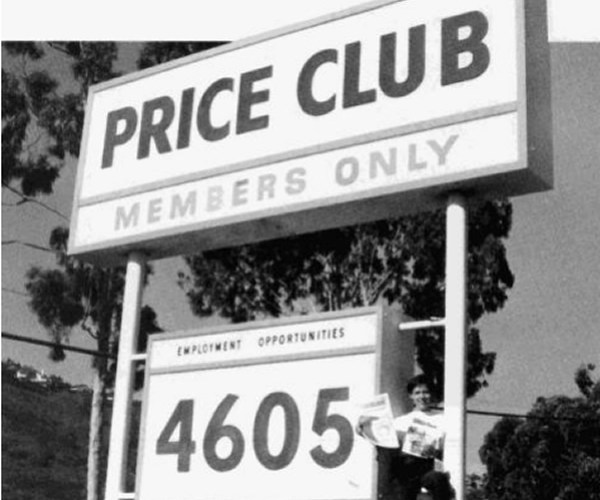
The magic of compounding capital at high rates of return has created ample wealth for Costco’s shareholders. Within a recent time-frame, its stock price has gone from $40/share (2001) to $303.76/share today. Costco’s almost an 8x bagger within the past 20 years alone, which is pretty darn good for a company founded in 1976 (under the “Price Club” name). And it’s still got growth ahead…

SubscribeSubscribe Now to My FREE Newsletter (Join 5,000+ Subscribers!)

Let’s examine Costco’s underlying business performance (per share metrics); 2001 – 2018:

Metric (per share) 2001 2018 Growth
Revenue $77.03 $320.44 4x
Earnings $1.29 $7.09 5.5x
Cash Flow $2.00 $13.07 6.5x
Book Value $10.81 $28.97 3x

Source: Value Line, and Morningstar

This is why I personally love Compounders too. High return on capital drives share price performance over the long run…

“It’s obvious that if a company generates high returns on capital and reinvests at high returns, it will do well” — Charlie Munger

Though, the challenge in selecting Compounders today is applying ones best guess as to whether the business will continue to compound at those high rates into the future. Competition can be fierce, the pace of innovation / change destructive, and the business may be reaching its own maturation point. Certainly, past performance does not equate to future return. Which is why among my focus areas for selecting the 50 U.S. Compounders was each company’s future (re-) investment opportunities, and ability to continually compound intrinsic value.

It’s honestly more an art than it is a science. Thus, I won’t get it all right. The list of Compounders will evolve.

Let’s use Costco again as an example. Its future business is seemingly bright. Costco opened its first-ever store in Shanghai (China) on August 27th this year. 139,000 people signed up for memberships at the new store on day one, and the crowds got so big that Costco was forced to cut the opening day short.

That’s an exciting new development for a household-name retailer.

Interestingly, most of the 50 U.S. Compounders that I’ve selected are boring, simple businesses. They’ll probably continue to grow (until they don’t) despite future recessions, and technological change. You won’t win any points discussing them at cocktail parties. But boring can be beautiful.

On average, these US Compounders have achieved:
 22% ROIC (5-yr avg., and TTM);
 260% Avg. Cumulative Return (5-yrs), and;
 27% avg. Compound Return (over 5 years)

The spreadsheet of 50 U.S. Compounders contains information to help you pick n’ choose stocks for your portfolio: company names, ticker symbols, business type, company overview, CEO / Founder, 5 years of ROIC, current P/E, PE/ROIC, and cumulative plus compound returns (over the past 5 years). It also includes my full list of criteria for selecting these Compounders over all of the other thousands of US stocks.

SubscribeSubscribe Now to My FREE Newsletter (Join 5,000+ Subscribers!)

Stock Market Adventure (Investing for Kids)

Investing

It’s back to school season soon, and I know that some of you have young kids at home, and others have lil’ nieces, nephews, grandkids etc.

I remember growing up, there wasn’t really anything available to get me interested in the stock market at a very young age (it wasn’t until high school). The schools in this country still don’t teach how to invest in stocks, so it’s up to the students themselves or their parents to provide that early inspiration.

So, I recently created from scratch what I call the “Stock Market Adventure“. It’s a printable activity sheet that your kids (or other young loved ones) can print, and have fun filling out. There’s lots to do: public company search, ticker look-up, exchange maze, industry match-up, math problems, and more!

Although, I think the little ones are already ahead of the game (and don’t even know it). Remember what Peter Lynch said: “Never invest in any idea you can’t illustrate with a crayon“.  It’s true!

The activity sheet (PDF) is inside my Patreon package, which also includes:

23+ Independent MicroCap Research Reports (as of August 2019):
AcuityAds (AT.v) – EnWave (ENW.v) – Hamilton Thorne (HTL.v) – Intrinsyc Technologies (ITC) – Kraken Robotics (PNG.v) – NamSys (CTZ.v) – Redishred Capital (KUT.v) – WELL Health Technologies (WELL.v) – XPEL Technologies (DAP.U) – Swiss Water Decaffeinated Coffee (SWP) – Sangoma Technologies (STC.v) – WOW! Unlimited Media (WOW.v) – GreenSpace Brands (JTR.v) – Titanium Transportation Group (TTR.v) – Organic Garage (OG.v) – FLYHT Aerospace Solutions (FLY.v) – Good Natured Products (GDNP.v) – Hill Street Beverage Company (BEER.v) – Enthusiast Gaming Holdings (EGLX.v) – Western Investment Company of Canada (WI.v) – TIMIA Capital (TCA.v) – PowerBand Solutions (PBX.v) – National Access Cannabis (META.v) – Plus: LightSpeed POS (LSPD)  *more coming…*

20+ Exclusive Audio Interviews w/ Top Investors (as of July 2019): 
Jason Donville – Francois Rochon – Aubrey Hearn – Gerry Wimmer – John Ewing – Martin Braun – James Telfser – Iain Butler – Roger Dent – Barry Schwartz – Jason Mann – Matt Kacur – Jason Del Vicario – Alex Sasso – Benj Gallander – Richard Rooney – Keith Richards – Steven Ko *more coming…*

Private Chat Group w/ Bots & Level-up Powers:
Meet other DIY investors who are hunting for their next multi-baggers, and interact with the bots inside that will automatically send you alerts throughout the week: new 52-week highs, recent financial filings, IPO listings, and more. Also, you can level up! You’ll gain XP and levels by participating in the chat; posting updates / news on stocks that you follow etc. It’s lots of fun.

Best 15 Ideas, and Updated Top Stock Lists:
Future 60 MicroCaps, Canadian Capital Compounders, and U.S. Compounders (coming soon)

Toolkit for DIY Investors:
75+ Investor Presentations (Future 60 + Capital Compounders), TSX Venture Rolodex (1,600+ company contacts), Capital Compounders Club, Guest Features (e.g. top ideas), Punch-card Picks, Capital Compounders Audiobook, Market Masters ePUB, and Ask Me Anything

Plus: Dividend Growth Machines excel; 70 curated CDN Income Stocks

Why my Package?
– Researching & picking stocks since 2005 (with battle scars to show)
– Focus on growth companies (mostly micro / small / mid-cap companies)
– Pick n’ choose what works for you; F60 MicroCaps & Capital Compounders
– No exposure to Resource-based (e.g. Oil & Gas) / cyclical companies
– Content is updated for members on a monthly basis (always fresh)
– No compensation from any companies (ever)

Give it a try.  See you there!

Seven Deadly Sins (Applied To Investing)

Investing

/// Hunting for that Next 10x Bagger? Join us ///

I’ve been investing in the stock market now for almost 15 years, and have made mistakes along the way. Still do. I’m only human after all.

Because investing is essentially the act of trying to forecast the future and placing respective bets, there’s always some element of luck involved. With luck also comes misfortune. It’s an ebb and flow, where investors are really only meaningfully rewarded in the long run. If investing in stocks wasn’t arduous, more people would be doing it for much longer.

Amidst the day-to-day action of the market, and flurry of emotion that it can conjure up, it’s easy to commit the seven deadly sins (applied to investing) below; sometimes without even being mindful. We can’t control everything in this game, but we can control our own actions, and reactions. Let’s discuss..

Pride. The stock market is the great humbler. It doesn’t know whether we’re white, black, or purple. It will take our money just as quickly as it makes us money. Unless we use privileged information (insider trading), everyone in the stock market starts out on the same level. It’s easy to feel like a genius after we ride a stock all the way up, so we need to be careful not to ride it all the way back down, or think that we now have the golden touch and then go on to invest in a series of speculative, questionable companies. We’re only as good as our next trade, so let’s choose wisely. I’m always reminding myself, “past performance is no guarantee of future results”.

Envy. Sometimes we can feel inferior and jealous towards other investors, especially during a poorly performing year in the market. Maybe our portfolio is down -12%, while other investors’ portfolios and even the index is up 20%. It’s those feelings of resentment deep down inside that hurt, and can cloud future actions. But I like to remember this lyric from one of Bob Dylan’s songs whenever I’m feeling down; “for the loser now will be later to win”. Not everyone is right, and doing well all of the time. That’s impossible. Investing is about the long game. We’re doing this to build wealth, and achieve financial freedom; not to feel like the smartest guy or gal in the room.

Gluttony. Good investing comes down to focus; applying knowledge to a select group of stocks that we come to know very well after careful research, and due diligence. It’s easy to get bored, adding too many stocks to one’s portfolio. But that’s when performance suffers. We can also go astray consuming too much information about things that don’t matter in the long run. We might hear about famous investors who “read 100s of pages everyday”, but that’s probably just a result of too much time on their hands, sheer boredom, or for whatever other reason. Read what you need to know, and don’t muddy your thinking.

Lust. Let’s fend off our primal instincts, and stop chasing hot stocks that everyone wants in the moment, especially if they’re outside of our circle of competence. Buying a stock just because it’s going up will lead to a broken heart, and regret. We need to get to know companies better before we commit, because beauty (fundamentals) are skin deep. Equally disconcerting is when we find ourselves sulking over ‘the one that got away’. Just because a stock on our watchlist went up 50%, doesn’t mean it’s too late to buy now. But remember; good companies keep on growing until they don’t. That’s life.

Anger. We’ve all had losers. Those stocks that crater, falling out of favour seemingly after we finally decide to buy, and then let languish at the bottom of our portfolios. This anger we let harbor in ourselves is unhealthy. It doesn’t mean that we’re incompetent. As I’ve said before, there’s an element of chance in the investing game. Even the conventionally ‘smartest’ people make poor investment choices in their careers. It’s easy to give up, but never forget; compounding takes time, and a small bump in the path doesn’t stop the snowball from rolling down that mountain, and getting bigger over time.

Greed. Money is a means to an end. It’s to build the life that we want, freeing ourselves from a system that rents our valuable time… time that we’ll never get back. However, along the way we can get blinded by our pursuit of money. Investing in and effectively supporting companies that build war machines to kill people isn’t what good people do. Who are they kidding with names such as the “Defense Industry”. Sounds noble, but it’s really masking true intent. The beautiful thing about the stock market is that we can invest in companies changing the world, and doing good things. There’s so many positive growth companies out there. We don’t have to sacrifice performance for virtue, and we certainly don’t have to invest in morally corrupt companies to generate returns.

Sloth. Gaining confidence, and achieving success in the stock market takes time. This isn’t something like sports where some people are simply more physically well endowed, and naturally gifted in the athletics department than others. Whereas a trust fund kid who won the family lottery won’t generate higher returns in the market just because he starts out with more money. Investing success is a mixture of intelligence, skill and daring. We must put in the research, be willing to make mistakes, and take calculated bets along the way. The market is constantly evolving. Businesses come and go, and so we must be aware of all of the changes taking place right in front of our eyes.

I think that investing in the stock market is such a positive, and empowering thing, and I’m always encouraging more people to become DIY investors. We’re building wealth, which leads to financial independence (i.e. more options) but it also means that we must take responsibility for our actions, and learn from our mistakes to be the best investors that we can be.

On this topic, as part of my giving pledge, I’m going to donate an additional $1k to the SickKids Foundation once we pass the 200 member mark. Learn more.

Canada’s Next Billion Dollar Company

Investing

SubscribeSubscribe Now to My FREE Newsletter (Join 5,000+ Subscribers!)

I’m going to make an assumption about you: buying lottery tickets was never your thing.

Rationally, you always knew that the odds weren’t in your favour (getting struck by lightning was more likely!), so you didn’t bother. Instead, you plowed your money into the stock market and never looked back. It worked.

Life lesson: you would rather bet on a sure thing, than a hope and a dream.

But here’s the problem.

That’s what some still think about MicroCap stocks: a hope and a dream. Heck, even I was cautious in my early days as a DIY investor, especially with micro-caps labelled as “penny stocks”.  *shudder*

But I’ve gone through my epiphany stage, and happy that I changed my perception because there’s just so much untapped opportunity out there in MicroCap land, especially in Canada! There’s treasures to be found…

Today, micro-caps represent a growing part of my portfolio (~20% now).

Here’s why I changed my thinking:

MicroCaps might seem risky at first, but once you get to know them better, some aren’t so bad, and a select few might become Canada’s Next Billion Dollar Company. It’s possible, and it’s happened before.

It’s like that saying: “don’t judge a book by its cover”. Some of these MicroCaps are very compelling once you look deeper inside.

But don’t take my word for it; you be the judge…

Here’s some examples (in a nutshell) of actual MicroCap companies, based on my multi-bagger blueprint:

1. Future-ready Business Model
2. Founder / Operator’s Big Vision
3. Growth Potential (Can it scale?)

What do you think?  Which of these MicroCaps stand out for you? 

HoldCo that’s investing in strong, stable and profitable Berkshire/Buffett-esque Canadian companies (ice cream, insurance, and more interesting similarities). The current founder/CEO built his previous company into a $1 Billion revenue generator that one of Canada’s largest financial institutions acquired for $440M.

Consolidator of clinics, and acquirer of digital (EMR) assets within the primary healthcare sector. Management has aspirations to leverage more technology throughout their clinic network (e.g. telemedicine) to administer patient care. Mr. Li Ka-shing (HK billionaire) is a strategic investor, and the founder/CEO’s previous company was acquired by PayPal for $304M.

SubscribeSubscribe Now to My FREE Newsletter (Join 5,000+ Subscribers!)

Leader in unified communication solutions (cloud and on-premises) that boasts customers in 170+ countries around the world, with 5 million users of their open source software, and an average of 50,000 new installs per month. In FY2019, it will officially become a $100M revenue company, with aspirations to grow as high as $500M in revenue within the next 4 years.

Innovator of advanced sensors, software and underwater robotics, with $300M+ of current contract pursuits in the pipeline. The company has achieved 4x revenue growth since 2015 ($2M -> $8M), and management & insiders are aligned with shareholders, owning ~30% of the company. Their annual revenue is expected to double this year.

Global eSports and gaming media leader, now that the company has merged with two others (this combined company now generates $22M in pro forma revenue and holds $36M cash). It owns and operates Canada’s largest and most successful gaming expo that hosts 55,000 gamers, including 100+ sponsors. Its website properties reach over 200 million monthly visitors, making it a top 5 video game website network worldwide.

Programmatic advertising platform that empowers businesses to make smarter marketing decisions as they shift to digital channels. The company serves Fortune 500 enterprises and small to mid-sized businesses in the U.S., Canada, and Europe. It’s achieved 79% Revenue CAGR since 2011, with $90M in projected revenue for 2019. Insiders own ~35%.

Animation and children’s content producer with a recent strategic partnership (Bell Media) that now makes them the exclusive curator of kids programming for CraveTV, Canada’s leading streaming service (the “other” Netflix). Current founder/CEO previously built a media company that Corus Entertainment purchased for $554M.

Expanding specialty grocery chain of organic & natural groceries. Management believes that Ontario can support 25-30 locations (5x current footprint), and the founder and operator (20% insider stake) is a seasoned, fourth generation grocer. An ex-SVP from Loblaws now sits on the Board of Directors.

Canada’s largest recreational cannabis retailer with a current portfolio of 35 licensed retail locations nationwide. Management continues to execute on its plan to have 40 stores operating by the end of calendar 2019, and 110 by the end of calendar 2020, with a $300M revenue forecast by that time.

Transportation and logistics company servicing Canada and the United States, with approximately 475 power units, 1,400 trailers and 600 employees & independent owner operators. Management has communicated aspirations to become a $500M+ revenue company through organic growth, and strategic acquisitions.

Global leader in environmentally responsible decaffeinated coffee, with distribution across the United States, Canada, and 56 different countries around the world, including some of North America’s largest roasters, roaster-retailers and leading coffee brands, including Tim Hortons, and McDonald’s.

Producers of alcohol-free beverages (wine & beer) that are available in Loblaws, Shoppers Drug Mart, Sobey’s, and Zehrs (~8,000 stores). Management now strives to become ‘the preeminent global cannabis beverage company’.

Emerging company that produces and distributes one of North America’s widest assortments of consumer products and packaging made from the highest possible percentage of renewable and plant-based materials, with no BPAs, phthalates or other chemicals of concern.

Safety and efficiency (Hardware & SaaS) company that operates in the aviation industry, providing solutions to more than 70 customers (including airlines, leasing companies, and OEMs) worldwide. Notably in October 2018, the company’s management acquired Panasonic Weather Solutions’ assets to fuel future growth.

Makers of industrial-scale dehydration technology for commercial applications in the food, cannabis (entirely new market), and pharmaceutical industries. One of the Big 3 Cannabis Producers recently invested $10M, and so this company is now positioned with a debt-free balance sheet and cash in excess of $20M.

SubscribeSubscribe Now to My FREE Newsletter (Join 5,000+ Subscribers!)

Doesn’t sound so bad, right?  Most of these companies above are still trading below $100M market cap. Small companies with big dreams.

… Imagine being one of the early shareholders in any of these companies before they end up in the mainstream news… before there’s countless analyst coverage, and before funds and other investors start to buy en masse?

Because as I said before; maybe, just maybe some of these MicroCaps become Canada’s Next Billion Dollar Company.

Canada’s Technology & Software Superstocks 🚀

Investing

This is what Steve Jobs said to Pepsi executive John Sculley, convincing him to join Apple at the time (1983):

“Do you want to sell sugar water for the rest of your life, or do you want to come with me and change the world?”

It’s the truth.

I ❤️ new tech & software. Innovation is exciting, and makes my life better / easier / more fun. Drinking more soda-pop, though, just makes me fatter 😛

We all know about the FAANG (U.S.), and BAT (China) Tech Superstocks, but what about Canada? We’re often overlooked, and that would be a mistake…

Canada, and Canadians (+ abroad) have been pioneers of some of the world’s most important technological innovations ever throughout history:

– Electric Lightbulb; Henry Woodward (1874)
– Telephone; Alexander Graham Bell (1876)
– Telephone Handset; Cyrille Duquet (1878)
– Electric Car Heater, and Oven; Thomas Ahearn (1892)
– Wireless Radio; Reginald A. Fessenden (1900)
– Medicinal Insulin; Frederick Banting, Charles Best and James Collip (1922)
– Snowblower; Arthur Sicard (1925)
– Television Camera; F.C.P. Henroteau (1934)
– Snowmobile; Joseph-Armand Bombardier (1937)
– Walkie-talkie; Donald L. Hings and Alfred J. Gross (1937)
– Anti-gravity Suit; Wilbur Rounding Franks (1940)
– Pager; Alfred J. Gross (1949)
– Cardiac Pacemaker; John Hopps (1950)
– Computer Trackball; Tom Cranston (1952)
– Electric Wheelchair; George Klein (1953)
– Alkaline Battery; Lewis Urry (1954)
– Instant Replay; George Retzlaff (1955)
– IMAX; Graeme Ferguson, Roman Kroitor, and Robert Kerr (1967)
– Prosthetic Hand; Helmut Lucas (1971)
– Canadarm; George Klein, and others (1981)
– Archie (first search engine); Alan Emtage, Bill Heelan, J. Peter Deutsch (1988)
– Java Programming Language; James Gosling (1991)
– 56k Modem; Dr. Brent Townshend (1996)
– BlackBerry Smartphone/Messaging; Mike Lazaridis (1996)

Where would the world be without these inventors, and their inventions?

Life would suck..

Seriously.

But wait… I haven’t even mentioned the Canadians behind some of today’s biggest tech companies in the world:

– Uber; Garrett Camp
– Slack Technologies; Stewart Butterfield
– Alibaba; Joseph Tsai

I’m not making this up. Honest.

But I’ll admit; Canada has also had some of the biggest public stock blow-ups in the technology sector; Nortel, and BlackBerry among the most notable in recent history. Lots of tears 😢 + broken hearts 💔. However, that shouldn’t scare you. It’s the nature of innovation. “Innovate or die“, as the saying goes. So let’s focus on the Canadian technology & software companies that are building big things today ,and into the future.

I’ve curated my favourite Canadian Technology & Software Superstocks (see below), most of which originally appeared in my list of “Capital Compounders” (est. 2017). You won’t find any Canadian tech/software micro-capcompanies in this list, but you will if you join Patreon. There’s already 150+ members who have access to the Future 60 MicroCaps that I track and update (> 70% are technology/software stocks), and you can also download my new research report on Lighstspeed POS (LSPD) from Patreon.

*drum-roll*

Here they are…

Canada’s Technology & Software Superstocks:

Company Ticker Market Cap YTD Return
Shopify SHOP $48.2B 132.0%
Lightspeed POS LSPD $3.0B 91.0%
Constellation Software CSU $27.1B 47.3%
Ceridian HCM* CDAY $9.5B 40.5%
CAE CAE $9.6B 40.4%
Descartes Systems DSG $4.1B 36.2%
Open Text OTEX $15.5B 29.0%
People Corporation PEO.v $536.0M 25.6%
CGI GIB.A $25.0B 25.2%
Kinaxis KXS $2.2B 24.8%
Calian Group CGY $260.4M 11.6%
Enghouse Systems ENGH $1.9B 5.0%
Tecsys TCS $164.2M 3.6%
Photon Control PHO $120.3M -5.2%
Stars Group TSGI $6.2B -7.8%
Sylogist SYZ.v $272.4M -8.2%
Tucows TC $699.7M -19.9%


*Ceridian HCM (CDAY) is a U.S. company, but is also listed in Canada (TSX), and has significant Canadian influence

/// Challenge: can you come up with an acronym ala “FAANG” / “BAT” based on this list of Canadian Technology & Software Superstocks?

Become a Member

Investing

Hey readers! It’s been a while. I’ve been busy building something special on Patreon. There’s now 20+ exclusive audio interviews w/ top investors, 18+ micro-cap research reports, and lots more:

20+ Top Investor Audio Interviews:

Jason Donville – Francois Rochon – Aubrey Hearn – Gerry Wimmer – John Ewing – Martin Braun – James Telfser – Iain Butler – Roger Dent – Barry Schwartz – Jason Mann – Matt Kacur – Jason Del Vicario – Alex Sasso – Benj Gallander – Richard Rooney – Keith Richards – Steven Ko

18+ MicroCap Research Reports (based on my “Future 60” list):

AcuityAds (AT.v) – EnWave (ENW.v) – Hamilton Thorne (HTL.v) – Intrinsyc Technologies (ITC.to) – Kraken Robotics (PNG.v) – NamSys (CTZ.v) – Redishred Capital (KUT.v) – WELL Health Technologies (WELL.v) – XPEL Technologies (DAP.U) – Swiss Water Decaffeinated Coffee (SWP.to) – WOW! Unlimited Media (WOW.v) – GreenSpace Brands (JTR.v) – Titanium Transportation Group (TTR.v) – Organic Garage (OG.v) – FLYHT Aerospace Solutions (FLY.v) – Good Natured Products (GDNP.v) – Hill Street Beverage Company (BEER.v) – Enthusiast Gaming Holdings (EGLX.v) – PLUS: LightSpeed POS (LSPD.to)

Everything else:

– Best 15 Ideas for 2019 (beating the market)
– 75+ Investor Presentations (Future 60 + Capital Compounders)
– TSX Venture Rolodex (1,600+ company contacts)
– Private Chat Group on Discord (w/ bots, and level-up powers)
– Model Growth Portfolios (U.S. Compounders coming soon)
– Capital Compounders Club
– Guest Features (e.g. top ideas)
– Hedge Fund Insights
– Punch-card Picks from other DIY Investors & Analysts
– Complimentary Copies of my Books (including audiobook)
– Starter Bitcoin
– Future 60 Performance Updates (top 20 stocks +50% avg. return since Jul ’18, w/ one 4x bagger, and 5 takeovers)
– Giveaways
– AI Interactive Interviews (words stitched to audio) – beta
– Get-togethers (pub night soon)
– Updates on the 40 Capital Compounders; 16% avg. ROIC
– One-on-one Conversations; ask me anything
– 70+ member only posts from the 1+ years I’ve been on Patreon

Join us 🙂 We’re 150+ strong, and growing… plus, if you sign-up before August 6 (my birthday!), I’ll send you a bonus excel file — Dividend Growth Machines (70 income stocks).

Next 10x Bagger

Investing

Don’t you hate it when you miss a stock that’s gone up?

Maybe you:
– didn’t know about the company until much later
– researched the stock, but didn’t invest in it
– owned it but sold out way too soon

It’s not a good feeling… missing a multi-bagger — any stock that doubles or more. Here’s the math:

Bagger Gain ROI
2-bagger 100% 2x
3-bagger 200% 3x
4-bagger 300% 4x
5-bagger 400% 5x
10-bagger 900% 10x
100-bagger 9,900% 100x

I’m guilty of it too (missing out).

But I’ve also had my share of multi-baggers since 2005. That’s when I started investing in the stock market from my dorm room at the age of 18. It only takes a handful of long-term performers to really compound your portfolio’s returns.

My stock portfolio is up 50x since then.

I have a strong passion and instinct for finding promising micro-cap, small-cap, and mid-cap companies that have what it takes to grow bigger. But it’s taken years of practice, and persistence…

As legendary investor, Peter Lynch said: “the person that turns over the most rocks wins the game”.