Here’s what I presented at the 2017 Canadian Investors Conference:
Robin Speziale_CIC 2017_What I Learned From Canada’s Top Investors-Market Masters


Here’s what I presented at the 2017 Canadian Investors Conference:
Robin Speziale_CIC 2017_What I Learned From Canada’s Top Investors-Market Masters


Become a Patron Now to Access My Exclusive Content – Top Performers, Portfolio, Watchlist.
First off, I launched my new blog on March 1st. And these are the 5 most popular posts so far.. have a look if you’re interested:
Also, on March 1st, my friend Sean Cooper released his first book – Burn Your Mortgage. Maybe you’ve heard of Sean. He was all over the news because he paid off his mortgage…at… 30! In his book, Sean chronicles how he did it. Not everyone will have the motivation to pay their mortgage off so quickly but it’s an interesting read nonetheless. I endorsed Burn Your Mortgage, and had actually inspired Sean to write the book in the first place, walking him through the publishing process.
We all invest in stocks and are obviously passionate about the markets. And some of you may also invest in real estate too. So, I asked Sean to write a blurb on investing in real estate vs. stocks.
This is what Sean had to say:
A common argument is that it doesn’t make sense to buy a home in a big city. That renting is a lot less expensive and the way to go. As real estate blogger Garth Turner so bluntly put it, “Why would any person want to buy a condo in Toronto or Calgary or Vancouver and actually pay twice the monthly cost than it would take to rent the same unit?” Kevin O’Leary of ABC’s Shark Tank shares a similar view. Mr. Wonderful has gone on record saying you’d be an “idiot” to buy a home (I guess I’m king of the idiots, since I not only bought a house in a big city, I paid it off). We’re told we’d be better off renting and investing.
When it comes to the performance of real estate versus the stock market, the findings seem to back this up. The average price of a resale home in Canada was up 5.4% from 2004 to 2013. Over the same time, the S&P/TSX Composite Index posted a 7.97% return. It seems pretty clear: you’re better off renting and investing than you are buying.
So why isn’t the debate over? Because it’s flawed. It ignores the power of leverage. Leverage is a fancy way of saying you’re borrowing the bank’s money to invest in something that’s expected to go up in value. You’re leveraging when the bank lets you borrow up to 95% of a home’s value. The bank doesn’t let you borrow this much money for stocks. Why not? Because real estate is seen as a safe, long-term investment. (It’s also because of collateral. If you lose all your money in the stock market, the bank has nothing, but if you default on your mortgage, the bank can sell your home to recover some or all of its money.) Here’s an example that shows the power of leverage: Let’s say you bought a home a decade ago for $250,000, with only 10% down ($25,000). You later sold it for $400,000, making $125,000 in profit (for simplicity’s sake, we’ll ignore associated costs such as mortgage interest, mortgage insurance, property taxes and closing costs). Even though your home only went up in value by 60%, that’s a 500% return on your initial investment (down payment) of $25,000. Try finding that kind of return in the stock market!
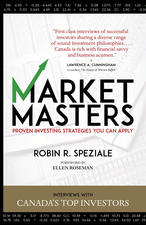
Robin Speziale is the national bestselling author of Market Masters, which is available at Chapters, Indigo, and Coles as well as Costco and Amazon.ca. He lives in Toronto, Ontario. Learn more about Market Masters.
Become a Patron Now to Access My Exclusive Content – Top Performers, Portfolio, Watchlist.
Do you regularly review your portfolio holdings? I view my stock holdings as actual stakes in businesses (because they are). Thus, every serious investor should practice disciplined portfolio management. Why? Businesses aren’t forever. Business go through cycles. And businesses can be hit by serious issues. Take TD for example. TD has recently come under scrutiny for allegations of its sales practices. DBRS explained:
These reports include allegations, by both current and former employees of TD, of aggressive sales practices, creating potentially unethical and illegal activity in TD’s Canadian retail bank. The allegations of misconduct, while not currently at the same level, are reminiscent of what transpired at Wells Fargo & Company last year that came to public attention following settlement agreements reached with the Consumer Financial Protection Bureau, as well as other parties. Following the settlement, Wells Fargo & Company has been subject to negative media coverage, increased U.S. government scrutiny, litigation, as well as senior management changes.
I’m not saying to dump your TD shares if you own any. I don’t give recommendations. However, what I want to stress is that all investors should be well aware of what’s going on with the companies in their portfolio. I’ll explain how I go about portfolio management (it’s my shortcut). Every now and again I’ll go back to Philip Fisher’s 15 Points to Look for in a Common Stock, which was a short, but very important chapter in his book, Common Stocks and Uncommon Profits…
(As an aside, Ken Fisher, Philip Fisher’s son, endorsed my book, Market Masters. He’s a great guy. Billionaire. But very humble).
…Anyway, I’ll scan my stock holdings, validating them against Fisher’s 15 points (see below), and then decide whether to hold, dump, or buy more shares in the companies that I own. In my opinion, Philip Fisher’s “points” will save you money. His advice might sound ‘common sense’, but let’s face it, common sense isn’t common, or at least, some investors allow greed and fear to cloud their judgement from time to time. Imagine if you had used these 15 points to evaluate RIM/BlackBerry before its fall from grace (see point #14). Or Valeant before its implosion (see point #15). Or any other dog stock that might still be sitting in your portfolio – see all points. (I’ve been a victim of holding declining stocks too). Alas, here are the 15 points you can use to review your stock portfolio on a regular basis.
Philip Fisher’s 15 Points to Look for in a Common Stock:
1) Does the company have products or services with sufficient market potential to make possible a sizeable increase in sales for at least several years?
2) Does the management have a determination to continue to develop products or processes that will still further increase total sales potential when the growth potential of currently attractive product lines have largely been exploited?
3) How effective are the company’s research and development efforts in relation to its size?
4) Does the company have an above-average sales organization?
5) Does the company have a worthwhile profit margin?
6) What is the company doing to maintain or improve profit margins?
7) Does the company have outstanding labor and personnel relations?
8) Does the company have outstanding executive relations?
9) Does the company have depth to its management?
10) How good are the company’s cost analysis and accounting controls?
11) Are there other aspects of the business somewhat peculiar to the industry involved that will give the investor important clues as to how the company will be in relation to its competition?
12) Does the company have a short-range or long-range outlook in regard to profits?
13) In the foreseeable future, will the growth of the company require sufficient financing so that the large number of shares then outstanding will largely cancel existing shareholders’ benefit from this anticipated growth?
14) Does the management talk freely to investors about its affairs when things are going well and “clam up” when troubles or disappointments occur?
15) Does the company have a management of unquestioned integrity?
Robin Speziale is the national bestselling author of Market Masters, which is available at Chapters, Indigo, and Coles as well as Costco and Amazon.ca. He lives in Toronto, Ontario. Learn more about Market Masters.
My full interview with Randy Cass of Nest Wealth originally appeared in my national bestselling book, Market Masters, which is available at Chapters, Indigo, and Coles as well as Costco and Amazon.ca.
***
Randy Cass’s booming voice fills a room. Randy likens himself to Jim Cramer, the host of CNBC’s Mad Money. I disagree with that comparison — Cramer is obnoxious on Mad Money, whereas Randy Cass is dynamic but well spoken. Randy became a household name, at least among Canadian business watchers, when he co-anchored the show Market Sense on BNN with Catherine Murray. The show was a success. While both anchors were highly adept in the financial markets, their personalities were almost complete opposites, with an effect like the dynamic between Kevin O’Leary and Amanda Lang from the long-running CBC show The Lang & O’Leary Exchange. Randy Cass’s tenure on Market Sense wasn’t as long-running as Catherine’s, though, as he departed the show after three years, in 2012, to focus his energy on Nest Wealth, a robo-advisor company. Nest Wealth provides investors access to low-cost, high-quality managed investment accounts at the click of a mouse.
This is how Nest Wealth works: first they get to know you and your financial goals, second they invest your money in low-cost ETFs, and then third, they monitor and rebalance your portfolios. The philosophy that drives their investment accounts is based on the Efficient Market Theory (EMT) and the idea that passive investing beats active investing. With the exception of Som Seif, who actually develops ETFs that track the market, Randy is the only other individual featured in this book who actually stands by EMT, which was popularized by Burton Malkiel in his book A Random Walk Down Wall Street. This is what Randy has to say on the topic: “Studies demonstrate that over the long term, passive investing — building a portfolio to perform like the market instead of trying to beat it — does better than active management.
Over the last five years in Canada, nearly 80% of actively managed Canadian Equity Funds failed to perform as well as the S&P/ TSX Composite.” Compelling data like this makes Nest Wealth’s mandate to “be the market” instead of “beat the market” a viable option for investors. The active managers in this book have for the most part beaten the market, but the evidence is clear: the majority of managers won’t grow your money faster than the market. All portfolios in Nest Wealth are built on three rules by David Swensen,
the chief investment officer of Yale University, as available on the Nest Wealth website:
1. The investor should maintain a portfolio allocated to six core asset classes and be diversified. (These include domestic equities, emerging market equities, international equities, government fixed income, real-return bonds, and real estate.)
2. The investor should rebalance the portfolio on a regular basis.
3. The investor should, in the absence of a confident marketbeating strategy, invest in low-cost index funds and ETFs.
During the interview, Randy explained that he had suffered a bout of disillusionment,
as we all do in some form, upon first entering the workforce. He started as an articling intern at a law firm, but saw that the career path to becoming a partner was fraught with stress and that the long days wouldn’t magically vanish once he “made it.” One Sunday morning, he was working across from a senior partner, and he realized that he would
still be working Sundays at a law firm no matter how much success he had. The difference between Randy and the average person is that Randy actually made a crucial change in his life to redirect his path. He actually wrote to Jim Cramer, got his surprisingly astute advice, and then from then on, blazed a path through the investment industry.
Prior to founding Nest Wealth, Randy managed quantitative portfolios at the Ontario Teachers’ Pension Plan and institutional assets at Orchard Asset Management. Randy’s last startup, First Coverage, developed a proprietary technology-based system that measures the effectiveness of information given by the sell side to institutional investing clients. It won multiple awards as a top startup, including a financial services Morningstar award for best use of technology in Canada. First Coverage expanded into the United States and the U.K. and was ultimately sold to a U.K. company in 2011.
The interview with Randy is informative, though I’ve removed parts of some responses in which Randy sounded too much like a salesman for Nest Wealth to keep the information balanced. What you’ll glean, instead, is the effectiveness of Randy’s entrepreneurial drive and a strong foundation in the markets, as well as the merits of the Efficient Market Theory. As a bonus, Randy shares his experiences with FX trading — a job that he can laugh about now.
1) “We would leave stop-losses on [FX trades] because we couldn’t let a currency trade run without any risk management because we would lever, and so you could get your head handed to you otherwise.”
2) “Currency trading was all about picking up nickels and nickels and nickels and nickels on every transaction.”
3) “If you were right, the odds of getting stopped out before you were right three months down the road were high. So FX didn’t seem to have the mental stimulation that I was looking for.”
4) “The most successful fund at Orchard Asset Management was a closed-end fund that employed an arbitrage strategy. We built an entire system that captured the differences in value between closed-end funds and the underlying assets the closed-end funds had within it.”
5) “If you know a lot about a particular area, at some point you can’t keep doubting yourself.”
6) “[Stocks don’t] always have to come back. We see that in Canada’s many tech companies over the last decade.”
7) “Markets can materially shift for a variety of reasons and the lesson there was that if you’re going to play that game, if you’re going to try to fundamentally out-think everybody, you can’t be captive to whatever your old thought process was.”
8) “It’s incredibly hard, next to impossible, to actually beat the market on a consistent basis.”
9) “We believe that with ETFs it’s not about performance, but whether it does what it says it’s going to do. Does it mimic what it says it’s going to mimic? Does it have good liquidity? Does it have low fees? Does it have minimized tracking error?”
10) “Trading in and of itself right now is a technology arms race. It’s about who can get their hold in the market the fastest. It’s about who can co-locate their server the closest to the exchange. It’s about who can build something that can do billions upon billions of procedures faster than the other guy’s computers.”
11) “Passive beats active. It’s hard to come out ahead when you trade.”
12) “There are very smart people who do exceptional things on a semifrequent basis.”
13) “Benjamin Graham would probably still be Benjamin Graham, but the odds of becoming that person as a retail investor are stacked against you today.”
14) “Over five years 90%-plus of funds will underperform the benchmark. If you stretch it out to 10 years it becomes an almost certainty that you underperform the benchmark.”
15) “When you look at all the studies, there’s a reason that every legal document has to say, ‘Past performance not indicative of future performance.’ It’s a fact.”
16) “If we had a thousand people sitting with us right now, I could have them stand up and flip coins and guarantee that one of them is going to get 10 heads in a row. If you’re going to try and do this [i.e., invest in the markets], you need to understand that the odds of you being the guy who can consistently outperform the market doesn’t compensate you for the risk that you’re going to take to actually try it.”
Robin Speziale is the national bestselling author of Market Masters, which is available at Chapters, Indigo, and Coles as well as Costco and Amazon.ca. He lives in Toronto, Ontario. Learn more about Market Masters.

My full interview with Lorne Zeiler of TriDelta Financial originally appeared in my national bestselling book, Market Masters, which is available at Chapters, Indigo, and Coles as well as Costco and Amazon.ca.
***
“This is your brain on drugs.” A study from Laurence Tancredri, entitled “Hardwired Behaviour, What Neuroscience Reveals about Morality,” showed that “there is a resemblance between the brain of someone predicting a financial gain and that of a drug abuser. A dopamine ‘buzz’ is created by the cue, which prompts us to be more aggressive with our money. When acting on the cue fails to produce a reward, the dopamine level still increases dramatically, leaving us in a profound funk. The result: you overreact and prematurely remove your money from the market. If enough people did that, the market would inevitably drop precipitously.”
Lorne Zeiler, vice-president and associate portfolio manager at TriDelta Financial, would also argue that your behavioural drive often dictates your investment decisions. That’s why Lorne travels the country to educate people about their own brains. Don’t do drugs, kids. Seriously, though, this is how Lorne opens his presentation, “What You Don’t Know Can Be Harmful to Your Investment Returns”: “Have you wondered why your investment returns have been below your expectations? Why others seem to be able to take advantage of buying opportunities, while you sit on the sidelines? Have you sold stocks that seem to continue to go up, while holding on to securities that continue to go down in value? This is because emotion often has a much greater impact on investment decisions than most people realize.” You’ll also learn from Lorne why women make better investors than men. Pretty controversial.
1) “Just because it’s illogical doesn’t mean it can’t continue to move up. And the market can get more illogical before it comes back to reality.”
2) “The best description I’ve ever heard is when John Maynard Keynes termed it ‘the animal spirits.’ When the animal spirits are there, people get excited, and rationality doesn’t necessarily meet up.”
3) “Retail investors tend to come into the market after it’s already moved up [and] tend to then hold on with the expectation that when things are turning negative, they can ride it out and things will be fine.”
4) “There’s an emotional cycle that people go through in the market. They get to a point of what’s called ‘capitulation,’ where they just can’t take it anymore.”
5) “People are of the expectation that if markets have returned 9% a year, markets are going to continue to return 9% a year. This is called ‘recency bias.’”
6) “When you’re buying stocks, what you’re actually doing is buying a fractional ownership in a company. A lot of people forget that.”
7) “The value of that company really should be based on its future prospects, future cash flows, future dividends, and future market share.”
8) “It is actually very difficult emotionally to go against the herd, even if all of your logic is there, even if you’ve done all your research, and even if you’re very confident in your conviction.”
9) “A sell-off period can have a serious impact on your thought process.”
10) “You never know a bottom until after it’s gone up from the bottom.”
11) “One of the issues with the Efficient Market Theory is that it states that the market reacts to information immediately. But that doesn’t mean it reacts properly.”
12) “I like the fixed-income market in that it tends to be more institutional, and so it tends to react more logically to events going on.”
13) “Studies have shown that in general winners outperform your losers. Stocks that have generally done well are often going to continue to do well but there are a lot of people who will continue to hold onto that losing position, because they don’t want to admit that loss.”
14) “Unless there’s a fundamental reason why not to sell it, then our natural decision is to sell . . . the sell discipline is very key.”
15) “If something fundamentally has changed about the company, then that might also be a reason for you to buy back the stock.”
16) “There’s a low correlation in general between equity and fixed income, in that if equity markets are dropping hopefully your fixed-income portfolio is going up.”
17) “If you are a believer that bond yields are going to drop — for example, quantitative easing is ramping up or people have expectations that rates are going to rise when they’re not — then the greater return potential can generally be achieved by owning a longer-dated bond.”
18) “With corporate bonds there’s something called ‘the spread’ — that’s how much additional yield you make from owning a corporate bond versus a similar-maturity-date government bond.”
19) “The main reason for owning U.S. stocks is that the Canadian market just isn’t sufficient.”
20) “Men tend to trade more. And men tend to be more overconfident in their abilities. Women tend to be more conservative. As a result, they watch their portfolio less, which often results in a better overall return than men.”
Robin Speziale is the national bestselling author of Market Masters, which is available at Chapters, Indigo, and Coles as well as Costco and Amazon.ca. He lives in Toronto, Ontario. Learn more about Market Masters.

Become a Patron Now to Access My Exclusive Content – Top Performers, Portfolio, Watchlist.
My full interview with Jason Mann of EdgeHill Partners originally appeared in my national bestselling book, Market Masters, which is available at Chapters, Indigo, and Coles as well as Costco and Amazon.ca.
***
Jason Mann is all about momentum. At EdgeHill Partners, Jason runs the flagship EHP Advantage Fund. That fund has delivered a 23% compound annual return since its inception. How does Jason deliver such high returns? He employs a quant-based, rules-driven system for stock selection. Additionally, he follows a strictly balanced long/short policy, and maintains 400 to 500 highly liquid positions in the fund at any given time. Through the EHP Advantage Fund, Jason buys undervalued, rising, stable stocks and shorts overvalued, declining, volatile stocks. He actively gears down risk in declining markets and rotates toward more defensive stocks and strategies to preserve capital. Impressively, Jason geared down before the oil crash impacted Canadian markets. In the EHP Advantage
Fund’s fact sheet, there’s a chart that shows a clear divergence starting in August 2014 between the fund and the TSX, whereby the former rose while the latter plunged.
Jason’s idea of “gearing down” means taking very specific steps: reducing net exposure, rotating to more defensive strategies, and reducing beta to zero. This gear-down concept demonstrates that while Jason is full speed ahead in rising and stable markets, he knows when, how, and where to take a detour when there’s a crash up ahead. Jason says, “We aim to participate in bull markets and sit out of bear markets.” All investors should understand and implement risk management in their trading or investing practice, since protecting capital is just as important, or some might argue more important, than growing capital in the market.
In addition to the core long/short investment strategy employed at EdgeHill Partners, Jason also shared with me the other strategies he used while he was a managing director, co-head of the Absolute Return/ Arbitrage Group at Scotia Capital. The Absolute Return Group is responsible for developing and delivering cross-platform alpha-generating ideas for the hedge fund community.
1) “The way we run money here is quantitative, or systematic, or rules driven.”
2) “We want to buy the best combination of cheap, rising, and stable stocks.”
3) “Most important though is to determine the price of a company relative to its historical ability to generate cash. That’s what we care about when we measure value.”
4) “Forward estimates are just that — an estimate, just a collection of guesses — whereas backwards looking is a factual representation of what a company has been able to do.”
5) “Value works because the market becomes overly pessimistic about a formerly good company’s ability to ever regain its footing and generate cash flows.”
6) “‘What do you call a stock that’s down 90%? A stock that was down 80% and then got cut in half.’ You can buy something at an 80% discount and still take a lot of pain waiting for that value to play out.”
7) “Because we are both long and short, we can benefit from both sides of that trade.”
8) “Momentum feeds on itself. Think about the manager who manages $100 million, but then receives another $100 million. What do they typically do? They go buy the same stocks they already own.”
9) “The classic definition of momentum is 12-month rolling returns. I ask, ‘What has this stock done over the last 12 months, relative to all the other stocks in the index?’”
10) “[We’ll] score a stock relative to how well it’s done on that measure, relative to all the other stocks, and we want to buy the stocks that have the best price momentum and the cheapest valuation.”
11) “Who would ever buy overvalued, declining, volatile stocks? However, there’s a huge behavioural bias to buy those stocks. They have lottery ticket–like payoffs.”
12) “There is a behavioural bias to trade relatively liquid, small-cap, volatile stocks that can go up or down 10% a day. Holding those stocks in a buy-and-hold-type environment is ruinous to returns on a long-term basis. You can get periodic great returns, and long-term terrible returns.”
13) “We take an amount of risk where the expected volatility and drawdown is going to be in the 10% range.”
14) “Because we’re operating with repeatable human behavioural biases in terms of the market participants, you have a market that rhymes.”
15) “Virtually all investors who are successful over the long run are either very good at instinctively understanding what their own behavioural biases are and what the behavioural biases are out there to take advantage of, or they’ve built a set of rules and processes to constrain their actions, their risks, and their own behavioural biases.”
16) “A bought deal is when a company issues stock to the secondary market at a discount to its trading price. Bought deals are done at a discount. And if that bought deal is liquid, oversubscribed, and borrowable — meaning that we can borrow to hedge our risk — then it’s of interest to us.”
17) “We play volatile stocks where there’s a high probability of a small gain in a short period of time.”
18) “A market that is moving below its 50-, 100-, and 200-day moving average is a warning sign for us.”
19) “The VIX going from a stable state to a rising state indicates an increase in volatility.”
20) “The existence of probability is part of the reason why we run money systematically. It’s to avoid breaking a rule, letting our emotions get to us, buying too much of something, not selling when we should have, failing to take a capital gains loss, doubling down, and so on.”
21) “Stocks that are highly valued have a long way to fall before they get into a category where value investors step in and apply a floor.”
Robin Speziale is the national bestselling author of Market Masters, which is available at Chapters, Indigo, and Coles as well as Costco and Amazon.ca. He lives in Toronto, Ontario. Learn more about Market Masters.
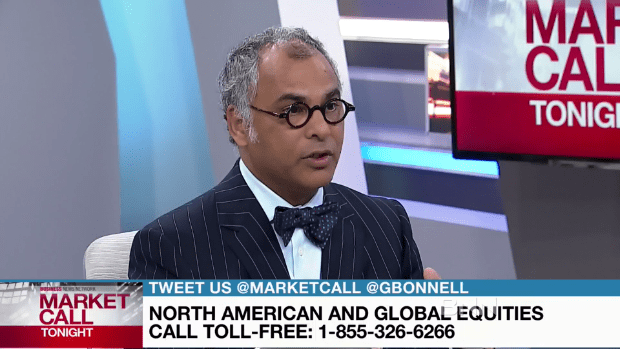
My full interview with Paul Harris, Bill Harris, and Paul Gardner of Avenue Asset Management originally appeared in my national bestselling book, Market Masters, which is available at Chapters, Indigo, and Coles as well as Costco and Amazon.ca.
***
Avenue Investment Management’s office is situated on a quaint street in downtown Toronto. It feels tucked away, but the office is only a fiveminute walk away from the hustle and bustle of the financial district on Bay Street. The “Three Amigos” who run Avenue Investment Management — Paul Harris, Bill Harris, and Paul Gardner — seem to have so much fun working together that I almost imagine them tap-dancing to work every morning. Their office exudes a general sense of happiness, with bright, open spaces, light brick walls, and long wooden floors. Their main meeting room’s wide windows allow the sun to shine through. It was in that meeting room that all Three Amigos came together to answer my questions, and share both their individual and collective experiences in the market.
This is the only multiple-interviewee format in the book. At times, I felt like a referee, guiding the conversation, switching between talkers, and handing out penalties to any of the three who started to dominate the conversation. This interactive format worked, however, as each of the three investors had lots of great information to share. All Three Amigos are masters in their own right, but overlay their niche knowledge with one another to make final investment decisions. This process works a bit like the sounding board that exists between Warren Buffett and Charlie Munger at Berkshire Hathaway, in which both partners reach an investment decision after a constructive process. Paul Harris focuses on financial institutions, technology, and telecom.
Bill Harris’s areas are resources, utilities, and infrastructure. Paul Gardiner covers bonds, real estate, utilities, and telecom. While their mandate is to double portfolios’ values every 10 years, which implies a 7.3% annual compound rate of return, their flagship Avenue Equity Portfolio has exceeded that mandate by tripling over a 10-year period. Paul, Paul, and Bill are as much focused on risk management as they are on their upside returns. As we discussed in the interview, the Three Amigos managed to save their portfolios from a complete crash before the financial crisis in 2008 that decimated banks around the world. They witnessed weakness in the global financial sector and then quickly took action to eliminate that risk from their portfolios.
Paul Harris was actually my first point of contact at Avenue Asset Management. After years of watching BNN’s Market Call, I’ve come to respect Paul’s no-nonsense advice to callers. Also, his fashion sense and swagger rival those of Norman Levine, who you’ll hear from later (but a winner is just too close to call). Paul usually wears a colourful bow tie with a brightly coloured shirt and thick-framed circular glasses to accentuate his face. And his buttery smooth voice makes listening to Paul talk about the markets comforting and reassuring, especially during a period of market turmoil. Unfortunately, family man Paul Harris had to step out halfway through the interview to pick up his daughter, but later supplemented the transcription with additional comments. As well, Paul Gardner was slightly late to the interview, so his answers don’t appear in the first few questions. I was so involved in this conversation that I lost track of time as our conversation went late into the morning.
To clear things up before we get started, Paul Harris and Bill Harris are not related; their identical last names are simply a matter of coincidence — just as it is a coincidence that the other two are named Paul. Perhaps they were fated to be a team.
1) “Part of our success is having all of the stars aligned. If we were all equity heads, it would be hard to succeed because we’d have to look at different investment frames.”
2) “One of our critical advantages is that we understand the capital structure of any company. What happens with any company is that if they get the capital structure wrong, then their debt overwhelms their business and that’s when they can go into bankruptcy.”
3) “Once you’re in the bond world, you can achieve a 10% to 12% rate of return. All you need to determine is whether a company is going to go bankrupt. That’s all. The upside is very easy.”
4) “We just win by not losing. That’s how we survived the financial crisis.”
5) “Picture the TSX as a pie. The trick is to determine the most consistent companies in the TSX. We don’t own things that don’t make money.”
6) “Really good companies don’t change that much over time. [We] identify historically great companies, with great numbers, that we can we buy at a decent price.”
7) “If we need to have some exposure to a sector, then we try to find the best in class and just immunize our risk.”
8) “If you try to compound consistently at 10% or 12%, you will end up hitting air pockets. The problem is that you take up more risk and thus increased probability that you get no return.”
9) “We have a 30-year time horizon. You can double your money, then double it again, and double that again. But you need to give yourself the highest probability that it actually happens.”
10) “We know we’re going to make mistakes, so let’s just leave it at that. . . . If we make a mistake, we can sell.”
11) “If you buy a bond at a discount, there’s an end to the story. It’s called par. Conversely, stocks are indefinite. They can stay there forever. A bond has to have an end. You should know your rate of return, and then at the end of the game you end up at maturity.”
12) “We generally tend to overperform on the downside and underperform on the upside. During market collapses, we go out and find these special situation bonds that can go up and can crush the volatility.”
13) “We don’t care about the index. What we care about is getting you this rate of return between 8% and 10% with the least amount of risk.”
14) “[Generally], balance sheets need to be conservatively financed. Companies should be in profitable markets. Managements need to actually be good at what they do.”
15) “You need 8% to 12% free cash flow yield, and you can get that if you’re super patient.”
16) “You want to invest in companies that can either maintain the rate of return or enhance their rate of return when they reinvest their earnings. However, be cognizant of companies that enhance their rates of return through acquisition strategies or financial engineering.”
17) “Bad people and bad managers keep doing bad things. Good people and good managers generally keep doing good things. It’s a very simple concept.”
18) “You should draw a line under the price, and say, ‘We’ll give it this much time at this price.’ You have to be very vigilant. If the fundamentals start going wrong, the nice thing about public markets is that you have the advantage to sell a bad investment.”
19) “People get all excited about their investments and get to a point where they don’t know why they are investing anymore. So your real work is to come up with a very tight strategy, then stick to it.”
20) “The one thing you must accept is that the world doesn’t end tomorrow. If you look at ’08 and ’09 you would have thought that the world ended, but moments later, it was the bottom of the market.”
21) “The stock market and the economy are not correlated. They’re not. Your portfolio might act completely differently to what’s going on in the economy.”
22) “If you owned a thriving company, you wouldn’t buy it and then sell it the next day based on short-term market prices. When you own shares in a company, you’re technically an owner of that company.”
23) “We have a 20% insurance policy [i.e., cash] inside the portfolio at any one time. So it’s always a drag on performance, but then we have the ability to react at whatever that black swan event is, because we’re going to get impacted by events in different markets at different times.”
24) “It’s nice to know that when you invest in those stocks [companies with an ownership stake] you’re 100% aligned with the owners and management.”
Robin Speziale is the national bestselling author of Market Masters, which is available at Chapters, Indigo, and Coles as well as Costco and Amazon.ca. He lives in Toronto, Ontario. Learn more about Market Masters.
Become a Patron Now to Access My Exclusive Content – Top Performers, Portfolio, Watchlist.
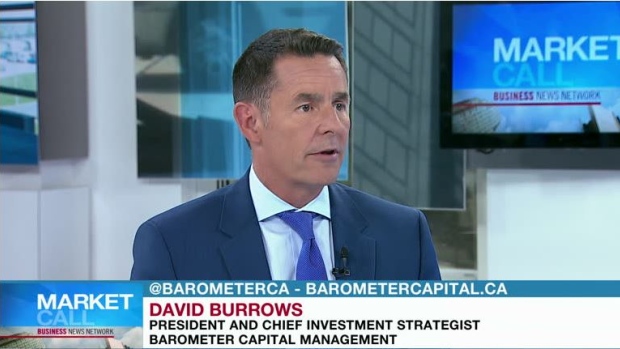
My full interview with David Burrows of Barometer Capital originally appeared in my national bestselling book, Market Masters, which is available at Chapters, Indigo, and Coles as well as Costco and Amazon.ca.
***
Is that a bird? Is that a plane? No, that’s David Burrows in his helicopter, flying high in the sky, scouring for opportunities in the markets. David may not actually be in the sky, but he is not a bottom-up investor. Which means, in this case, that he doesn’t care as much about individual securities as he does about entire countries, markets, and sectors. At Barometer Capital, David and his team continuously scan and rank over 63,000 global
securities in more than 41 industry sectors with their quantitative analytics machine. David mainly invests in ETFs (exchange-traded funds) based on where he identifies opportunities. Barometer Capital was co-founded by David Burrows in 2001, and today remains an independent partner-owned firm. The firm has $3 billion in assets under management. And David tells me during our interview that Barometer Capital’s equity strategy has earned on average 15% annually over 25 years.
David would fit in well with the Manhattan hedge fund manager crowd. He has a crew-cut, dresses very sharply, and talks as if he was top of his class at Toastmasters. He’s also a good teacher, using his MacBook to show me a set of macro charts to walk me through his investment model. I was intrigued by the “breadth model.” As David explained, expanding market breadth signals an increasing amount of investors, money, and volume, into the market. Logic dictates that the more potential investors that there are in the market, among other factors, the greater the upward pressure on prices. David follows shifts of capital into asset classes, then themes, then sectors, and then individual securities. Those shifts of capital cause that breadth expansion (more volume), which then triggers multiple expansion (higher prices). In other words, for David, the trend is his friend.
There was a pause in our interview when Greg Guichon, chairman of Barometer Capital, poked his head into the room and asked to talk privately with David. While I waited for David to return, I glanced outside the meeting room and into the open office and that’s when I grasped the ingenuity of the Barometer Capital floor space, which is a mini–trading floor. All 10 employees had dual monitors set up with Bloomberg on one screen and MS Office on the other. BNN was playing on a large TV screen hanging over the office space. The BNN host had started to talk about the continued slide in oil prices when David returned to the meeting room to
continue our conversation.
1) “What moves share prices? One factor of course is at the company level. But 80% of returns come from the impact of capital inflows — breadth expansion (more volume) — into an asset class. That’s when multiple expansion (higher prices) or re-valuation starts.”
2) “You can capitalize on multiple expansion in three areas. First, get to the right asset class. Second, find the right themes and sectors within that asset class. And third, find securities within that universe where companies are changing for the better.”
3) “My focus is on the 80% of the return that comes from getting into the right neighbourhood.”
4) “Capital flows are always moving, and so we move on to the next opportunity, too.”
5) “The big issue that investors succumb to is that they have a tendency to look at what has worked in their recent past, which is their recent experience, and then try to figure out how to make money in it again.”
6) “As you go through a down-cycle in the market, everything doesn’t start selling off on day one. The weaklings sell off in the beginning. But as the sell-off picks up steam, more securities are impacted, until late in the decline where almost nothing’s performing well in the market.”
7) “When the most aggressive folks start to re-allocate to that asset class, theme, or sector, they don’t want to buy ‘Moose Pasture Mines’; they want to buy the securities that they’re most confident in.”
8) “You don’t need to be first. You can wait until multiple expansion begins before you invest in that area.”
9) “I use something called point-and-figure price charts. They’re quantitative in nature. Higher highs and higher lows — that’s an uptrend, and lower highs and lower lows — that’s a downtrend.”
10) “There’s no bear market in history that happened while breadth was expanding.”
11) “I can go back to the 1950s and see that there’s no significant bull market that ever ended before 70 or 80% of stocks participated in an advance. In the NYSE, today, we’re sitting at only about 60% participation.”
12) “We believe ultimately the market gets it right. So forget about what you think should happen . . . No matter how smart you are, sooner or later you will get put in the ditch.”
13) “If the fundamental picture is doing this but the price behaviour is that, it’s not of interest. We want both — one confirming the other.”
14) “We are not ever looking for a ‘broken getting fixed’ security. We are looking for a ‘good getting better’ security.”
15) “When we start to see deterioration in breadth, or volume, whether or not the fundamental data’s still great, it’s time for us to start to reduce our weight.”
16) “We run stops on all of our positions. If something stops working, and it hits our stock, we’re gone.”
17) “In a bull market, investors say, ‘Earnings are growing at 6%, so how can the market be going up 15%? That’s irrational.’ Well, that’s multiple expansion. You want to stay in a position so long as the multiple grows and as long as the earnings grow.”
18) “Once you end up in a bull market, everyone’s scared because of the previous bear market; they want to take profits off the table as soon as things start to work.”
19) “In any transition there’s a period of higher volatility where the buyers and sellers battle it out until one side wins and you either transition higher or lower.”
20) “One should understand what is happening. Don’t try to justify what you think should happen.”
21) “Our job is to make sure we get the best inventory we could have, and the most important job of an inventory manager is to know when something isn’t attractive to mark it down.”
Robin Speziale is the national bestselling author of Market Masters, which is available at Chapters, Indigo, and Coles as well as Costco and Amazon.ca. He lives in Toronto, Ontario. Learn more about Market Masters.
Become a Patron Now to Access My Exclusive Content – Top Performers, Portfolio, Watchlist.
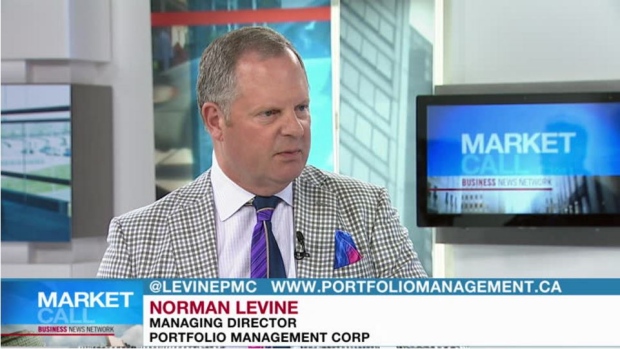
My full interview with Norman Levine of Portfolio Management Corp originally appeared in my national bestselling book, Market Masters, which is available at Chapters, Indigo, and Coles as well as Costco and Amazon.ca.
***
Norman Levine has been around the block. Over his 39 years in the investment industry, he survived the inflationary era in the 1970s, Black Monday in 1987, the technology boom and bust in 2000, the global financial crisis in 2008, and the euro crisis in 2011. Up on Norman’s office wall is an old framed photo of a Bloomberg terminal screen that shows the carnage that occurred on that Bloody Monday, where the Dow Jones Industrial Average dropped 22.61% and the TSX dropped 11.32%. It was an angstfilled, record-breaking day. By the end of October, the TSX had fallen further to post a 22.5% decline. I asked Norman how he reacted on Bloody Monday and over the remainder of that October. His response should be carefully studied, as there’s no doubt that you will experience similar flash crashes in your time as an investor.
It seems that an uncertain market is a profitable market for Norman. You’ll find through numerous examples in the interview — BCE, European stocks, U.S. financials, CCL Industries — that he is an opportunist. Norman sees opportunity before it is obvious to the common investor and captures not only the early leg up but then another string of gains when institutions and retail investors pile into his holdings. Norman swoops in like a hawk as soon as he sees some short-term negative event impact stocks or when he finds stocks that are overlooked and improperly priced. His experience also teaches us that simply buying mispriced stocks will not earn investment glory. One also needs to foresee and then anticipate a catalyst that will propel those stocks out of their low points or holding patterns. Norman is an expert at a challenging skill: finding opportunity.
Every time I see Norman, he’s wearing a new suit with a coordinating tie or bow tie and cufflinks. His closet must be the size of my onebedroom condo. Norman tells me, “It’s important to dress well in this business. It really does make a difference.” He sprinkles in some Yiddish when he explains that his “dad used to dress like a shmatte.” I can’t help but glance around his office; there’s so much history packed within Norman’s four walls, not to mention a mini putter machine on the floor, which most likely serves as a relaxing escape from a tough day in the market. I was drawn into Norman’s storytelling as we spoke. Norman has that classic old-style swagger, combined with a hard gaze when he locks onto your eyes. Norman is a remarkable figure in the Canadian markets — it’s hard to fathom that he was fired from his first job as a broker. It just goes to show that you never know what the future holds.
1) “If the markets were efficient, you wouldn’t have the volatility. There’s emotions. It’s so critical to understand how people think when they invest. They’re not efficient at all.”
2) “Commodity markets move in decade and even multi-decade cycles.”
3) “Nothing goes straight up and straight down in the market. You get these rallies and people get sucked into them. I would rather lose some opportunity on the way up than lose capital on the way down.”
4) “I would rather see commodities stop going down, probably tread water for a long time, or even form a V, and then buy them when they’re starting to go up again.”
5) “Commodity stocks are not value stocks. And they never will be.”
6) “We don’t buy industries, and we don’t buy countries, we buy stocks. And we look all over the world for them.”
7) “We’ve never invested directly in China, [Russia,] or in India, but that’s subject to change in the future. Basically, their security markets are not mature and do not have the safety standards of markets we like to invest in.”
8) “If you’re a genius in our business, you’re right 60% of the time. So you’re wrong 40% if you’re extraordinary. That’s why you’ve got to have a diversified portfolio. Because you’re going to be wrong a lot.”
9) “For retail investors, I would suggest around 20 stocks. And they should be diversified. Too many people don’t diversify.” 10) “We don’t own any [U.S.] ‘money-centre banks.’ We only own regional banks.”
11) “If you own a value stock that doesn’t have a catalyst, it might go down and out . . . It’s always going to be a value stock, and that’s the trap. People get sucked in to that all the time, saying, ‘Well, the stock is cheap.’”
12) “A lot of people are fixated on return, but smart investors are more interested in protecting their capital, and then a return on that.”
13) “You can’t have a target [price]; a lot of people get hurt by targets. If somebody asked me, ‘What are you going to return for me this year or next year or the next five years?’ I’ll respond, ‘I haven’t got a clue.’”
14) “If you want to short stocks, wait until they’re going down. Follow the trend going down.”
15) “‘Never fight the Fed.’ And generally that’s true. If the Fed says that they want to send interest rates down and keep them down, don’t bet against them. The opposite is also true.”
16) “Most people only know a declining interest rate environment. They have no idea what happens when interest rates go up. Once interest rates start going up, money starts to leave the stock market and heads into fixed income.”
17) “Don’t fall in love with what you own. Most investors fall in love with what they own. It’s a stock. It doesn’t know you own it. It doesn’t care that you own it. Don’t be afraid to sell something because of the capital gains tax.”
Robin Speziale is the national bestselling author of Market Masters, which is available at Chapters, Indigo, and Coles as well as Costco and Amazon.ca. He lives in Toronto, Ontario. Learn more about Market Masters.

 Subscribe Now to My FREE Newsletter (Join 5,000+ Subscribers!)
My full interview with Kiki Delaney of Delaney Capital Management originally appeared in my national bestselling book, Market Masters, which is available at Chapters, Indigo, and Coles as well as Costco and Amazon.ca.
***
I was referred to Kiki Delaney through someone I met after my interview with Gaelen Morphet. “Alex, come meet Robin,” said Gaelen to an employee passing by our interview room at the Empire Life offices. “Alex is one of the brightest stars at the firm.” Alex, a relatively junior employee, glowed at the praise. After all, Gaelen is a senior executive. Alex is around the same age as me and we found that we shared the same perspective on the market. So, we decided to meet some weeks later for coffee at Aroma Café in downtown Toronto.
Alex was excited to hear about this book. After reading my list of Market Masters to him I asked Alex, “Am I missing anyone?” to which he said, “Yeah,” and offered a couple of names. Upon further research there on my smartphone, one individual he had mentioned resonated with me: Kiki Delaney. How had I missed Catherine “Kiki” Delaney? Her firm, Delaney Capital Management, boasts $2 billion in assets under management, with a track record that spans more than 20 years. So, my next email, which I hammered out as soon as my meeting with Alex ended, was a direct request to Kiki: “Would you like to be featured in Market Masters? It would be an honour to have you be a part of the project.” I was delighted, and grateful to her and to Alex, when Kiki said yes.
Subscribe Now to My FREE Newsletter (Join 5,000+ Subscribers!)
In the meeting room for our interview, a statue of a defiant bull stood tall over a defensive bear. That statue was especially appropriate since negative news seemed to be hitting the global markets on a daily basis in the first half of 2015 — Greece, China, Oil, the Fed, and so on. I stared at that statue and thought, “Will the bull be too weak to continue to assert its market dominance? Will the bull market finally succumb to the tail risks?” I would soon get reassurance from Kiki that those factors should not matter, that investors must continually find value in the market regardless of whether the bull or the bear reigns supreme.
An important concept that Kiki conveyed is to invest in relative value. For example, while the broader market, industry, or peer group can be overvalued, a particular stock within any of those domains can still be fairly valued or undervalued. Sometimes, the market and stocks within that market are mutually exclusive, in that returns of the market are not always perfectly correlated with all of its constituents. For instance, today, while the broader market can be down, some of your stocks may in fact be up. And that inverse correlation, among other factors, could be because those stocks were relatively cheaper than the broader market at the time, and did not join the market sell-off. Separately, Kiki shares her opinion on which is the more challenging asset class to manage in a portfolio: equity(stocks) or debt (bonds).
Kiki succeeded early on in an industry that was even more maledominated than it is now. As a young adult, she moved to Toronto, where there were more opportunities, not just for women, but in general in the job market. Kiki got her start at Merrill Lynch before moving to Guardian Capital, where she managed equity and fixed-income portfolios. Prior to founding Delaney Capital Management (DCM), Kiki was a partner, executive vice-president, and portfolio manager at Gluskin Sheff + Associates. Interestingly, Martin Braun, whom I also interviewed, filled Kiki’s role as Canadian equity manager at Gluskin Sheff.
With the success of DCM, Kiki became one of the most powerful women on Bay Street. In addition to DCM, Kiki is chancellor of OCAD University, a member of the board of trustees for the Hospital for Sick Children, chair of the investment and pension committee at the Hospital for Sick Children, and a member of the Leadership Council of the Perimeter Institute for Theoretical Physics. And she was appointed a member of the Order of Canada in 2006. The Governor General of Canada wrote this of her: “After a steady rise through major investment houses, she launched her own investment counselling firm, one of the first women in Canada to do so.” Kiki Delaney is a trailblazer.
Subscribe Now to My FREE Newsletter (Join 5,000+ Subscribers!)
1) “Some of the best calls I have made involve avoiding disasters.”
2) “It is easier to pick great companies than to make the macro calls required to manage fixed-income portfolios.”
3) “When we look at a company we compare it to others in the same industry and buy the company that is statistically the cheapest. . . . We want companies that are cheap but also are well managed, have a strong growth profile, have a good product, and where there is the catalyst for change to unlock value.”
4) “If the industry fundamentals are strong and the valuations are appealing, then it makes sense to buy more than one company in the sector.”
5) “We look for catalysts for change . . . a catalyst can be a management change, a new product, an acquisition, or a de-leveraging of the balance sheet.”
6) “The reality is that the Canadian market is two-sided. You have on the one hand resource names, and then on the other hand, you have everything else.”
7) “[On the TSX] there’s also a lot of world-class international companies. Funnily, a lot of them reside in Quebec . . . Quebec companies get positive reinforcement. In many cases, the Caisse de dépôt takes a fairly substantial position in underwriting companies to help them expand through very large acquisitions.”
8) “I think companies should buy their stock back when it is fundamentally cheap. Not every month, or every year. I find it troubling that companies have nothing better to do with their cash.”
9) “[We] invest initially no more than 1% in a small-cap company. If it works, it’s probably really going to work, and it’ll be very beneficial. But if it doesn’t work, it will hurt the portfolio to the extent of its 1% exposure.”
10) “As long as a company continues to represent good value and has decent capital gain potential, we will continue to hold it.”
11) “If you can find a relatively undiscovered theme and marry it with a well-managed and undervalued company, you will probably have a winning combination . . . [for example] companies that make significant and highly accretive acquisitions. This has worked really well in a low-interest environment.”
12) “Declining interest rates are positive. Once interest rates start to go up, they do hit a point where they shut off the economy and that clearly is not good for the stock market.”
13) “You have to read as much as you can. And you have to be as informed as you can be. You don’t want to buy cocktail tips. It doesn’t work.”
Subscribe Now to My FREE Newsletter (Join 5,000+ Subscribers!)
Robin Speziale is the national bestselling author of Market Masters, which is available at Chapters, Indigo, and Coles as well as Costco and Amazon.ca. He lives in Toronto, Ontario. Learn more about Market Masters.


You must be logged in to post a comment.