William O’Neil: CAN SLIM® System

Investing

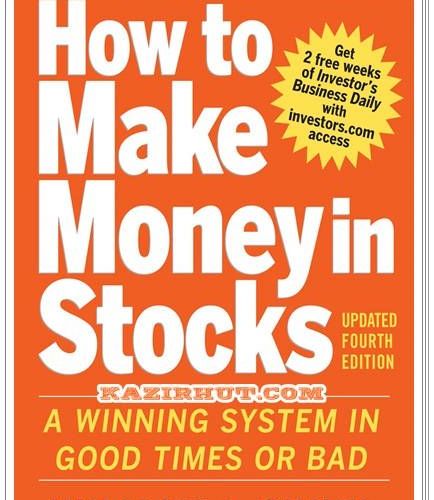
C stands for Current earnings. Per share, current earnings should be up to 25%. Additionally, if earnings are accelerating in recent quarters, this is a positive prognostic sign.

A stands for Annual earnings, which should be up 25% or more in each of the last three years. Annual returns on equity should be 17% or more.

N stands for New product or service, which refers to the idea that a company should have a new basic idea that fuels the earnings growth seen in the first two parts of the mnemonic. This product is what allows the stock to emerge from a proper chart pattern of its past earnings to allow it to continue to grow and achieve a new high for pricing. A notable example of this is Apple Computer’s iPod.

S stands for Supply and demand. An index of a stock’s demand can be seen by the trading volume of the stock, particularly during price increases.

L stands for Leader. O’Neil suggests buying “the leading stock in a leading industry”. This somewhat qualitative measurement can be more objectively measured by the Relative Price Strength Rating (RPSR) of the stock, an index designed to measure the price of stock over the past 12 months in comparison to the rest of the market based on the S&P 500 or the TSX 300 over a set period of time.

I stands for Institutional sponsorship, which refers to the ownership of the stock by mutual funds, particularly in recent quarters. A quantitative measure here is the Accumulation/Distribution Rating, which is a gauge of mutual fund activity in a particular stock.

M stands for Market Direction, which is categorized into three – Market in Confirmed Uptrend, Market Uptrend Under Pressure, and Market in Correction. The S&P 500 and NASDAQ are studied to determine the market direction. During the time of investment, O’Neil prefers investing during times of definite uptrends of these indexes, as three out of four stocks tend to follow the general market pattern.”

Source: https://en.wikipedia.org/wiki/CAN_SLIM#cite_note-IBD-1
MarketMasters

Robin Speziale is the national bestselling author of Market Masters, which is available at Chapters, Indigo, and Coles as well as Costco and Amazon.ca. He lives in Toronto, Ontario. Learn more about Market Masters.
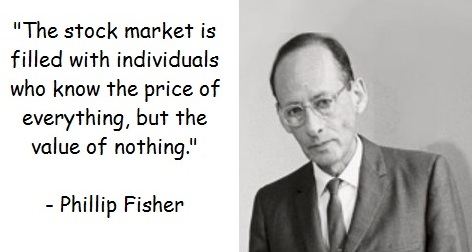
Philip Fisher: The 15 Points to Look for in a Common Stock

Investing

1) Does the company have products or services with sufficient market potential to make possible a sizeable increase in sales for at least several years?

2) Does the management have a determination to continue to develop products or processes that will still further increase total sales potential when the growth potential of currently attractive product lines have largely been exploited?

3) How effective are the company’s research and development efforts in relation to its size?

4) Does the company have an above-average sales organization?

5) Does the company have a worthwhile profit margin?

6) What is the company doing to maintain or improve profit margins?

7) Does the company have outstanding labor and personnel relations?

8) Does the company have outstanding executive relations?

9) Does the company have depth to its management?

10) How good are the company’s cost analysis and accounting controls?

11) Are there other aspects of the business somewhat peculiar to the industry involved that will give the investor important clues as to how the company will be in relation to its competition?

12) Does the company have a short-range or long-range outlook in regard to profits?

13) In the foreseeable future, will the growth of the company require sufficient financing so that the large number of shares then outstanding will largely cancel existing shareholders’ benefit from this anticipated growth?

14) Does the management talk freely to investors about its affairs when things are going well and “clam up” when troubles or disappointments occur?

15) Does the company have a management of unquestioned integrity?

Source: Common Stocks and Uncommon Profits. Philip Fisher.

MarketMasters

Robin Speziale is the national bestselling author of Market Masters, which is available at Chapters, Indigo, and Coles as well as Costco and Amazon.ca. He lives in Toronto, Ontario. Learn more about Market Masters.

Five Reasons to Love Stocks, No Matter What the Market is doing

Investing

[This article was originally printed in the Financial Post]

I was reading a new investment book this week, Market Masters, by Robin Speziale. (Well, I sort of had to read it, since there was a chapter on me in it!) The book is a collection of interviews with successful investors, and makes for a very good read. At the end, Speziale speculates on what actually makes a good investor.

One of his conclusions: good investors simply love the investment game. If you think about it, most successful investors are very, very rich, yet most keep plugging away, trying to find good stocks and get great performance, year after year. They are not doing it for the money. The love of the process, and the passion for investments, means that these portfolio managers are never really ‘working,’ but just doing what they love. And why not? There are many things to love about the investment world, whether you are a professional or not. Here are five of them:

Lazy people can make money, and get annual raises too!

When speaking about investments to young people, I always highlight how investments are one of the only ways a lazy person can make money. Invest in dividend paying companies, and every three months, or every month, another deposit lands in your account. What did you have to do for this free money? Absolutely nothing. What’s more, if you buy the right company, you might get annual raises — dividend increases — as well, all for, again, doing nothing. Lazy long-term investors, in fact, can do very well indeed.

It is always interesting

Even though I have been in the business, like, forever, every day is entertaining. Companies get taken over, have problems, discover oil, make acquisitions, grow earnings, win some contracts and so on. You almost never know what might happen with a company or with the market. As I write this, one of the stocks we follow is halted. News could be good, or could be bad, but either way something is going to happen. It is hard to get that variety in other businesses.

There are tax advantages

Capital gains taxes have the lowest tax rate in Canada, so when you make a good investment and take a profit, you get to keep a lot of it. Dividends in Canada come with the dividend tax credit, making dividends a preferred form of income over salary for most Canadians. So, while others slave away at a salaried job and pay the highest marginal tax rates, many investors are sitting back, earnings gains or dividends and still paying lower tax rates.

Math works in your favour

When you pick a bad stock, you can have a 100 per cent loss, when that stock goes to $0. However, when you pick a great stock, you can have a 1,000 per cent or more gain. You can only lose all of your capital on the bad investment, but can make 10-times or more of your capital when things go well. Thus, one good winner makes up for a few big losers. You really only need one amazing stock pick in your life. Don’t believe me? Take a look at Intuitive Surgical, a $6 stock in 2001, trading at $620 per share today. Or, how about Monster Beverage, trading at 18 cents, split-adjusted, in 2001, and now at $130 per share. That is a 72,122 per cent return in 15 years.

Business can be bad and you can still make lots of money

When you are employed, and your company has a tough year, you might not get a raise, nor a year-end bonus. In the market, though, you can still make money when things are bad. Either through selective stock purchases — not all stocks go down, even in a bad market — or, for those more aggressive, through short selling. You can still profit, even when times are horrible. What other business can say this?

Now, since I have been in the industry so long, I clearly might be biased here. But you have to admit, compared to many industries, investments do have a lot of good qualities.

Peter Hodson, CFA, is CEO of 5i Research Inc., an independent research network providing conflict-free advice to individual investors (www.5iresearch.ca).

[This article was originally printed in the Financial Post]

MarketMasters

Robin Speziale is the national bestselling author of Market Masters, which is available at Chapters, Indigo, and Coles as well as Costco and Amazon.ca. He lives in Toronto, Ontario. Learn more about Market Masters.

6 Best Movies About The Stock Market

Investing

If you have some free time to yourself this long weekend, I would recommend watching some great movies on the financial world / the stock market.

These are my top 6 stock market movies (some are on Netflix):

  1. Wall Street
  2. The Wolf of Wall Street
  3. Inside Job
  4. The Big Short
  5. Margin Call
  6. Boiler Room
  7. (Am I missing any?)

MarketMasters

Robin Speziale is the national bestselling author of Market Masters, which is available at Chapters, Indigo, and Coles as well as Costco and Amazon.ca. He lives in Toronto, Ontario. Learn more about Market Masters.

1st Anniversary

Investing

My book, Market Masters, was released February, 2016, at the bottom of the bear market. It’s now been out in stores and online for one year. And while it wasn’t nominated for the annual National Business Book Award, Market Masters did become both a Globe and Mail and Toronto Star National Bestseller.

Some of you picked up Market Masters on the first day. Others; the first month. And there’s been new readers every day since its release. I want to thank you all for reading my book. I hope it’s given you a bigger edge in the markets.

Now, on Market Masters‘ 1st Year Anniversary, I want to ask you to post a short review on Amazon. My goal is to get to 100 reviews. You can help get it there!

Here’s How:
Post a Review on Amazon.ca  (Canadian readers)
Post a Review on Amazon.com  (U.S. and International readers)

– Robin

P.S. I tweeted the New “Beat The TSX” (BTSX) Model Portfolio for 2017. In 2016, BTSX delivered a 25.4% total return (including dividends), beating the market.

MarketMasters

Robin Speziale is the national bestselling author of Market Masters, which is available at Chapters, Indigo, and Coles as well as Costco and Amazon.ca. He lives in Toronto, Ontario. Learn more about Market Masters.

My 10 Best Stock Performers in 2016

Investing

become_a_patron_button

Become a Patron Now to Access My Exclusive Content – Top Performers, Portfolio, Watchlist.

Some readers email me and ask about my portfolio holdings. I won’t disclose all of my holdings in this newsletter but I’ll share with you my top 10 best performers in 2016 (see below). Ceapro and Canopy Growth Corp (formerly Tweed) were the clear out-performers. But I had my share of losers too. Davids Tea (-44.71%), Ten Peaks Coffee (-38.65%), and Exco Technologies (-36.28%). I don’t know what I was thinking with Davids Tea to be honest…(I’ve since cut my position). I do have another regret from 2016. And it was not investing in Teck Resources, which posted a mega 403.18% return, making it the best performer on the TSX in 2016. Overall, my portfolio beat all three indices that I track: S&P/TSX, S&P 500, and DJIA. Do you own any of these stocks?

Company Ticker Return
CEAPRO CZO 348.72%
CANOPY GROWTH CORPORATION CGC 259.27%
SAVARIA CORPORATION SIS 97.28%
ANDREW PELLER LIMITED ADW.A 71.29%
SLEEP COUNTRY ZZZ 66.93%
TUCOWS TC 57.64%
NINTENDO NTDOY 56.03%
MTY FOOD GROUP MTY 55.90%
NEULION NLN 53.32%
PACIFIC INSIGHT ELECTRONICS PIH 49.70%

P.S. Bill Ackman initiated two new (undisclosed) positions in his Pershing Square Hedge Fund, representing 13% of committed capital. New Position 1: 4% weight. New Position 2: 9% weight. Bill’s in recovery mode, as his fund was down -20.5% in 2015 and -13.5% in 2016 (net returns). Based on my interview with Bill in my book, Market Masters, he’s likely to have invested in North American Companies, with market caps > $15 billion. I predict that Pershing Square will post a positive net return this year. Read more about Bill Ackman’s new positions here.

MarketMasters

Robin Speziale is the national bestselling author of Market Masters, which is available at Chapters, Indigo, and Coles as well as Costco and Amazon.ca. He lives in Toronto, Ontario. Learn more about Market Masters.

Keynesian Beauty Contest

Investing

become_a_patron_button

Become a Patron Now to Access My Exclusive Content – Top Performers, Portfolio, Watchlist.

I was at a party over the holidays and made a bet with an acquaintance who works in the investment industry. It started when I asked him, “What are your top picks for 2017”? He proceeded to list the stocks that he believed would outperform the market. But then I stopped him half-way at “Visa”. I said, “I’ll bet you that MasterCard will outperform Visa in 2017”. Just friendly competition. After all, we were at a party (drinks were flowing). He replied, “$100 bucks it won’t!”. So, at the end of 2017, we’ll both pull up charts of MasterCard and Visa and see who wins the $100 bet. You see, I chose MasterCard based on my past research into both companies; their financials/key metrics, current valuations, and projections. In 2016, MasterCard (+6%) beat Visa (+0.6%), but both stocks under-performed the S&P 500 (+9.5%). Year-to-date in 2017, MasterCard and Visa are neck-and-neck.

However, the morning after the party, I thought about the quote from John Maynard Keynes, explaining the concept of the “Keynesian Beauty Contest”, that I included at the beginning of my book, Market Masters:

“It is not a case of choosing those [faces] that, to the best of one’s judgment, are really the prettiest, nor even those that average opinion genuinely thinks the prettiest. We have reached the third degree where we devote our intelligences to anticipating what average opinion expects the average opinion to be. And there are some, I believe, who practice the fourth, fifth and higher degrees.” (Keynes, General Theory of Employment, Interest and Money, 1936).

So, in other words, I was contemplating whether I should have instead placed my bet on the stock (Visa or MasterCard) based on what others think that others think are ‘prettiest’ (i.e., most likely to outperform) – “Third Degree Thinking”.

Robert J. Shiller wrote an article in the New York Times (2011), further exploring the Keynesian Beauty Contest concept:

“The best strategy, Keynes noted, isn’t to pick the faces that are your personal favorites. It is to select those that you think others will think prettiest. Better yet, he said, move to the “third degree” and pick the faces you think that others think that still others think are prettiest. Similarly in speculative markets, he said, you win not by picking the soundest investment, but by picking the investment that others, who are playing the same game, will soon bid up higher.”

Shiller continues by arguing:

“When you hear a conversation among professional investors — including those who manage money for big institutions like university endowments and pension funds — it often sounds as if they are engaged in just this kind of guesswork. You wonder how many people are actually basing their decisions on what is taught in business school: calculating an optimal portfolio based on a rational statistical analysis of fundamental economic data.”

What do you think about the Keynesian Beauty Contest?

MarketMasters

Robin Speziale is the national bestselling author of Market Masters, which is available at Chapters, Indigo, and Coles as well as Costco and Amazon.ca. He lives in Toronto, Ontario. Learn more about Market Masters.

The Stock Tip

Investing

[This was originally sent to my newsletter subscribers on December 24, 2016]

The holiday season is almost here. And what better time to catch up on some books you’ve wanted to read all year, or watch some movies or TV shows from past and present. My tradition is to watch National Lampoon’s Christmas Vacation. That movie never gets old for me. It’s such a dysfunctional Christmas for the Griswold family.

I’m also a Seinfeld fan, and while it’s not a Christmas episode, I do recommend that you (re)watch “The Stock Tip”, which is the fifth episode of the first season of Seinfeld. In that episode George Costanza tells Jerry Seinfeld and Elaine Benes that a friend of a friend of his has given him a stock tip, and he encourages them to invest in it too. Jerry does so, but as soon as he does, the value of his stock falls. I like the episode because I think we’ve all been there, one way or another, and lived to regret it. Over the weekend, I was talking with a friend, who runs one of the great (and often times hilarious) financial blogs in Canada (http://dontfuckwithdonville.blogspot.ca) and we both agreed that conducting ones own independent research is essential in the stock picking process. Going on just a stock tip is a bad idea. Anyway, it’s a funny episode, and I think you’ll enjoy it over rum n’ egg nog or whatever’s your holiday drink.

I also want to let you know that this month I donated $1,000 to the SickKids Foundation and that next year I’ll be writing another cheque, as I’ve committed to them a portion of my own royalties for the lifetime of sales from Market Masters.

Merry Christmas, Happy Holidays, and Happy Festivus!!

MarketMasters

Robin Speziale is the national bestselling author of Market Masters, which is available at Chapters, Indigo, and Coles as well as Costco and Amazon.ca. He lives in Toronto, Ontario. Learn more about Market Masters.

The 30 Super Stocks of the Past 30 Years

Investing

Post - CC

become_a_patron_button

SubscribeSubscribe Now to My Newsletter (Join 3,500 Subscribers!)

When I interviewed Canada’s Top Growth Investors (Jason Donville, Martin Braun, Peter Hodson, Martin Ferguson, and Ryaz Shariff) for my National Bestselling book, Market Masters, I learned from them how they went about discovering high-growth stocks. The common characteristics were: small/mid-cap, low prices, low/ or no dividend, mostly knowledge-based industries (e.g. technology, healthcare, consulting, etc.), new products/services, intelligent capital allocators as managers, and high rates of growth in book value per share, earnings per share, and free cash flow per share, as well as high returns on capital, all combined with durable competitive advantages.

As an example, Jason Donville’s investment in Constellation Software is a 30-bagger (i.e., a $1,000 investment turned into $30,000). There’s more examples in my book.

And when we talk about “Super Stocks”, the first American fund manager to come to mind is Peter Lynch. Mr. Lynch, who ran the Magellan fund at Fidelity from 1977 until 1990, achieved a 29.2% compound annual return. Remarkably, during his tenure at Fidelity, Lynch invested in more than a hundred “tenbagger” stocks (i.e., $1,000 turns into $10,000), including Fannie Mae, Ford Motor, Philip Morris International, Taco Bell, Dunkin’ Donuts, L’Eggs, and General Electric

“These are among my favorite investments: small, aggressive new enterprises that grow at 20 to 25 percent a year. If you choose wisely, this is the land of the 10- to 40-baggers, and even the 200-baggers…” — Peter Lynch

I’ve posted for you below the 30 best-performing U.S. super stocks of the past 30 years. There might be some surprises in the list. For example, The Home Depot (#2 position) has achieved a total cumulative return of 67,795%. And you might own some of these stocks in your portfolio today. But remember that while these super stocks are now all mature large-cap companies, at one point in time they were small/mid cap stocks. The question is, which stocks today will turn out to be the top performing stocks in the next 30 years?  Email me your predictions.

Sources: WSJ. FactSet; Windhorse Capital Management

MarketMasters

Robin Speziale is the national bestselling author of Market Masters, which is available at Chapters, Indigo, and Coles as well as Costco and Amazon.ca. He lives in Toronto, Ontario. Learn more about Market Masters.

The Best-Kept Secrets of Canada’s Smartest Investors; Market Masters

Investing

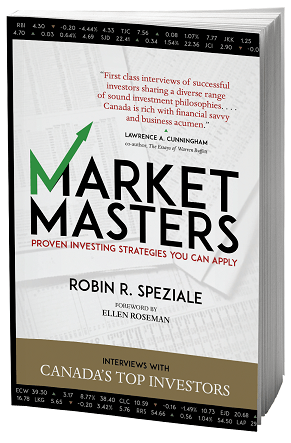
There is nothing like Market Masters for the Canadian “Do it Yourself” (DIY) investor. Before I wrote the book, I would browse the Business / Investing bookshelves at my local Indigo, Chapters, and Coles book stores and only find investing books written by Americans for Americans. Sure, there are lots of Canadian books on personal finance, budgeting, saving, how to get started investing, mutual funds, etc. but those do not count. Especially any book that promises “sleep easy investing”… (*yawn*) or that teaches “investing for dummies”. I’m talking about Canadian books on good old stock picking. There was nothing.

That’s why I wrote Market Masters.

I wanted to create a go-to manual for Canadian DIY investors, featuring the top investors from across the country, their stock picking strategies, spanning different investing styles, and packing it all into 600 pages.

So, I started on the book-writing journey. I wrote the first draft of Market Masters in 2015, drawing material from my interviews with 28 top Canadian investors, and then shopping the manuscript around to ~50 publishers. They all rejected Market Masters. Most rejection emails were automated. But some were typed up by someone at the respective publishing house. For example, one editor flat out said, “Your book won’t sell”. Another explained that “People would rather read this type of content in magazines”. It wasn’t until I sent the manuscript to ECW Press that Market Masters found a home. The publisher’s founder, Jack David, saw the potential in Market Masters. He believed in me, my book, and the value it would bring to DIY investors across the country. There truly wasn’t anything like it. Fast forward to today, Market Masters was released nationwide, in stores and online, in February ’16, and then two months later, became both a Globe and Mail and Toronto Star National Bestseller. It’s been read by thousands of DIY investors across the country. And it’s quickly becoming one of the most popular Canadian investing books of all time.

Here’s what one reader said about Market Masters: “While America has a healthy supply of financial authors, Canada’s under covered market is lucky to have someone like Robin Speziale. Just as Jack Schwager authored multiple editions in his Market Wizard series, so too should Robin with a Market Masters series”.  Another reader said: “This book is the best investment I ever made! I am on my second reading. Lots of great ideas concerning how to invest in the market. Diverse opinions and lots of examples. It was interesting to read how these Marketing Masters go about choosing the stocks they do.”

Since the release of Market Masters, there’s been lots written about the book, including Will Ashworth’s (Motley Fool) wonderful write-ups of some of the top investors featured in my book. Will took a liking to Market Masters after picking it up from his local library. In his articles, he summarizes his favourite investors’ concepts and then in some cases makes stock recommendations of his own based on their investment frameworks.

Check out Will Ashworth’s articles:

I hope that you enjoy Market Masters. I think you’ll gain an edge in the market after you read it if you haven’t done so already. Before you purchase the book you can read a sample here for free.

MarketMasters

Robin Speziale is the national bestselling author of Market Masters, which is available at Chapters, Indigo, and Coles as well as Costco and Amazon.ca. He lives in Toronto, Ontario. Learn more about Market Masters.