My Interview with Francis Chou

Investing

Post - CC

SubscribeSubscribe Now to My FREE Newsletter (Join 5,000+ Subscribers!)
My interview with Francis Chou of Chou Associates originally appeared in my national bestselling book, Market Masters, which is available at Chapters, Indigo, and Coles as well as Costco and Amazon.ca.

***

Francis Chou is arguably the only staunch Graham-and-Dodd value investor in Canada today.  I say “staunch” because both the concept  and application of value investing have become diluted over the years since Benjamin Graham fathered the philosophy in 1949’s The Intelligent Investor. Benjamin Graham would seek out and buy a dollar’s worth of tangible assets for 50 cents. Value investing has evolved, though, because tangible assets are not as prevalent in companies today as they were in  the decades from 1890 to 1980, when industrial, transportation, chemical, steel, textile, and oil and gas companies represented the majority of the stock market.

Today, an investor cannot simply “buy a dollar’s worth of assets for 50 cents,” since most companies that make up the stock market do not consist entirely of tangible assets, but rather, to a greater extent, intangible assets. Intangible assets include — but are not limited to — trademarks, copyrights, patents, and brands. Notable examples of predominant intangible companies are Google, Apple, or Microsoft. Success as a Graham-style value investor in today’s market is limited because intangible assets do not hold the same value nor do they produce the same predictable returns as tangible assets. For example, Graham could quite easily and confidently calculate the liquidation value of a steel manufacturer’s machinery and equipment based on readily available market prices, as one key input to determine the worth of that company. From there, he would invest in that steel manufacturer if, say, its current assets exceeded its total liabilities (net current asset value). But how do you calculate Microsoft’s worth when intangible assets make up the majority of its business? Think about it, the value of intangible assets can be transitory in that they often do not stand the test of time from the effects of innovation or competition. Even Benjamin Graham, late in his career, declared, “I am no longer an advocate of elaborate techniques of security analysis in order to find superior value opportunities. This was a rewarding activity, say, 40 years ago, when our textbook Graham and Dodd was first published, but the situation has changed a great deal since then.”

Given today’s reality, Francis Chou has still been able to successfully apply the same Graham-and-Dodd value investing principle to his security selection in both tangible- and intangible-asset-based companies. Using   as an example Warren Buffett, who went from being a staunch Graham value disciple to more of a growth at a reasonable price investor, I asked Francis whether he’s ever felt the need to change, to which he replied, “As my knowledge of businesses has grown, I’ve bought good companies as well as mediocre companies. I’m all over the place — wherever I can find bargains.” While deep-value investing represents the core of Francis’s philosophy, he’s complemented his funds with other securities, ones that do not fit into a “deep value” category.

Francis was a 25-year-old repairman for Bell Canada when he pooled $51,000 from himself and six coworkers  to  start  an  investment  club.  That investment club would eventually blossom into Chou Associates Management Inc., which now has around $1 billion of assets under management. The flagship Chou Associates Fund has boasted a long-running and consistent track record since its inception in 1986. Francis sent me Bloomberg screenshots of the Chou Associates Fund’s 15- and 20-year annual com- pound returns. Fifteen-year compound annual return: 11.69% versus S&P 500’s 4.23%.  Twenty-year compound annual  return:  13.19%  versus  S&P 500’s 9.81%.

SubscribeSubscribe Now to My FREE Newsletter (Join 5,000+ Subscribers!)

Both Bloomberg screens were fascinating. The 20-year chart showed the Chou Associates Fund trailing the S&P 500 from 1995 to 2001, during the technology bubble, then vastly outpacing it from 2001 to 2015. Value investing won. Morningstar has shown that the Chou Associates Fund   has achieved the highest return of all Canadian mutual funds between 1986 and 2015. Amazingly, Francis achieved the highest returns over this long period with one of the lowest standard deviations in the industry, meaning that his fund experienced only minor volatility or ups and downs. Therefore, the Chou Associates Fund actually ranks the highest according to the Sharpe ratio of portfolio risk-adjusted returns. Using his fund as an example, Francis will often say that the Modern Portfolio Theory (MPT)  is bunk. “MPT says that to get high returns, your standard deviation has to be higher; however a positive correlation between risk and return is not found here [in my funds].”

Francis’s was the most challenging interview to secure for this book. It took a letter, multiple phone calls, and multiple emails to both him and his assistant to finally schedule our talk. Francis told me, “You can get all of this information from my annual report” or “Go use what’s been written on me online.” However, I pleaded with Francis that those resources would not suffice, as I needed to produce an in-depth, informal, and entertaining interview. Finally, I got the interview. And trust me, it  was worth it.

Francis’s office is located north of Toronto, far removed from Bay Street. It’s just him and his assistant, Stephanie, who work in the office, an office so spare that you could probably fit everything in it into one box. Francis is definitely not an accumulator of things, and he is the embodiment of a successful value investor. This tells you that all you really need to invest is a computer, account, and good ideas.

There is a tinge of sarcastic humor to some of what Francis says.  At times, you’ll need to read between the lines, and his humor may not always come through on the first read. Also, occasionally during our interview, Francis would expect me to answer some of his questions. He asked me, “What’s the most important thing to check in the bank?” to which I incorrectly answered, “ROE.” He turned me, the interviewer, into the interviewee. To find out what I should have said, and to learn from a value investing master, you will have to read the interview.

SubscribeSubscribe Now to My FREE Newsletter (Join 5,000+ Subscribers!)

Pre-Interview Lessons

Bargain: a term usually used by value investors to denote a value stock.

Business Moat: the illustration of competitive advantage, which is usually created by strong brands, unique assets, long-term    contracts,

market position, or some combination of all of these factors.

Dollar-Cost Averaging: when investors continue to put money into      a stock while its price on the market declines, either to reduce the average purchase price (and limit their loss), and/or to buy more when it’s cheaper, signifying a value stock opportunity.

Intangibles: non-physical assets, such as brand, that cannot be easily or accurately quantified by accountants and can be subject to depreciation- based changes in perception alone in some cases, or write-downs on erroneous acquisitions (i.e., “Goodwill”) from the past that did not realize an ample return.

Modern Portfolio Theory (MPT): a systematic approach to portfolio diversification based on asset class allocation (e.g., bonds, stocks, etc.), that seeks to maximize return for a given amount of risk in one’s port- folio.

Quantitative Easing (QE): when a central bank (e.g., U.S. Federal Reserve) creates new money to buy financial assets, most commonly bonds, in order to influence higher private sector spending and to meet the designated inflation target during recessions or downturns in the economy.

Valuation: the worth of a company or asset.

SubscribeSubscribe Now to My FREE Newsletter (Join 5,000+ Subscribers!)

Francis Chou Interview

How many clients are currently invested in your funds?

It’s hard to say for sure, but I assume in the area of one hundred thousand accounts.

You manage about $1 billion in assets. Is that in total, or just in the Chou Associates Fund?

That’s in total, including the Chou America Mutual Funds.

How much assets under management did you start with at your firm?

Back on July 1, 1981, I started with $51,000 when I was at Bell Canada. That’s phenomenal growth. You came to Canada for work. You were actually born and raised in India, is that correct?

Yes, in a city called Allahabad in India. But my parents moved to India from China.

Why did they move to India?

My dad got a job as a university professor, teaching history, philosophy, Chinese history, and Chinese language.

Did your parents influence you early on to invest in the market?

No, my dad died when I was seven years old.

I am sorry to hear that. When did you first become interested in the mar- kets? Was it once you moved to Canada?

I came to Canada in 1976. I became interested in the markets shortly thereafter, probably around 1979.

What was the spark that got you interested in the markets?

Buying bargains, which I was doing all my life while I was in India. After my dad died when I was seven years old I started to do most of the shopping for the family. In India the shopping is very different than it is here. If you go to Loblaws, the price of everything is marked, so you just pick whatever you want, pay at the cashier, and then off you go. In India, you have to haggle for everything. But haggling is not that simple. Before you can haggle, you first have to go to several vendors to determine the quality, and then compare the prices, so that you can buy the best quality at the cheapest price.

I can see the bridge — you buy bargains in the market, too.

That’s  correct.  So,  in  a  way,  I  was  doing  the  same  thing  in  India. Everything you buy, whether it’s milk, meat, vegetables, or whatever else there — it was my job to make sure I was paying the lowest price for the best quality.

And then you were introduced to The Intelligent Investor, and value investing, which solidified your investment strategy.

Yes, I read something, most probably in the Financial Post in    1979,

saying that the father of value investing was Benjamin Graham. So one thing led to another, and I found my niche, so to speak.

Were you personally buying stocks early on?

No, I did not buy stocks then — I had no money. I was scrambling for a living.

You got a job at Bell Canada, gained some assets, and then decided to start up that investment club, which I believe included five or six of your coworkers?

Yes, there were six.

Where are those six coworkers now?

Some have died. That was a long time ago — 1981, which was 34 years ago. While some former coworkers have died, others are alive, and worth a lot of money.

The ones who are still alive — how wealthy are they now?

One of them who is around my age gave me $80,000 to invest in 1981 and right now he’s worth $5 million. When he gets to the age of 80, if we continue to compound at that same rate, he will be worth close to $60 million. And if he lives to 90 years old, he’ll be worth $200 million, just from that original $80,000, assuming that we can maintain the compound rate we have earned in the past. But even if that original $80,000 investment grows to just $100 million, that is a lot of money for a telephone technician. There are tens of thousands of MBA students graduating every year from elite universities in North America. How many of them can boast about developing a net worth close to $10 million in their lifetimes, let alone $100 million?

He’s financially independent now.

Yes, he doesn’t need anything. There are a few guys like that.

Do you still keep in touch with all of the original investors from your Bell Canada investment club?

Some of them; not all of them.

Did any divest their shares?

Yes. Most probably.

How did you initially turn the club’s $51,000 into $1.5 million? What did you invest in?

The returns were compounding fast. Later on some new money came in and the $51,000 grew.

But do you have examples of some of the early investments that you took on?

Those were some of the best times to invest. You could buy anything and you would probably do well.

Businessweek issued a feature article just before that period. It was entitled “The Death of Equities.” I believe that it was written in 1980. 1979.

Yes, 1979. Their headliner statement was completely wrong. 1981–1982 was the start of a long-term bull market. Do you attribute your early success to that bull market?

No, not at all. Read my annual letter of 1981. My success has nothing

to do with the fact that it was a bull market.

[I did read it. The quote below is from that annual letter.]

Is this the time to invest? Yes, definitely. Stocks, in this doom and gloom environment, are cheap by every historical standard. . . . What I would propose in the future, if the market is more demoralized than what it is now, is that we should open this fund to the public. There is no better time to invest aggressively. Stocks are selling at a substantial discount from book value and even during the Great Depression, the Dow [Dow Jones Industrial Average] did not trade below book value for more than a few months. . . . Companies in the United States are selling at giveaway prices.

Interesting — your foresight was spot on.

So, you cannot say that my success is because of the bull market.

You said the opposite of what the experts said at the time — you said that the stock market was alive, not dead.

That’s right. My 2014 annual letter explains the framework of what I was thinking at that time.

I have been managing money since 1981 and one of the benefits of managing money for so long is that you get exposed to many financial and economic scenarios. When I was first thinking about the current market I couldn’t help recalling what happened over the 15-year period from 1966 to 1981. The Dow hit a high of approximately one thousand in 1966 and for the next 15 years it would approach that level only to recede back again. Inflation, which was subdued in the 1960s, started to go up in the 1970s, the result of printing money in the 1960s to finance the war in Vietnam.

By 1980, the combination of high inflation and low GDP growth was the story of the day. When Volcker was named Chairman of the Federal Reserve board in 1978, his first mandate was to tame inflation. By June 1981 the federal funds rate rose to 20%. Eventually, in June 1982, a highly important economic measure, the prime interest rate, reached 21.5%. The 30-year bond hit a high of 15.2% yield when Volcker put the brakes on money printing. The Dow tumbled, selling at a severe discount to book value.

At the time, I was wondering how much lower the market could go. This is how I looked at the scenario: the interest rate was so high that      I felt it could not remain at the level for any extended period of time without just killing the economy. Volcker’s mandate was to break the back of inflation, and when he did that, interest rates were bound to go lower. Even if they didn’t, the market was incredibly cheap: approximately six times earnings and roughly 6% dividend yield. The Dow had been earning, for a long time, on average, 13% on its equity and there was nothing to suggest that it was not going to earn the same in the   future.

If interest rates went down, the end result would be that the companies would be worth a lot more. The discount rate that used the discount future earning power is somewhat linked to the prevailing long-term interest rate. When companies borrow money, the rate they pay, depending on their credit rating, is benchmarked to the pre- vailing interest rate plus or minus a few points.

The climate for investing in 1980 was one of extreme fear. For example, pension funds, as a group, invested only 9% of net investible assets into equity. In contrast, in 1971, 122% of net funds available were purchased into equities; in other words, they sold bonds to buy more of the equities. Those who wanted to get into the investment field in the late 1970s and early 1980s were considered pariahs at the times, and were to be avoided at all social gatherings as one would avoid the plague.

At that time I was getting totally immersed in the works of Benjamin Graham. I was hunting for every scrap piece of information I could find on Benjamin Graham and Warren Buffett. Although I was new to the investment scene then, the scenario had a smell of true success for any value investor. Not just success but something that would enable you to cook up a grand career.

Okay, you clearly had the correct foresight, and took the right bet on the stock market.

Yes. It was not a speculative bet but a bet based on reason and logic.

You can see how confident I was. I knew my stuff. That’s why I can say without hesitation that my success was not because of the bull market.

So, it’s about making the right call, and then having the conviction to invest. Are you as confident in the market now? Multiples seem high.

Everything is so high. But I wrote about that too in my 2014 annual

report. In the last half I provide a framework where I contrast the cur- rent scenario to the scenario in 1981. Everyone is so bullish but I’m really negative. Look particularly at the last sentence in my 2014 annual report. By contrast, current conditions today make me feel like investors are being set up for a heartbreaking disappointment, especially for the

unwary.

Are lofty valuations in the market today the result of quantitative easing programs around the world?

Yes. A lot of people don’t understand the dangers, so they can see the

bullish side, but not the negative side.

And so, when rates eventually go up, people will cycle out of equities and go into bonds?

Yes, but we don’t know for sure. We only know that the rates can

change in the future. The same thing happened in 1981. I didn’t know the market was going to take off in six months, but I knew you couldn’t get stocks any cheaper than their prices at the time, though all the numbers were indicating that everyone was running away from the stock market. Pension funds were running away from equities and you could see that. So, basically, my success in 1981 wasn’t because I was just there; it was because I understood what was happening.

You had conviction.

I took a stand.

After running the investment club for many years, you joined GW Asset Management. And that’s where you met Prem Watsa.

That’s right. After working seven years at Bell Canada, it was time to leave. I had already delivered some great numbers by 1982. From ’81 to ’82, in a six-month period, do you know how much the TSX dropped?

No.

40%. When I was running the fund, how much do you think my fund dropped?

10%?

5%.

That’s great. I’ve heard that you were the “most talented employee” at GW Asset Management.

No. I don’t know about that.

Whether true or not, why would people say that about you?

Could be just hindsight, because I’m successful now.

How did you meet Prem Watsa at GW Asset Management?

Prem was working there. He had been working at Confederation Life, and then Gardiner Watson wanted someone to run an asset management company as a subsidiary of Gardiner Watson, so that was how Prem landed there in late 1983.

You and Prem have been close since. And if we were to compare the port- folio of Fairfax Financial Holdings to your Chou Associates Fund, there are some commonalities. For example, Resolute Forest Products.

Value funds tend to have a 5% overlap. My funds may have commonalities with the funds of a lot of other value guys.

I would understand that for a stock like Google, but not for a smaller stock like Resolute Forest Products.

Resolute has more than a $1 billion market cap.

Okay, moving on then. Do you work best alone?

Yes, I just work on my own. I’ve been doing it since I started my fund.

It’s just you investing in the funds?

Yes. Normally you need 40 to 80 people, when one has seven funds and $1 billion in assets.

What do you do for the most part on a regular day?

Just read.

What do you read?

All the newspapers, and all the publications such as Newsweek, Forbes, the Economist, as well as trade magazines, politics, scientific journals, and biographies. I read about anything and everything. Nothing is irrelevant. Investing is not done in isolation. When you read about great men and women of the past, it is like having a conversation about world affairs in your living room. It is not only educational but it builds perspective about life and business in general. I have been involved in business and investing for close to 40 years and when you have been doing this for so long you will always encounter situations similar to what these great people have faced in their lives. By reading about them, you know what kind of actions they took and how well it worked for them. You cannot ask for better guidance than that.

Do you take on positions from any of the companies that you read about in the news?

No. My first job is to check whether the company in question meets my investment criteria. It could be a good company, a bad company, or it could be a CRAP. Do you know what CRAP means?

No. Is it an acronym?

It means “cannot realize a profit.”

What do you expect from CRAP companies — that they’ll eventually turn around and generate a profit?

You examine the capital structure first. In terms of priority, you look

at the most senior bonds, down to the most junior bonds, and finally to equities. But sometimes you can buy a senior bond at 40 cents on the dollar and if it goes into bankruptcy you can get 80 cents on a dollar.

Was that why you bought into Sears, which you have a stake in? Was it because of the real estate that may be worth more on the books than what it’s trading at on the market?

Yes, the real estate is worth more than what the stock is trading at on the market.

How do you generate your best investment ideas?

I do screens, read a lot, and talk to other talented portfolio managers to see where they are seeing bargains.

So you have a sounding board.

Before you make a purchase, you should look for investors who are negative on the stock.

You want to test your logic?

Disconfirm your own thesis.

Would you consider yourself a deep-value investor?

Most probably. And that’s how most would label me. But in some ways it’s not really true, because I also buy a lot of good companies.

So, you’re a lot like Warren Buffett then. He went from just picking up cheap “cigar butts” and getting a couple more puffs to investing in quality companies for a fair price, too.

I do the same.

How have you evolved?

As my knowledge of businesses has grown, I’ve bought good companies as well as mediocre companies. I’m all over the place — wherever I can find bargains.

So what’s your portfolio allocation? You mentioned that you primarily buy into CRAP. But how many quality companies do you own?

It depends, based on the time period. In the nineties I had a lot more “good” companies than I do now. To purchase good companies right now you need to pay more than 25 times earnings. That is not cheap. So I just go wherever I can find bargains. For instance, in the years 2000 to 2002, I was basically in distressed bonds. I just go wherever I can find something undervalued.

Where are you finding value now?

There is hardly anything to buy.

So there’s a lot of cash on the sidelines?

Yes, and I think if you break even over the next five years, you will have some of the best numbers five years down the road.

Do your funds experience higher performance than your peers during bad markets?

By and large, I had better performance than other mutual funds in bad times.

How were you investing right before the financial crisis? Did you foresee the crisis?

You should read my 2006 annual report. In it, I warned investors and explained how I was already planning on going into CDSs [Credit Default Swaps]. Here is what I wrote about the stock market, potential banking crisis, and sub-prime mortgages in that report:

According to the Bank for International Settlements, con- tracts outstanding worldwide for derivatives at the end of June 30, 2006 rose to $370 trillion. We are alarmed by the exponential rise in the use of derivatives. No one knows how dangerous these instruments can be. They have not been stress-tested. However we cannot remain complacent. We believe the risk embedded in derivative instruments is pervasive and most likely not limited or localized to a particular industry. Financial institutions are most vulnerable when (not if ) surprises occur — and when they occur they are almost always negative.

As a result, we have not invested heavily in financial institutions although at times their stock prices have come down to buy levels. Some 30 years ago, when an investor looked at a bank, he or she knew what the items on the balance sheet meant. The investor understood what criteria the bankers used to loan out money, how to interpret the loss reserving history, and how to assess the quality and sustainability of revenue streams and expenses of the bank to generate reasonable earnings. In a nutshell, we were able  to appraise  how much the bank was worth based on how efficiently its bankers were utilizing the 3-6-3 rule.

The 3-6-3 rule works like this: the bank pays 3% on savings accounts, loans out money to businesses with solid financials at 6%, and then the banker leaves    the office at 3 p.m. to play golf.

That was 30 years ago and you can see how easy it was to evaluate a bank.

Now, when an investor examines a bank’s financials, he or she is subjected to reams of information and numbers but has no way of ascertaining with a high degree of certainty how solid the assets are, or whether the liabilities are all disclosed, or even  known,  much  less  properly  priced.  As the investor digs deeper into the footnotes, instead of becoming enlightened, more doubts may surface about the true riskiness of the bank’s liabilities. Those liabilities could be securitized, hidden in derivative instruments, or morphed into any number of  other instruments that barely resemble the original   loans.

We wonder whether bankers are using a rule that is as difficult to understand as their derivative instruments. We call it the 1-12-11 rule: namely, the bank pays 1% on checking accounts, loans out money to businesses with weak financials at 12%, and the banker leaves the office at 11 a.m. to play golf with hedge fund and private equity managers where they discuss how to chop and/or bundle the loan portfolios into different tranches and create, out of thin air, new derivative products that are rated triple A (from products that originally were B-rated). These products are then sold to institutions (who may be oblivious of the risk involved) that are reaching for yields.

The above example is written tongue-in-cheek and it is not meant to be entirely representative of what bankers do. It is meant to show just how creative participants have been in producing new derivative products, with little regard for a sound understanding of their leverage and true risk characteristics. We may be witnessing a “tragedy of the commons” where the search for quick individual profits is causing a system-wide increase in risk and reckless behavior.

How did the sub-prime mortgage lenders contribute to the problem?

Some of the greatest excesses of easy credit were committed by sub- prime mortgage lenders. Credit standards were so lax and liberal that homeowners didn’t even need to produce verification of income to be able to borrow up to 100% or more of the appraised value of their houses.

What was your conclusion?

My report concluded as follows:

From these examples, it appears obvious that investors are throwing caution to the wind. Risk is not priced into riskier securities at all. Whenever the majority of investors are purchasing securities at prices that implicitly assume that everything is perfect with the world, an economic dislocation or other shock always seems to appear out of the blue. And when that happens, investors learn, once again, that they ignore risk at their peril. We continue to diligently look for undervalued stocks and will buy them only when they meet our price criteria — in other words, when they are priced for imperfection.

Interesting. Can you expand on Credit Default Swaps?

This is what I wrote on Credit Default Swaps [CDSes] in 2006: In terms of investment ideas in derivatives, we believe that CDSes are selling at prices that are compelling. At recent prices, they offer the cheapest form of insurance against market disruptions. In CDSes, one party sells credit protection and the other party buys credit protection. Put another way, one party is selling insurance and the counterparty is buying insurance against the default of the third party’s debt. The Chou Funds would be interested in buying this type of insurance.

To give you some sense of perspective, in October 2002, the five-year CDS of General Electric Company was quoted at an annual price of 110 basis points. Recently, it was quoted at an annual price of less than eight basis points.

To make money in CDSes, you don’t need a default of the third party’s debt. If there is any hiccup in the economy, the CDS price will rise from these low levels. The negative aspect is that, like insurance, the premium paid for the protection erodes over time and may expire worthless.

Unfortunately I could not get the approval to purchase CDSes for my funds quickly. I was having some problems get- ting regulatory approval, getting comfortable with counter- party risks, and so on.

Let’s focus on your current investment process: do you invest bottom-up?

Yes. Initially I analyze bottom-up and then I go top-down. For example, let us look at the banks. What’s the most important thing to check in the bank?

ROE?

No. It is the loan portfolio, the book of business. You start with the loan portfolio and then you go from there. But most investors invest in terms of premium or discount to book value. That is a serious mistake. Let’s say the year was 2006. You examine the loan portfolio and see all the junk there. As a result, you wouldn’t touch a U.S. bank with a barge pole. The question about loan growth becomes irrelevant then.

So you don’t systematically scan stocks for low book value?

No. I’m a businessman. I have the benefit of having worked in operations. So I have an understanding of business, and not just book value. I bring another element to my analysis.

It’s your wisdom and experience that makes you successful. You don’t indiscriminately scan and invest in stocks.

Exactly.

How do your holdings post such strong returns?

I’m trying to buy 80 cents for 40 cents. It does not matter whether they are good companies, bad companies, or distressed companies.

Then how do you evaluate intrinsic value so that you can buy bargains?

The first thing you have to do in this business is to make sure that your valuation is accurate. That’s how it starts. If you think a stock is worth

$100, you try to buy it at $60. But if your valuation is wrong, and four years down the road it turns out it’s worth only $60, then you won’t make it in this business.

How do you ascertain that your valuation is accurate?

You’re a businessman and you look for these assets. Then you ask, “If I were to buy this company, how much would I pay?”

You also ensure that there’s a catalyst, right?

Buy and wait works most of the time, but a catalyst accelerates the process and generates higher returns.

Have you taken on a position that didn’t work out right away but worked out in the long run?

Oh, yes.

Can you share an example?

Yes, one instance happened two years ago when I bought a stock called Overstock.com that I thought was worth closer to $25. I bought it for Chou Opportunity Fund around $14 and it promptly went down to $7. I bought some more at that price. A bargain at $14 became a super bargain at $7.

Why did you think that it was worth closer to $25?

That was just my valuation. That’s what I thought it was worth based on its inventories, revenues, double-digit percentage growth in revenues, the potential of the business, the website, and a combination of factors that didn’t show up in the operating statement. Eventually, it went up a year later to $34.

Once an investment reaches your target price — in Overstock’s case, $25 — do you start to sell?

Yes, I would start selling then.

And then allocate that capital in other positions?

Yes.

With Overstock, you practiced dollar-cost averaging. It went lower, and you bought more shares.

No, it was not precisely dollar-cost averaging. You don’t automatically buy when it goes down. It all depends on your valuation. In this case, it was still worth $25 after reassessing it after the drop, so at $14, I was getting a 44% discount and at $7, I was getting a 72% discount.

Has there been a time though when you sold out of a stock because it dropped?

No, you don’t sell because of that. But if my revised valuation is $7, I would sell it. It would mean my original valuation of $25 was wrong.

I see. So, if the business deteriorates along with the stock price, then you would sell?

Yes, if I think the valuation is now not $25, then I’ve made a mistake.

A downward revision to $7 would prompt me to sell. The decision is totally based on valuation.

Normally you don’t invest in technology, correct? Overstock is close, but it’s e-commerce.

I shy  away  because  of  obsolescence  and so on. I cannot predict   the

future of  technology, and I don’t know what will happen two years from now where there could and probably would be newer technology.

But you invest in BlackBerry — why is that?

Some of my investment choices like BlackBerry are because their patents are worth so much more than their stock price. For example, I bought some BlackBerry when it was around $7 because I valued the patents at about $13.

I’m interested in your thoughts on the Indian market. You were born there.

Indian people are highly intelligent and highly creative.

I agree — they generally are highly educated.

There’s no reason why Indians shouldn’t flourish in India.

Have you taken on any positions in Indian companies?

At this time, no.

Do you plan to?

We are looking into it.

Which companies would you look at in India?

I would take the same approach as I do here.

But I imagine a lot of them would be startup companies that you’d avoid.

They need to have some history. I am someone who will look at 10-year history, even a 20-year history.

Do you look for consistent earnings?

Yes. I don’t mind even if the revenue decreases as long as management is doing the right thing. I don’t want to chase businesses where management is making decisions that don’t make economic sense.

What about increases in book value. Is that important?

I think increases in intrinsic value are more important than increases in book value.

What’s the difference?

Sustainable earning power, business moats, and competitive advantage relate more closely to intrinsic value and therefore are more important than just increases in book value.

So you also need to understand whether or not a company will have competitive advantage for the long term?

Yes, five years, ten years down the road, if you’re going to go the route of good companies.

How can you predict that?

Well,  with  firms  such  as  Sears  and  BlackBerry,  you  don’t  know. Therefore, you look for asset coverage like real estate or patents. With others, like Coca-Cola, you can predict for sure.

Which companies generally don’t have enduring competitive advantage?

Technology companies for sure. Mining and commodity companies come to mind, too.

Do you have anything else to add?

It’s important to remember that investments are most profitable when the selection process is most businesslike. Therefore, you must have the skill level to evaluate a business. As for assets, evaluate what they are worth, because the accuracy of that valuation will determine how well you perform as an investor. I enjoy doing this. It’s very hard to say but I think the best way to describe it is that I’ve found my calling, which makes it easier and more enjoyable.

Do you have a succession plan in place?

At this time, I don’t. I’m still fairly young. One of the benefits of starting young is that one can have a 30-year record, even 35 like I have, and I can still manage the funds for a while. That is one of the benefits of starting so early.

Have you groomed anybody, though?

At this time, no. Eventually, I will have to. That question will get more pressing as I get older.

Are you considering having your kids enter the business?

I’ll leave it to them to decide. This business of investing and how I do it is very psychological.

By psychological you mean that when you have a conviction you stick to it, right? You don’t sell out based on general market sentiment?

You have to go against the grain. You have to do your own independent work, your own analysis, and you stand on the merits of your own judgments. The stock market will tell you in two years, maybe four years down the road, whether you’ve been accurate or not.

Have your kids shown an interest in the business?

One is seriously interested at this time.

Value Investing Thoughts

What struck me most about Francis was his strong sense of confidence. He is very certain of himself, his performance, and his outlook.

His track record shows that his predictions have come to pass, whether they were good or bad for the markets. In the early eighties he predicted that the future would bring higher equity market prices as rates started to decrease. That’s precisely what happened. Now he warns that an imminent increase in rates would hamper equity markets. Time will tell.

Francis mentioned to me that he personally started buying Fairfax Financial (FFH) stock at $3.25 early on in his career. FFH is now around

$605 per share. You don’t have to do the math to fathom that the return on his investment in Fairfax Financial is mouth-watering. While Francis is no longer on the senior management team at Fairfax Financial, he still considers its founder and CEO, Prem Watsa, a close friend and confidant. I will close this section with Francis Chou’s investment philosophy, as he describes it on his firm’s website:

The investment process followed in selecting equity investments for the funds is a value-oriented approach to investing. This involves a detailed analysis of the strengths of individual companies, with much less emphasis on short- term market factors. Far greater importance is placed upon an assessment of a company’s balance sheet, cash flow characteristics, profitability, industry position, special strengths, future growth potential, and management ability. The level of investments in the company’s securities is generally commensurate with the current price of the company’s securities in relation to its intrinsic value as determined by the above factors. That approach is designed to provide an extra margin of safety, which in turn serves to reduce overall portfolio risk. The manager may decide to maintain a larger portion of the fund’s assets in short-term fixed-income securities during periods of high market valuations and volatility. This temporary departure from the fund’s core investment strategy may be undertaken to protect capital while awaiting more favorable market  conditions.

Says Francis, “We do nothing fancy. We are just looking for undervalued stocks.” Francis provided me with the following information about the three areas on which they focus:

  • Good companies

›    Sustainable earning power (look at owner’s earnings) for the last 10 years, generally not in mining, commodities, or IT

›  Management showing reasonable allocation skill

›   Companies that are not highly leveraged

›     Companies selling for less than 10 times earnings

  • Mediocre companies

›     Liquidation value

›    Potential turnaround situation

›    Sum of the parts valuation

  • CRAP (cannot realize a profit) companies

›   Look at bonds first

›  Start with the most senior bonds in the capital structure

›    Assume it’s going bankrupt

Finally, at a value investing conference, Francis presented this closing advice for the audience:

In conclusion, if you stay patient, buy when it’s cheap, and don’t chase the stock when it runs away from you, there’s no reason for you not to beat the market. The market is there for you to take advantage of, not to let it control you. Have the courage of your conviction, courage of your work, courage of your analysis, and courage of your judgment, and you should beat the market.

Francis Chou Investing Lessons

  • Relating shopping in India to investing: “It was my job to make sure I was paying the lowest price for the best ”
  • “I contrast the current scenario to the scenario in 1981. Everyone is so bullish.”
  • “I didn’t know the market was going to take off in six months [in 1981], but I knew you couldn’t get stocks any cheaper.”
  • “When you read about great men and women of the past, it is like having a conversation about world affairs in your living It is not only educational but it builds perspective about life and business in general.”
  • “My first job is to check whether the company in question meets my investment criteria. It could be a good company, a bad company, or it could be a CRAP [cannot realize a profit].”
  • “I do screens, read a lot, and talk to other talented portfolio managers to see where they are seeing bargains. . . . [And] before you make a purchase, you should look for investors who are negative.
  • “I just go wherever I can find For instance, in the years 2000 to 2002, I was basically in distressed bonds. I just go wherever I can find something undervalued.”
  • “Whenever the majority of investors are purchasing securities at prices that implicitly assume that everything is perfect with the world, an economic dislocation or other shock always seems to appear out of the blue. And when that happens, investors learn, once again, that they ignore risk at their own peril”
  • “We continue to diligently look for undervalued stocks and will buy them only when they meet our price criteria — in other words, when they are priced for imperfection.”
  • “Initially I analyze bottom-up and then I go top-down.”
  • “Most investors invest in terms of premium or discount to book That is a serious mistake. Let’s say the year was 2006. You examine the loan portfolio [of a bank] and see all the junk there. As a result, you wouldn’t touch a U.S. bank with a barge pole.”
  • “I’m trying to buy 80 cents for 40 cents. It does not matter whether they are good companies, bad companies, or distressed”
  • “The first thing you have to do in this business is to make sure that your valuation is accur If your valuation is wrong . . . then you won’t make it in this business.”
  • “You’re a businessman . . . you ask, ‘If I were to buy this company, how much would I pay?’”
  • “I don’t know what will happen two years from now where there could and probably would be newer technology.”
  • “I don’t want to chase businesses where management is making decisions that don’t make economic sense.”
  • “Sustainable earning power, business moats, and competitive advantage relate more closely to intrinsic value and therefore are more important than just increases in book ”
  • “Investments are most profitable when the selection process is most businesslike. Therefore, you must have the skill level to evaluate a business.”
  • “You have to go against the grain. You have to do your own independent work, your own analysis, and you stand on the merits of your own judgments.”

SubscribeSubscribe Now to My FREE Newsletter (Join 5,000+ Subscribers!)

MarketMasters

Robin Speziale is the national bestselling author of Market Masters, which is available at Chapters, Indigo, and Coles as well as Costco and Amazon.ca. He lives in Toronto, Ontario. Learn more about Market Masters.
My Interview with Jason Donville

Investing

Post - CC

SubscribeSubscribe Now to My FREE Newsletter (Join 5,000+ Subscribers!)

My interview with Jason Donville of Donville Kent Asset Management originally appeared in my national bestselling book, Market Masters, which is available at Chapters, Indigo, and Coles as well as Costco and Amazon.ca.

*** Email Me Now for a FREE copy of my new book – Capital Compounders ***

***

Aside from his phenomenal stock- picking prowess, market-crushing returns, and beaming confidence, Jason is built like a truck, a physical asset that perhaps benefits him on the lacrosse field more than it does in the office at Donville Kent Asset Management (DKAM). An avid field lacrosse player, Jason also personally mentored his two sons in the sport, and currently coaches the Edge Lacrosse elite travel team. With no disrespect, though, I’d wager that Jason scores even higher in his hedge fund than he does on the lacrosse field. To say that Jason’s brain trumps his brawn is no small claim, but it is nevertheless true.

DKAM’s flagship Capital Ideas Fund has been the envy of Bay Street. Within  just  seven  years,  the  Capital  Ideas  Fund  has  beaten  the TSX Composite Index by 350% in cumulative gains. That’s 350% in “alpha,” or the amount by which Jason’s performance exceeded the benchmark index. From 2008 to 2015, the fund achieved a whopping 525% in cumulative gains. That’s a 27.9% annualized return since inception. How did Jason not only beat the index but achieve such high alpha? Straight from the Capital Ideas Fund letter:

Through the application of our focused investment strategy, we search for companies that possess high levels of return on equity, reasonable valuations, and positive share price momentum. Portfolio companies typically have a track record of achieving high returns on equity, and are capable of generating high returns on equity for many years without the addition of significant amounts of equity capital other than that which is being generated internally. These companies are run by strong management teams that have a significant ownership stake in the business.

The return on equity (ROE) metric is crucial to Jason’s hedge fund’s success. ROE is not just a figure. It’s an initial hurdle that a company must pass, Jason’s rigorous test (ROE greater or equal to 20%), in order for any security to progress to future stages of analysis. During our interview we discussed everything from Jason’s philosophy, to his process and his strategy, along with the unorthodox way Jason entered the investment world — starting in the navy.

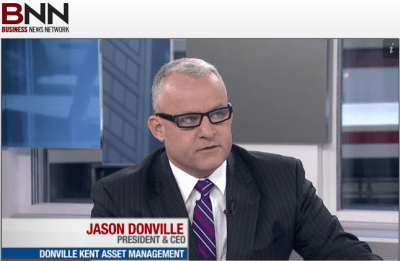
Jason has curly gelled-back silver hair and wears thick, round glasses. On the day we met he was dressed down in jeans and a shirt with rolled-up sleeves. Throughout the interview I noticed that Jason’s brain sometimes works faster than his mouth. From time to time he needs to rewind after he speaks, as though he can’t vocally articulate his thoughts and ideas at the same rate that his brain produces them. His brain is always working at full speed. If his brain was a car, it’d be a Ferrari. Before starting the interview with Jason, I thought, “Jason would be a great guy to have a beer with. He’s a guy’s guy, on and off the lacrosse field and his hedge fund’s trading floor.”

SubscribeSubscribe Now to My FREE Newsletter (Join 5,000+ Subscribers!)

Pre-Interview Lessons

Alpha: the amount by which an investor’s performance exceeds his or her benchmark index.

Broker or Brokerage: an agent who handles the public’s orders to buy and sell securities, commodities, or other property. A commission is generally charged for this service.

Capital Allocation: when management makes investments in a company to improve operations, revenues, and expand product lines, or to make new acquisitions. Successful capital allocation requires an ample return on that investment (return on invested capital, or ROIC).

Fed: The U.S. Federal Reserve, the American central bank that sets monetary and fiscal policy (such as overnight rates and money supply) and motions to control factors such as inflation. Similar to the Central Bank of Canada.

Front-Run: when a broker places a trade based on privileged information before a large client places a trade in order to profit at the outset.

Growth: stocks that have higher-than-average return potential or positive financial changes to a company (e.g., revenue growth).

Management: the salaried team of individuals who manage a company. May or may not be the founders or family owners, and may or may not own a stake in the company.

Porter five forces: a framework containing five “micro environment forces” developed by Michael E. Porter to analyze the level of competition that a company faces within an industry. Those forces — threat of new entrants, bargaining power of suppliers, bargaining power of buyers, threat of substitutes, and industry rivalry — can affect a company’s ability to make a profit.

Turnaround: the outcome by which a fledgling company improves itself to regain and sometimes even surpass its previous success. An example of a turnaround would be Apple in the late nineties to the early 2000s.

SubscribeSubscribe Now to My FREE Newsletter (Join 5,000+ Subscribers!)

Jason Donville Interview:

Where did you grow up in Canada?

I was born in Scarborough but my parents and I moved to Alberta when I was one. My parents were people stereotypically from Scarborough. Neither had graduated from high school. Both of them dropped out in grade 10. They were the lower-class white working poor. That’s what they were and they wanted something better out of life. Alberta was booming, so they went there for opportunity and we ended up staying there. So I actually grew up in Alberta.

My parents struggled for a good chunk of my childhood but my dad  eventually  became  a  tradesman  and  they’ve  done  well  subsequently. My family was very pro-education. That was one of the good things about my childhood. You didn’t want to bring a bad report card home. But nobody in the family had a finance background or worked in a white-collar job. So that’s a not-so-typical hedge fund background.

It’s not typical at all. How did you get interested in the markets?

I had lots of part-time jobs when I was a kid. I was always fascinated by the stock market. In the mid-1970s the province of Alberta decided to privatize the Alberta Energy Company. Any citizen of the province of Alberta could then subscribe for a hundred shares down at the local bank branch. And my parents did that. Soon we started to receive annual reports in the mail from Alberta Energy.  I would track the movement of the share price of Alberta Energy in the paper every day. My parents probably owned $1,000 of stock. So I just found this to be a really fascinating process. But even if you told me when I was 15 that I was going to become a hedge fund manager I would probably be skeptical. It was probably more likely that I was going to become a writer.

A writer?

Being a writer is a thread that weaves through my story.  I had an uncle who was quite well educated. He introduced the International Baccalaureate program to Canada. He used to teach at Pearson College in British Columbia. Pearson is a private school for grades 11 and 12. Kids come from all over the world to attend Pearson College. Anyway, my uncle got the idea of a “renaissance man” in my head. As you know, a renaissance man is someone who is familiar with literature, mathematics, art, physics, and languages. Additionally, around age 16 a certain ambition kicked in. Not suddenly, but it dawned on me that I was a good student and that if I worked hard I would get great results. And then in grade 12 the Royal Military College came on to my radar as a place to go for my undergrad. For me, coming from a poor back- ground, going to RMC where everything was paid for was great. Plus, you spent your summer at sea or on a flight line. There was an incredible amount of adventure.

So how did writing weave into your story?

So I completed an undergraduate degree at RMC in liberal arts. Most of my course work was essays. After I graduated I enlisted in the navy. But before I left, one of my professors who were a retired infantry officer said, “Don, you’re a good writer. You should keep it up because you’ll be valuable.” You see, when you join your ship or your unit in the navy, junior officers are assigned secondary duties. My professor proceeded to say, “Tell them that you want all the secondary duties that involve writing.” So I did that — “Give me anything that involves writing; I’m a good writer,” I told my superior. It was a win-win because then the senior officer knew that he got a junior officer who could write well. There’s just so much administration work in the navy. You could be writing thank-you letters one day and the next day writing a charge report for some guy who got caught with marijuana in his possession. Every day I was just writing, writing, writing. Eventually it got to the point where I was writing for the navy base   newspaper.

And then all of a sudden the admiral’s speech writer was going on maternity leave.  He called my cabin  and  asked,  “Jason,  would you like to come up and work as a speech writer for six to twelve months?” And I said, “Wow, I would love to do that!” I ended up writing one speech that I still have in my possession for the NATO’s First Ministers’ Conference in 1989. After the navy, I enrolled in my MBA at Western University, where the curriculum was essentially all case study. There’s no Q&A. Once again, my writing skills helped me get fairly high grades there because I was a good writer. Two guys can express the same idea but the stronger writer will get the higher grade. After graduation, I bought a one-way ticket to Asia. There, I marketed myself as a good English writer with a good education but no industry background.

Singapore, right?

Yeah, so I got to Singapore in 1992 and just basically started to cold-call firms for a job. At that time, though, a lot of these Singaporean firms had Singapore or Asian analysts but English was either not their first language or wasn’t a strong first language. They grew up in a bilingual or trilingual environment. So even if they went to a Singaporean university or they went to a UK university, their English and their writing skills weren’t flawless. I would do my own analytical work but I could also help to clean up the other analysts’ reports. Once again, writing became a competitive advantage for me. Also, as is the same today, I had a quirky flair, or style, to my material. You’ll see it in my DKAM ROE Reporter newsletters. They’re not your typical newsletters. There’s storytelling. It’s like a TED talk.

Your newsletters are fun to read.

I’ve learned to tailor my writing to my audience. Finance can be dry but if you turn it into a story and if it’s a bit self-deprecating, but still has a message, people start to bond with you. They see through the analytical work and realize that there’s a decent person on the other side. Trust comes from that.

Strong writing skills have helped you throughout your entire life, in pretty much any endeavor.

Yeah, and when you’re working as an analyst, you’re writing some-

thing every day. So you’re like a journalist. You’re looking for journalistic scoops. You’re writing for deadlines all the time; you have time pressures. You don’t quite have the same level of fact-checking standards that a journalist has, but nonetheless if you put out some- thing that’s factually wrong, within an hour you will receive an email: “Didn’t the guy read the annual report?”

You eventually returned to Canada. Did you immediately move to Toronto to start your hedge fund, DKAM?

No, I came back to Calgary. Because that was my hometown.  And part of it was because we were coming back for quality of life issues. Particularly on my wife’s side. I ended up being there for three years and started a small brokerage firm, Lightyear Capital. The problem was that as a non-oil-and-gas guy it was really hard to do what I liked.

It must have been a challenge to raise capital in Alberta. Everyone there invests in oil and gas for the most part.

Yeah,  and  it  just  wasn’t  the  right  location for  what  I  was  doing.  I needed to be in a headquarter town. Even if I was in the U.S., I couldn’t do what I do in Kansas City or in Minneapolis. I had to either be in Toronto or in New York City or in Hong Kong or in Tokyo. I couldn’t be in a regional city. If I was an oil-and-gas guy I certainly could be in Houston or in Calgary. But for the kind of companies I was interested in, I had to be in a city like Toronto.

So you closed Lightyear Capital?

I sold out to my partners and moved to Toronto, where I got a job with Sprott fairly quickly.

What was it like to work with Eric Sprott?

At that time, there was Sprott Asset Management, fund management, and then there was Cormack, the brokerage. Eric moved over to the asset management business and I was on the brokerage side. However, I would see Eric across the hallway. Eric knew me but this was 2002– 2003, which was when I was in the process to become a financial services specialist. However, Eric saw all financial services companies as a house of cards. He was friendly to me but he would say, “I’m really not interested in anything that you’re covering, with the only exception being Canadian Western Bank,” which is in Edmonton. Because, “when all the banks in the world fail, natural resources go through the roof, and CWB will be the last bank standing.”

Do you think he’s still sticking with that “the world is going to implode” macro thesis today?

I don’t know, because I haven’t spoken to Eric much in the last five years, other than just social pleasantries. I feel bad for those guys. First of all, everybody loves Eric Sprott because he treats everybody so well. Secondly, he had so many things right. However, you can get the macro thesis right but still not get the stock picks right. As far as the 2008–2009 crisis goes, he didn’t perform any better than anybody else. And then, once the financial crisis was over, he probably stayed on the natural resource trade too long, in my opinion. He became too fixated on gold and natural resources.

And was that the inflection point in the markets — the financial crisis — when you started up your own hedge fund, Donville Kent Asset Management?

Yes.

But why did you ultimately leave Sprott?

I was at that age where having a 25-year-old salesman tell a 40-year-old analyst to put his heels together was getting tedious. That was happening all the time. As an analyst, you were always junior no matter how many years you had been an analyst. The other issue would come up any time I made a PA trade. PA means personal account. I’ll give you an idea of the trading floor. There were about 20 traders and 15 salesman. So 30  or 40 guys in the room. Anyway, one day, the head trader got a ticket  for somebody’s $500,000 purchase of MTY Food Group shares. It said “pro,” which meant that it was a staff member’s trade. The head trader turned to the sales desk and yelled, “Who is buying half a million shares in MTY Food Group? I’ve never even heard of this company before! What do I need to know about this stock?”

All of the salesmen were perplexed. “We have no clue what you’re talking about,” they said. The head trader then looked at the employee number on the trade ticket and shouted, “It’s Donville”He called me out and said, “If you are buying this kind of stock, why the don’t our clients have the first kick at it?” I responded, “I’m a financial services analyst. This is a quick-serve restaurant company.” He barked back, “I don’t give a flying what it is. If it’s good enough for you to buy in this kind of size then I expect that there should be a research report on this —” Blah blah blah. And then he looked me square in the eyes and said, “Do you just sit here and spend all of  your time working on your PA and don’t write any research?”

That doesn’t sound like fun.

Yeah. At that time I was by far the most prolific research analyst there. You’ve seen all of the awards that I’ve won as best analyst and stuff like that. They acted on competitive jealousy. When my PA stocks would go up 50% they just got more jealous. So eventually my personal investing got harder to do inside of the brokerage. The expectation was that the analyst would just write research and never actually invest their own money. Which is crazy, because the analysts who become good stock-pickers are actually your most valuable resources. So, for me, it was time to move on. I initially left to go to Home Capital to start their hedge fund. I was there for about five months but then the financial crisis storm clouds started to form and so we just agreed that it wasn’t going to work. At that point, there were some legal costs that had been about $140,000. I just wrote Home Capital a cheque for $140,000 to pay for all the costs.

Interesting. You must have more fans across the country.

I used to be really good at responding to emails. People would email, “Hey, do you still like X stock?” I’d respond, “Yeah, I think it’s still a great company.” And then that person would post my comment on the Stockhouse message board — “I just talked to Donville and here’s what he said . . .”

So now I’m really careful with my comments through emails. Because there’s people out that are always trying to use it to promote their stocks.

That can damage your reputation. If investors want to follow your actual positions, they should read your ROE Reporter newsletter, right?

Yeah, and I’m on TV pretty frequently. I’m always very open about what we own and whenever I go on TV I’m allowed to disclose my top five positions, including their percentage allocation in my fund. I’m pretty good at that. But obviously, on any given day, if I’m adding to a position or subtracting from a position, I don’t want the market to know. Because I don’t want people to front-run me. So I just disclose stocks that are in a stable position in my hedge fund.

Your fund, Capital Ideas, was up 22.7% in 2014, which was double the index’s return. You were heavily exposed to pharmaceuticals, software, and IT. Why those three sectors?

Well, look around. The world is slowing down growth-wise.  Most of that is actually explained by demographics. Obviously the lever- aging and de-leveraging of individual balance sheets, government balance sheets, and corporate balance sheets has an impact, too. But the bigger impact is a result of demographics. When I look around I think, “Where does growth come from?”

Let me give you an example. Leon’s Furniture. We don’t own it but it’s a great company. They’re not going to sell 15% more chesterfields next year. Because there’s no demographic surge to generate that growth. Where the growth of the world is coming from is new product development in knowledge-based industries, whether it’s a drug or a software system or a piece of technology that nobody owns. Whereas 99% of us already have chesterfields and maybe 1% of us are going to replace our chesterfield.

At one point in the last 15 years none of us had a smartphone. That was a growth industry — we all bought smartphones over a period of 15 years. Indeed, all of the action is in the knowledge-based industries, though the health care sector has the added benefit of a very attractive demographic profile. So while there’s no demographic surge right now for chesterfields, there is a demographic surge for the kinds of things that people in their sixties and seventies need for health reasons.

Interesting. And now, going into 2015, you have lowered your exposure to financial institutions.

Yeah.

Why?

Think about the market as a baseball game. Let’s say there’s nine innings in the game. We’re now six years into this bull market. You never know until it’s over, but we’re probably in the seventh or eighth or ninth inning of the baseball game. That’s usually a bad time to own financials. They don’t do particularly well late in the cycle and then they typically lead us into the trough. So at this stage in the cycle, I don’t want to own a lot of financials.

So weakness in the financial sector can be a leading indicator that the economy is headed for a downturn?

Yeah, markets predict things to the extent that you could get a sense of whether you’re in the sixth or seventh inning — that’s when you want to lighten up on certain holdings. Generally speaking, the time to buy financials is after the market’s been crushed. Now, for really high-quality financial services stocks, we’ll just hold on to them for the long term. But we wouldn’t be adding to or loading up on financials right now.

Would you put Canadian banks into the high-quality camp?

They  don’t  achieve  the  ROE  that  we  want.  We  base  decisions  on adjusted ROE as opposed to stated ROE because the stated ROE doesn’t take into account the difference in the dividend policies of all these different companies. Conservatively, banks are going to make a 12% return per year in the market, year after year. And they’re going to realize that return in the form of a 4 to 5% dividend yield and a 7 to 8% capital appreciation. So for the average retail investor who wants to own individual stocks, the banks are actually a great deal. Particularly if you’re going to hold them for five or ten or fifteen years because our banks are really strong. Their share prices might come down just because of market sentiment but I’m not worried that they’re going to be doing any dividend cuts in the future. Again, though, we look for higher return on equity — 20%.

Your main focus is on ROE. However, you’ve said that while the companies in the TSX have competitive products and services, their ROEs are usually too low for you.

Not usually too low. They are low. If you start your analysis by looking at the companies that have really competitive products, you’ll find that they’re not really profitable. Why? Because of the capital structure and the capital allocation skills of the company. Let’s say that you and I enter a partnership to make a new smartphone. It has a very nice gross margin and even an attractive net profit margin. But we built up massive overhead, too. And that’s where the whole capital allocation game becomes really important.

So first we look for companies with ROE greater or equal to 20%. Second, we look for companies in that high-ROE group that are sustainable based on the competitiveness of their products. Third, we assess management’s ability to allocate capital at those companies. Once we validate those three things, we typically find companies that we can invest in.

But how do you determine which companies or products will be sustainable in the future?

I’m continuously looking through my database for high-ROE stocks.

So that’s any company that has an ROE of 20% or more. Then I look at the source of the ROE. Is it coming from leverage or is it coming from the sale of assets or is it coming from profit margin? Essentially, return on equity can be broken down into three pieces through DuPont anal- ysis. You’ve got good ROE and bad ROE. We want to make sure that the ROE is good ROE.

Once I’ve decided that any company is of interest to me, I’ll turn them on to my associates and say, “Get me a two-pager.” A two-pager is basically a seven-year history of the company’s financials. I often say to people, “If you’re thinking of investing in two companies and you run the numbers over the  last  seven  years  on  both  companies and you put them side by side, the good company will leap off the page at you.” That snapshot is so important in terms of understanding the difference between a good company and an okay or maybe even crappy company. The reason is because you can fake good ROE in one year. But to achieve high ROE seven years in a row is tough. You can show me the numbers and say, “Here, this is the company’s seven-year ROE track record,” and I’ll go, “I don’t even know what they do but there’s probably a really good company here.” Here’s a simple way to think about it: let’s say there’s a company that makes $20 million in profit and has $100 million in equity. Are you following me?

Yeah, that would work out to 20% ROE.

Yeah. At the end of the year, say you make that $20 million. So now the equity goes up to $120 million if management takes that $20 mil- lion of incremental profits and just puts it in the bank. If it’s in the bank then they’re going to make 1% on that. So the following year the return is still at $20 million just about because 1% interest is almost no interest at all. But now, let’s do the math, it’s 20 over 120. The next year after that it’s 20 over 140. See how fast the ROE comes down to 15%?

So when I see a company that has achieved an ROE of 23, 22, 23, 24, 23, 22, over the past seven years, without even knowing what industry they’re in, I go, “Wow! There’s something in place here. There’s some- thing magical going on here.” That’s the magic that you’re looking for in terms of those long-term sustainable companies. We can do that analysis in under an hour and that tells us whether we should spend more time getting to know a company.

Where do your associates get that long-term financial data?

We just pull it off SEDAR [System for Electronic Document Analysis and Retrieval, a mandatory documents system for Canadian public companies] and put those two pages together on each company. Those two-pagers look like the reports that Buffett used to read at the local library. That’s what we create in house. Nobody else does it that way. Though if they do it, it’s only on the large-cap stocks.

Yeah, Buffett used to peruse all of the Value Line reports.

Right,  and  it’s  just  boom  boom  boom  boom  boom.  It’s  just  this straight “Give me the financial history of the last seven years.”

Okay, that covers how you would determine sustainability. Now what about management? How do you assess the quality of management? You mentioned they must be good capital allocators.

Okay, so there’s a whole bunch of stuff. The assessment of management is something that takes place over time. When you meet with management face to face you don’t get 10 hours with these guys; you get an hour. For our type of investing we want competitive advantage and then we want capital allocation skills. So most of the questions we ask when we meet face to face with management are focused on those two areas. “What’s happening in your environment? Anybody new, or any new upstarts, or anybody thinking of entering your market?” Because the great enemy of a high-ROE company is competition. If management says, “No. We’re not aware of anybody who is thinking of entering the market,” then that’s a great thing.

Then we get a read on their capital allocation skills. Now, cap- ital allocation takes different forms depending on what business or industry the company is in. In a lending environment like Home Capital where they just write mortgages each year, they don’t need to acquire anything or buy anything. Through their network they just put out more capital in the form of mortgages. So it’s very straight- forward for them to lend more money. In the case of a lot of the most attractive industries, though, and the reason why a lot of these soft- ware companies are so attractive, is that their client relationships are sticky and they’re also high-margin. Once you get clients, you never lose them. Well, that’s the same for everybody else in their industry. Therefore, by raising sales and promotional expenses they’re actually not going to get much more business because the additional business that they’re trying to acquire is actually equally sticky. And then they get to a certain point where the owner wants to move on and then big boys acquire them. Because again, just upping sales and promotion to steal away another client in a sticky business doesn’t work.

But often you’ll hear analysts say, “There’s no organic growth.” Well, this is not an organic growth story; this is growth through acquisition. MTY Food Group, which is all about fast foods, does acquisitions but they also open up new locations. So once again we look at MTY Food Group, see that their ROE has never gone below 23%, and determine that they’re clearly able to take a year’s profits and channel it back into the business to keep their ROE at that level. But so many analysts just talk about the organic growth. That’s craziness!

Why is organic growth so crazy?

Think about it. You and I get the rights to buy a McDonald’s in down- town Toronto. And after a year we do $3 million in sales. After year two we do $3.3 million in sales and then it just stays at $3.3 million but the profit margin is massive. However, there will be no organic growth any- more. Because once that location is fully up and running it doesn’t grow anymore. It just throws off massive cash flow. So saying, “Let’s just up the advertising” is just crazy. There’s no more growth there. Instead, what we should do is talk McDonald’s into giving us a second location. And yet the number of guys that will criticize these quick-serve restaurants for their lack of organic growth is crazy. It doesn’t work that way. Just visualize yourself as a guy running a McDonald’s franchise. Get those MBA and B-Comm buzzwords out of your head.

Do you exit a position if management’s ROE or capital allocation perfor- mance declines?

I’ll use Solium Capital as an example. When I first moved back to Canada 1999, I met the founders of Solium Capital. There was a guy with the Calgary Flames who was actually working for them as a salesman. Anyway, they were unprofitable but then merged with another company that brought in a whole bunch of really good technology. It has been profitable ever since. We’ve owned it off and on. I just recently sold out this year because the ROE dipped down to 17%. Regardless, it’s a good company. For a lot of guys, 17% ROE is still high enough.

Who are the top capital allocators in Canada? In the past, you’ve made mention of the CEO from Constellation Software.

Mark Leonard.

Who else?

Gerry Soloway at Home Capital would be another one. I don’t own Stantec  because  the  ROE  isn’t  high  enough,  but  I  think  that  the management at Stantec are good capital allocators. Most of the companies we own have people running them that are very good capital allocators. Because if you can keep your ROE over 20% year after year, you almost by definition are a good allocator. But as the company gets larger, capital allocation becomes more a corporate skill, as opposed to an individual skill. For example, one can attribute the capital allocation skills of a small entrepreneurial company like MTY Food Group to the CEO rather than to the management team as a whole.

So I assume that you primarily take on positions in small- and mid-cap companies?

No, we are market cap agnostic. We buy into companies like Valeant and CGI, which have market caps over $15 billion. And then we buy into smaller companies with $100-million market caps in some cases. We don’t care about market cap. We care about the ROE.

And you only invest in Canadian companies?

Only in Canada. But this approach works anywhere. This isn’t unique to Canada. A few guys in Europe looked at my fund. They were either professors or grad students. I don’t remember. They wrote to me and said, “It’s hard to find companies in Europe that actually meet your criteria.” It’s true. The high ROEs are just not there. But in Asia it works. I used to do this in Indonesia, and in Singapore, and it worked in both of  those markets.

But what if high ROE comes at a high cost? Currently, the Canadian markets’ valuations seem overstretched compared to the growth prospects in the country.

Yeah, valuations are quite rich right now. But we also have a risk-free rate that is somewhere between 1% and 0%. Theoretically, when you work through any of the valuation models, and the risk-free rate goes down to 1%, you can justify virtually any multiple. But a lot of analysts will say, “The historical multiple for the market has been 15 times and currently it’s at 18 times.” Yeah, but interest rates have never been this low in North America — below 1% or at 1% and probably moving lower.

What risk management mechanisms do you have in place if you’re wrong on the direction of the market?

We have always been able to go long and short. We short the market.

Our biggest tool for risk mitigation right now though is put options on the TSX. That’s an insurance policy. We buy puts out of money so that they are not that expensive. That won’t protect me from a 30% correction but it should protect me from a 10% correction. And it doesn’t cost me that much.

Regardless, your fund has captured massive upside in the market: 22.7% return in 2014, and 55% return in 2013.

We’ve done 27.9% annual returns since inception.

So, why would you close off the fund to new money? I just saw the announcement this week.

The reason we’re closing the fund is fairly straightforward. If you look at people who manage $200 to $300 million they can put up really good numbers. But when they start to manage billions of dollars then that gets really hard in Canada. The market will force you into the large-caps, which is the most liquid part of the market. I don’t mind owning large-caps but I don’t want to be in the situation where the small- and mid-caps don’t move the market. In Canada, the mid-cap segment is probably the most inefficient part of the market. So it’s quite simple: I want to outperform more than I want to manage $3 billion. I don’t want to be forced into basically owning the TSX 60.

So you achieve greater returns in the mid-cap segment of the market — it’s inefficient. But there must be other reasons that you outperform the market.

I think we have a better methodological mouse trap. I didn’t invent

this style of  investing. This is Buffett’s style of investing. Why has Buffett been able to achieve a 20% return over 50 years? Because he focuses on companies that are growing at 20%. I also think though that measuring growth in terms of return on equity and book value per share is a better methodological way than measuring growth in terms of earnings per share. For example, for 50 years you can look at the Berkshire Hathaway annual reports; and what’s on the first page?

There’s the comparison between the S&P 500’s return and Berkshire Hathaway’s book value growth. Side by side.

He doesn’t spoon-feed you. But what’s he telling you right there on page one is “This is how you do it.”

Book value growth.

Right, so he said, “Focus on the growth and the book value per share.” Book value per share in old accounting terms was referred to as the net worth of the business. If you focus on companies where the net worth of the business is growing at a very steady clip, then the share price chart will take care of itself as long as the ROE stays intact.

So, why haven’t other money managers done what you’ve done to achieve the same high returns?

A friend of mine in New York used to say to me that “Everybody talks

Buffett but only a few people do Buffett.” So that would be one aspect of it. Unlike mutual fund managers who have concentration limits, we can concentrate holdings in our portfolio. They can’t put 12% of their money into their best idea. And honest to god, if I could only  put up to 3% in any of my best ideas I think I would still outperform the market. But it wouldn’t be as easy as if I could instead put 50% of the fund into my five best ideas. Because if you’re a good stock-picker, concentration works in your favour, and if you’re not, you should own an ETF [exchange-traded fund] instead. Truthfully, though, if you’re going to use concentration and you’re not a good stock-picker, you’re going to be out of this business pretty quickly.

Have you ever met Buffett?

No, I’ve been to Omaha but I’ve never met him because I’m not in love with the man. I love his ideas and the way he thinks, but I’m  not a rock star kind of guy who’s like, “Oh my god, to shake his hand would mean so much to me.” That doesn’t mean anything to me at all. Obviously, though, if he was around or he walked into my boardroom I would love to hear him speak. But Berkshire Hathaway’s annual report is good enough.

However, a lot of the best stuff that he wrote was 15 years ago. I have a printout of all the Berkshire Hathaway annual reports going back for the last 50 years. A lot of the stuff from the last 10 years has been more about praising people rather than offering insight into his investment process. So a lot of the stuff that’s the best about Buffett has actually been packaged and distilled by other writers. The same can be said of Benjamin Graham. People talk glowingly about reading The Intelligent Investor, which I’ve read a couple of times, but it’s dry.

It is dry. Especially the chapters on bonds.

It’s not a great read.

And it’s long.

Yeah, exactly. People who tell you that “Oh, yeah, The Intelligent Investor is my favourite book” are the same people who tell you that they love jazz but never go to a jazz club. They say it to be hip and cool. But it’s not. There’s only two chapters in there that I would recommend to our guys to read. But the people who’ve written about Buffett are fantastic, such as Mary Buffett’s Buffettelogy.

I’ve read Buffettology. It is a fantastic book.

Yeah, so Buffettology is great. If you can get through Snowball, it’s great, too. But also the one by the Wall Street Journal guy that was written about a decade earlier: American Capitalist. It’s only about 275 pages. But I think Buffettology is probably the best of all the stuff that’s been written on Buffett.

Some would argue that Buffett was an activist investor in his early days. Going back to your point that companies in the TSX have fantastic prod- ucts but through bloated overhead or poor capital allocation, their ROE is usually below 20%, have you ever considered becoming an activist hedge fund manager? Go on boards and improve capital allocation and ROE?

Not yet. Maybe that’s something down the road. But it’s not some- thing that’s on my radar screen. In part because we don’t buy turn- arounds. It might be because we don’t have the muscle. We wouldn’t own enough stock to be able to push for a turnaround. I continue  to look for great companies that are a fair price as opposed to cheap stocks. And that’s what Buffett evolved into as well in his career.

What’s your outlook on the markets?

In terms of just raw P/E, price to book, and price to cash flow, it’s expensive in a historical context. However, if you believe that interest rates are going to stay where they are right now, the valuations are completely just and in theory can go higher. Here’s a simple way of looking at it. Flip over a 20 times P/E; it’s got an earnings yield of 5%. You can invest in that company or get 1% by putting your money on deposit. Now in the past we’ve been able to get a 10% earnings yield. But we might have also been able to get 7% on deposit at the bank.  So you look at that as a ratio and go, “My god! As a ratio, stocks are actually, in relation to the risk-free rate, cheaper than they’ve been in the past.” Even on a spread basis, stocks are cheap.

But here’s the part that’s tough. If interest rates are going higher then we’re going to get into inflation. Where does inflation come from in a world where birth rates are plummeting? Where do we get the surge in aggregate demand that typically is the precursor to inflation? I don’t see it. Asia and Europe are both slowing down. There’s a whole bunch of countries in the world that have virtually negative birth rates. So where does it come from?

You’re obviously not worried about rate increases then.

I think we’re going to continue to be really nervous nellies about these multiples. But unless inflation goes up, I don’t see interest rates going dramatically higher.

The Fed downgraded their inflation projections.

I made hints at that in the January newsletter. Because when you live in Asia where there’s so many countries in such a small area, you become a lot more attuned to currency impacts than people realize. I was looking at what was happening to the Canadian dollar versus the U.S. dollar and thought, “Boy, the U.S. is going to slow down. By June we’re going to see the growth numbers in the U.S. come down dramatically because all the exporters are going to get killed.”

Yeah, P&G’s [Procter & Gamble’s] profits dropped dramatically on their last quarter.

Right, and that’s what I talked about in January. I don’t see interest rates shooting back up.

Any final advice?

Yeah, here’s my thesis on life. If you want to be a great doctor, don’t go ask a guy who’s a counsellor how to become a great doctor. Go ask a great doctor how to become a great doctor. If you want to be     a great investor, then study the great investors and pick one who fits your style and then master that style. In terms of the way academics would define it, I’m a growth investor. And, actually, so is Buffett. But Buffett doesn’t like that title. While a lot of people call him a value investor based on the way academics look at value versus growth, he’s definitely not a value investor.  He was before he met Munger, but  then he became a growth   investor.

Anyway, you must also understand your temperament. And the reason I say temperament is that if you’re a value investor then you’re investing in turnarounds. Therefore, you need to know how bankruptcy works. You’ve got to have an ability to know how boards can turn a company around. So when you say you’re going to be a really great value investor, there’s a bunch of skill sets that have to come with that. You need to be able to know that once a company goes into bankruptcy, how much is left over and how does that process work. There are a few guys who are value investors who don’t have that skill set.

I have an undergraduate background in economics and political science. A lot of what I do involves Porter five forces. It’s about competitive advantage. So if you want to invest like I do and you enjoy competitive advantage and you enjoy microeconomics and stuff like that, then this is a good style. But your style of investing has to fit your personality type. And I think that there’s a lot of more negativity in value investing because you’re buying companies that are cheap but are problematic. Whereas I’m buying awesome companies and just hoping that they’ll be awesome forever. I get to hang out with the really great CEOs all the time as opposed to having argumentative discussions with mediocre CEOs who aren’t doing a very good job running their companies.

JASON DONVILLE’S INVESTING STRATEGY

After the interview, Jason offered to take me on a tour of his office, which looks more like a university student’s dorm room than the typical office of a hedge fund manager. Trophies and medals lined the wall and a lacrosse helmet lay on the floor. There must have been five hundred books on his shelf. It was a comfortable place to work or to hang out, and a shrine to Jason’s passions in life.

Jason’s focus on ROE is the clearest of all the Market Masters. He only invests in companies that show at least seven years of ROE that is 20% or higher. I agree with him that ROE is a fantastic gauge of management’s ability to successfully allocate capital. So, after the interview, I ran my own filter of companies with greater or equal to 20% ROE on the TSX and subsequently invested in a handful of those securities that proved to have long-running and sustainable return on equity combined with enduring competitive advantages. I’m excited to see how those high-ROE securities play out in the market over time.

I was surprised just days before my interview with Jason when he issued a press release announcing that the DKAM Capital Ideas Fund was closing to any new money. Jason said in the release, “Many years ago, when the Capital Ideas Fund was quite small, I indicated that when the fund reached the $250-million level, we would close the fund (and trust)  to outside investors. That day has arrived. As such, the DKAM Capital Ideas Fund LP and DKAM Capital Ideas Trust will not be accepting new capital as of April 1st, 2015.” I do hope that the fund opens again in the future as its returns are phenomenal. As Jason explained in our interview, though, when you start to manage billions of dollars, the market will force you into investing in large-cap companies, which is the most liquid part of the market. Large-caps certainly do not offer the same rate of return on the market as small-cap or mid-cap   companies.

Jason’s  investment  philosophy  and  process  are  summarized  on  his website as follows.

INVESTMENT PHILOSOPHY

We believe that superior long-term investment returns can be achieved by focusing on companies that consistently earn high returns on equity (ROE) while possessing some form of competitive advantage that can be sustained on a multi- year basis. A competitive advantage is typically achieved by the existence of 1) a barrier to entry into the industry, 2) a superior product or service that is not easily replicatable, or 3) a superior physical location. Once we have identified a company with an attractive competitive advantage, we then look to acquire shares at a price we deem reasonable in relation to our assessments of the future cash flows of the business. In summary, we attempt to buy outstanding businesses at a reasonable price, rather than inferior businesses with low relative valuations.

INVESTMENT PROCESS

Idea Screening

Our first step is to screen Canadian public markets for stocks that are currently earning high returns on common equity, typically in excess of 20% at a minimum. Basic screens, on-going communication with our global network of industry contacts, industry publications, and financial media are all potential sources of new ideas.

Proprietary Database Ranking

Once we have identified a company that meets our initial criteria, we make several adjustments to company/analyst earnings forecasts in order to take into account non-cash items. Subsequent to the adjustments being made, we enter the relevant data into our proprietary database where each company’s ROE, valuation, and share price momentum are scored in relation to all other stocks in our universe.

Analytics

Those stocks that achieve the highest aggregate scores in our database are then subject to comprehensive quantitative analysis, which includes extensive earnings modelling as well as scenario analysis.

Management Evaluation

Our final step involves face to face meetings with company management, channel checks, and discussions with industry analysts. If this process is successful, the position is added to the portfolio, constantly monitored, and actively traded.

SubscribeSubscribe Now to My FREE Newsletter (Join 5,000+ Subscribers!)

JASON DONVILLE INVESTING LESSONS

  • “You can get the macro thesis right but still not get the stock picks ”
  • “If I’m adding to a position or subtracting from a position, I don’t want the market to know. Because I don’t want people to front-run”
  • “Where the growth of the world is coming from is new product development in knowledge-based industries. Whereas 99% of us already have chesterfields and maybe 1% of us are going to replace them”
  • “Think about the market as a baseball. Let’s say there’s nine innings in the game. We’re now six years into this bull market. You never know until it’s over, but we’re probably in the seventh or eighth or ninth inning of the baseball game. That’s usually a bad time to own financials.”
  • “The time to buy financials is after the market’s been corrected”
  • “We base decisions on adjusted ROE as opposed to stated ROE because the stated ROE doesn’t take into account the difference in the dividend policies.”
  • “First we look for companies with ROE greater or equal to 20%. Second, we look for companies in that high-ROE group that are sustainable based on the competitiveness of their products. Third, we assess management’s ability to allocate capital at those companies. Once we validate those three things, we typically find companies that we can invest in.”
  • “Return on equity can be broken down into three pieces through DuPont analysis. You’ve got good ROE and bad ROE. We want to make sure that the ROE is good.”
  • “You can fake good ROE in one year. But to achieve high ROE seven years in a row is tough. . . So when I see a company that has achieved an ROE of 23, 22, 23, 24, 23, 22, over the past seven years, without even knowing what industry they’re in, I go, ‘Wow! There’s something in place here.”
  • “If you’re thinking of investing in two companies and you run the numbers over the last seven years on both companies and you put them side by side, the good company will leap off the page at you.”
  • “The great enemy of a high-ROE company is competition.”
  • “Most of the companies we own have people running them that are very good capital allocators. Because if you can keep your ROE over 20% year after year, you almost by definition are a good allocator.”
  • “Our biggest tool for risk mitigation right now though is put options on the That’s an insurance policy. That won’t protect me from a 30% correction but it should protect me from a 10% correction.”
  • “In Canada, the mid-cap segment is probably the most inefficient part.”
  • “Measuring growth in terms of return on equity and book value per share is a better methodological way than measuring growth in terms of earnings per share.”
  • “If you focus on companies where the net worth of the business is growing at a very steady clip then the share price chart will take care of itself.”
  • “If you’re a good stock-picker, concentration works in your favour, and if you’re not, you should own an ETF.”
  • “We don’t buy turnarounds.We wouldn’t own enough stock to be able to push for a turn- around.”
  • “I continue to look for great companies that are fair price as opposed to cheap.”
  • “If you want to be a great investor, then study the great investors and pick one that fits your style and then master that.”
  • “Your style of investing has to fit your personality.”
  • “I’m buying awesome companies and just hoping that they’ll be awesome. I get to hang out with the really great CEOs all the time as opposed to having argumentative discussions with mediocre CEOs who aren’t doing a very good job running their companies.”

SubscribeSubscribe Now to My FREE Newsletter (Join 5,000+ Subscribers!)

MarketMasters

Robin Speziale is the national bestselling author of Market Masters, which is available at Chapters, Indigo, and Coles as well as Costco and Amazon.ca. He lives in Toronto, Ontario. Learn more about Market Masters.

Beating the TSX (BTSX) Update – 2017

Investing

become_a_patron_button

SubscribeSubscribe Now to My Newsletter (Join 3,500 Subscribers!)

I’ve already shared with you how you can build the BTSX portfolio. And now that it’s a new calendar year (2017), Ross Grant from Canadian MoneySaver has selected 10 new stocks for the Beating the TSX (BTSX) portfolio, with a 4.31% average dividend yield. See the snapshot below for the BTSX 2017 stock picks. Also, for 2016, the BTSX’s total return was an impressive 25.4% (including dividends). SOURCE: Canadian MoneySaver Magazine.

*** Email Me Now for a FREE copy of my new book – Capital Compounders ***

BTSX 2017 stock picks

btsx2017portfolio

MarketMasters

Robin Speziale is the national bestselling author of Market Masters, which is available at Chapters, Indigo, and Coles as well as Costco and Amazon.ca. He lives in Toronto, Ontario. Learn more about Market Masters.

Meet Some of Canada’s Best Investors

Investing

These are the 28 incredible investors who share their unique and intriguing stories about the market and investing in my new book, Market Masters.


Bill Ackman. A prominent activist investor who isn’t a Canadian but seems to have a Canadian love affair. Some of his biggest investment plays have involved Canadian companies — Tim Hortons, Canadian Pacific Railway — that have enriched his hedge fund’s results since inception: 23% annual compound return versus the S&P 500’s measly 8%.


Martin Braun. After years of watching the market rally as he held onto dog stocks, this former value investor turned growth investor runs a high-conviction hedge fund that has skyrocketed up 875% since inception. In its best year, his portfolio was up 57%, and if you’d invested $100,000 with him in 2000, you’d be a millionaire just 15 years later.


Peter Brieger. An old-school money manager close to the end of his career who stresses that “time in the market and not market timing” is the key to investing success. With a career in the market spanning 50 years, he’s seen the Toronto Stock Exchange go from $800 to $15,000.


David Burrows. This macro top-down money manager teaches that “the trend is your friend.” By astutely following shifts of capital in the market, he participates in breadth expansion, and then run-ups through multiple expansion.


Bill Carrigan. A straight-shooting technical investor whose Twitter bio states, “With 30 years’ experience in the investment industry I have learned to never get sucked into a compelling story.” Bill often makes technical selections that are eventually subject to takeover bids.


Randy Cass. This former BNN Market Sense anchor, now a founder of a robo-advisor firm, promotes the Efficient Market Theory (EMT), and thus doesn’t try to beat the market, but rather be the market. He explains that “nearly 80% of actively managed Canadian Equity Funds failed to perform as well as the S&P/TSX Composite.”


Francis Chou. An actual early investor with this former Bell repairmen saw his $80,000 grow to $5 million and, at the age of 80, will be worth close to $60 million if compound rates stay constant. Now, this deep-value portfolio manager who likes to pay 50 cents on the dollar runs over $1 billion for his multitude of investors.


Kiki Delaney. She defied the odds early on in a largely “old boys’ club” to become one of the first women in Canada to launch her own money management firm, which now boasts $2 billion in assets under management, and a consistent 20-year track record.


Jason Donville. An ex–navy officer whose aptitude in writing launched him into the investment industry. Today, the athletic, broad-shouldered hedge fund manager employs his strict ROE policy to crush the market — so effectively that he’s closed his fund after a continuous influx of investors’ money. “Don’t fuck with Donville,” as one raging fan says.


Martin Ferguson. This small-cap king has picked companies that have gone from good to great by sticking to a simple ROIC formula. It seems that all of the stocks he touches turn to gold. The same can also be said of his analysts, who’ve all worked under him and then made it to the top.


Derek Foster. Self-proclaimed “Idiot Millionaire” who reached the $1 million mark by age 34 and retired early into a life of financial freedom and frequent vacations with his family.


Benj Gallander. This cool-as-a-cat, never-follow-the-herd contrarian has been beating the market since 2000, with 19% annualized returns over a 15-year period.


Ross Grant. This early retiree was just passed the torch to run the famous Beat the TSX (BTSX) model, which has been used to beat the TSX for 28 years in a row. It’s easy to implement, too.


Paul Harris, Paul Gardner, Bill Harris. These three amigos run a fun, hip, startup-esque money management firm. They aim to double investors’ money every 10 years. Plus, they’ve got an obsession with risk management that saved their firm from ruin at the start of the financial crisis.


Peter Hodson. The owner of Canadian MoneySaver was once the growth manager at Sprott Asset Management. He likened the experience to being in the Wild West, hunting for 200% to 300% returns on individual stocks. While this cowboy’s long hung up his hat from money management, he’s got some insight you can use to gunsling to some big wins.


Norman Levine. An opportunistic money manager who’s got a knack for buying when others are selling or just not looking. He profits from both irrationality and uncertainty in the markets. And to think — he got fired from his first job.


Jason Mann. With 400 highly liquid positions, half long and half short, this hedge fund manager with a bias for momentum beats the market on both sides of the trade by buying undervalued, rising, stable stocks and shorting overvalued, declining, volatile stocks.


Charles Marleau. This hedge fund manager was groomed by his father to be an investment whiz kid. He’s gone on to beat the market by allocating capital to stocks within industries that are leading beneficiaries to shifts in the economy.

Gaelen Morphet. A value-based money manager who uses her proprietary margin of safety model to buy stocks on the cheap and to gauge the market to make bang-on calls. In 2012, after mass volatility, she predicted a major run-up in both the TSX and S&P 500.


Barry Schwartz. A money manager whose mantra is to buy competitively advantaged companies that generate “explosive” free cash flow. “I’ve never made a bad decision by buying into a company paying 8% or 9% free cash flow yield or higher.”


Som Seif. An engineering grad who at the tender of 27 built Claymore Investments Canada from scratch and quickly captured 15% of the exchange-traded fund (ETF) market before getting bought out by BlackRock. Today, he’s created a new company with ETF strategies that strive to be the market.


Ryaz Shariff. After a complete collapse in the commodities sector, following a long and glorious bull run that spawned many millionaires, multi-millionaires, and billionaires, this commodity manager is one of the last men standing. However, he’s still optimistic that the next up-cycle will return with a vengeance.


Michael Sprung. A money manager who learned from some of the most prominent value investors in Canada: Prem Watsa, John Watson, Tony Hamblin, and Tony Gage.


Jeff Stacey. A value money manager who employs conservative and repeatable event-driven investing strategies to supplement his long positions. He shares how to capture practically guaranteed spreads through takeovers, for example, Starbucks’ takeover of Teavana.


Cameron Winser. A multidisciplinary Head of Equities who against all odds broke into the industry with a degree in psychology. His investing approach is akin to peeling back the layers on an onion to reveal ideal stocks.


Lorne Zeiler. An associate portfolio manager who travels the country in the hopes of curing stock market addicts of their seemingly drug-induced antics in the market.

MarketMasters

Robin Speziale is the national bestselling author of Market Masters, which is available at Chapters, Indigo, and Coles as well as Costco and Amazon.ca. He lives in Toronto, Ontario. Learn more about Market Masters.

This is What People Are Saying About Market Masters…

Investing

Market Markets . . . rolls out a smorgasbord of interviews with 28 of Canada’s top investors. At 600 pages, it delivers the goods.” ― Globe and Mail

“The best of the best [business books] are often written by the masters themselves, not as investment advice per se, but as autobiographical works. They explain how the writers think, which in turn explains how they invest. That’s why Market Masters is so engaging.” ― Toronto Star

“Robin Speziale has interviewed Canada’s top money managers in depth. But instead of asking what stocks they like ― ‘the flavour of the month’ ― he talked to them about the processes they use to find investable securities.” ― Ellen Roseman, personal finance expert and Toronto Star business columnist

“First-class interviews of successful investors sharing a diverse range of sound investment philosophies. Robin Speziale and his interlocutors remind us that Canada is rich with financial savvy and business acumen.” ― Lawrence A. Cunningham, co-author and publisher of The Essays of Warren Buffett: Lessons for Corporate America

“A great addition to Canadian investing literature. Robin Speziale’s new book, Market Masters, spans the styles, stories, and strengths of 28 super investment characters. Investors ― novice or experienced ― will gain from it.” ― Ken Fisher, 31-year Forbes portfolio strategy columnist, five-time New York Times bestselling author, founder/CEO of Fisher Investments

“Only a few investors become great, and they take different paths to get there. For an investor who wants to be successful, this book provides not just the recipe that these investors used to reach success, but also insight into their beliefs, blind spots, and investment philosophies. I recommend it to those who want to get past cookbook models and develop their own ways of thinking about markets and investing.” ― Aswath Damodaran, professor of corporate finance and valuation at New York University’s Stern School of Business, and author of Damodaran on Valuation

“Robin Speziale’s new book, Market Masters, provides a wealth of insight into what it takes to succeed as an investor from a group of renowned Canadian investors. I think every investor would benefit from reading the book. Find out what group of ‘Master Keys’ fits your investment personality, and then, if you can, rigorously implement them in a systematic, unemotional way. Emotional buying and selling are a huge tax on investment returns. If you manage to conquer your emotions and use some of the plethora of ideas in this book, you’ll be well ahead of the majority of investors.” ― James P. O’Shaughnessy, author of What Works on Wall Street

“The words of wisdom from the Market Masters are priceless. They offer guiding principles and lessons for anyone who is interested in the stock market. Whether you are a long-term investor or a short-term trader, this book is an essential read.” ― Ronald W. Chan, founder and CIO of Chartwell Capital Limited, and author of The Value Investors: Lessons from the World’s Top Fund Managers

“I have been in the investment business for more than three decades, and there is still much one can learn from Market Masters. This book should be part of your personal investment library.” ― Chuck Carlson, CFA, author of The Little Book of Big Dividends

“Robin has written a fascinating book. The chapter and interview with the elusive Francis Chou alone makes it worth it to buy Market Masters.” ― Mohnish Pabrai, founder and managing partner of Pabrai Investment Funds, and author of The Dhandho Investor

“A wonderful resource for anyone who wants to study some of Canada’s world-class investors.” ― Guy Spier, managing partner of Aquamarine Capital, and author of The Education of a Value Investor

“You excel by learning from people who are better than you. Robin Speziale’s book gives you the insight on how some of the best investors think. Improve your success rate by reading this book and learning how the pros think and act.” ― John Schwinghamer, author of Purple Chips: Winning in the Stock Market with the Very Best of the Blue Chip Stocks

Market Masters by Robin Speziale is an excellent book and belongs on any serious investor’s bookshelf. Investors are often trained in a specific discipline, which is learned through apprenticeship. This readily accessible book provides insight into multiple investment disciplines through interviews with experienced practitioners. The breadth of knowledge conveyed byMarket Masters is both unique and extraordinary.” ― Mitch Zacks, portfolio manager at Zacks Investment Management

“One of the most effective ways to improve as an investor is to focus on process through understanding the processes of better investors. In Market Masters, Speziale has collected Canada’s best and provided a rare glimpse into their methods. The invaluable insights available here will help any investor get better.” ― Tobias Carlisle, founder and managing partner of Carbon Beach Asset Management, and author of Deep Value and Quantitative Value

“This book is full of useful nuggets.” ― Vitaliy Katsenelson, CIO of Investment Management Associates, Inc., and author of The Little Book of Sideways Markets

“I have found that the best path to stock market success for individuals is to follow the written strategies of legendary investors with a proven track record. Robin Speziale has identified 28 legendary investors in the Canadian stock market and captured in writing the essence of their strategies in his tour de force, Market Masters.” ― John Reese, CEO of Validea Capital Management and Globe and Mail columnist

“Throughout the book, the reader is privy to the range of biographical arcs that resulted in these men and women adopting their particular styles of investing and the skills critical to a becoming top investor.” ― ValueWalk.com

**********************************************************************

Get Your Free Sample Copy of Market Masters. Click Here.

**********************************************************************

MarketMasters

Robin Speziale is the national bestselling author of Market Masters, which is available at Chapters, Indigo, and Coles as well as Costco and Amazon.ca. He lives in Toronto, Ontario. Learn more about Market Masters.

How to Be Successful: Warren Buffett Reveals The 3 Qualities That Matter Most in Your Career

Investing, Jobs


Warren Buffett:

“Somebody once said that in looking for people to hire, you look for three qualities:integrity, intelligence, and energy. And if you don’t have the first, the other two will kill you. You think about it; it’s true. If you hire somebody without [integrity], you really want them to be dumb and lazy.”

Watch the full video here.

Warren Buffett is an American business magnate, investor, and philanthropist. He is one of the most successful investors in the world. Buffett is the chairman, CEO, and largest shareholder of Berkshire Hathaway, and is ranked among the world’s wealthiest people at US$66.9 billion (April, 2016).

MarketMasters

Robin Speziale is the national bestselling author of Market Masters, which is available at Chapters, Indigo, and Coles as well as Costco and Amazon.ca. He lives in Toronto, Ontario. Learn more about Market Masters.

Subscribe to My Newsletter

Investing

Subscribe to my newsletter. I’ve posted all past issues to-date:


MarketMasters

Robin Speziale is the national bestselling author of Market Masters, which is available at Chapters, Indigo, and Coles as well as Costco and Amazon.ca. He lives in Toronto, Ontario. Learn more about Market Masters.

Bill Ackman Initiated Two New (Undisclosed) Positions in His Pershing Square Hedge Fund

Investing

Bill Ackman initiated two new (undisclosed) positions in his Pershing Square Hedge Fund, representing 13% of committed capital. New Position 1: 4% weight. New Position 2: 9% weight. Bill’s in recovery mode, as his fund was down -20.5% in 2015 and -13.5% in 2016 (net returns). Based on my interview with Bill in my book, Market Masters, he’s likely to have invested in North American Companies, with market caps > $15 billion. I predict that Pershing Square will post a positive net return this year. Read more about Bill Ackman’s new positions here.

MarketMasters

Robin Speziale is the national bestselling author of Market Masters, which is available at Chapters, Indigo, and Coles as well as Costco and Amazon.ca. He lives in Toronto, Ontario. Learn more about Market Masters.

Francois Rochon of Giverny Capital

Investing

become_a_patron_button

SubscribeSubscribe Now to My Newsletter (Join 3,500 Subscribers!)

I interviewed top investors in my book, Market Masters. Some invested primarily in strong capital compounder companies. However, there’s a gentleman named François Rochon of Giverny Capital, located in Quebec, who doesn’t appear in my book (maybe the sequel…) but has been very successful investing in these types of companies through many business cycles. I want to bring him to your attention now. Since inception, Mr. Rochon’s “Rochon Global Portfolio” has delivered a 16.3% compound annual return. You can dig into his returns here and learn more about his investment strategy here.

MarketMasters

Robin Speziale is the national bestselling author of Market Masters, which is available at Chapters, Indigo, and Coles as well as Costco and Amazon.ca. He lives in Toronto, Ontario. Learn more about Market Masters.