
Become a Patron Now to Access My Exclusive Content – Top Performers, Portfolio, Watchlist.
There’s been a huge influx of new subscribers to my newsletter this past month. If you want new content on investing you can subscribe here. Join 1,000 other subscribers!
As many of you know, I’ve been investing in stocks since I was 18. I started in my dorm room at the University of Waterloo in first year (2005) and haven’t stopped investing in the stock market since. It’s been a passion of mine but also a path that I feel confident enough in to build wealth over time. I’ve achieved a 15% compound annual return in my personal stock portfolio over my 12-year investment career. You can read more about my investing background here.
But what I haven’t gone into depth sharing with you all is how I invest in stocks. My thoughts on the market, which types of stocks I pick, and why. My journey in writing the best-selling book, Market Masters, was certainly an inflection point for me. By meeting with, and learning about top investors’ investing strategies, and their frameworks, I upgraded my own investment approach. Experience also played a crucial role, having invested through the financial crisis (’08), two bear markets, and a handful of corrections. So, while it’s not all perfectly structured, with lots of rough notes, I’ve outlined below My 70 Rules on Investing in Stocks. These rules will give you access to my investment thought process.
For the budding investor, these 70 rules will hopefully be valuable information to help get you started in the stock market. And for the experienced investor, maybe there’s something new that you didn’t think about before, or at least that my rules validate how you’re already investing in the market. Enjoy.
My 70 Rules on Investing in Stocks:
1. I’ll only hold 25-40 core stocks in my portfolio, because at that point I’m well-diversified, and am not diluting my portfolio with ‘so-so’ picks. I have high conviction in my current holdings. Plus, I can more easily follow 25-40 stocks on a quarterly basis than I can 40+ stocks. Any number above that and it becomes a circus.
2. I don’t let any stock grow larger than 10% of my portfolio. That opens me up to potential risk. My winners will approach 10% position size as they grow, so I take profit off the table, and allocate those funds to my new emerging opportunities.
3. I only invest in companies where I can confidently project future cash flows. I can’t confidently project cash flows for companies in cyclical industries like mining, financial services, and pharmaceuticals, etc. I find it funny when I see shiny models that project 10 years of cash flow in unpredictable businesses. That’s like putting lipstick on a pig. And an ill-fated attempt at fortune-telling.
4. Similarly, I don’t invest in “price-takers”, like oil & gas companies that have to price what they sell based on prevailing crude oil market prices, for example, but rather invest in “price-setters”, that can raise prices year-after-year to generate higher revenues. Plus, it’s virtually impossible to fudge top-line revenue figures through financial engineering, like it can be done with net income / profit.
5. There’s only two ways a company can continually increase revenue over time: by raising prices or increasing volume (whether that’s through increasing the number of customers, average transaction size, or transactions per customer). I invest in companies that can achieve both price and volume growth. Also, revenue needs to be sustainable and recurring over time. I don’t like lumpy, and inconsistent ‘one-off’ revenue. To illustrate, I find it amazing that a ‘dollar’ store – Dollarama – can do both; increase its store count (volume) and its prices (higher than a dollar!). That’s why I’m a happy Dollarama shareholder.
6. I really like companies that can expand globally. Think about a company’s product’/services’ addressable market. The growth potential is enormous when the addressable market is virtually everyone in the world. That’s why companies that can become near-monopolies, with little-to-no competition, like Google, are ideal investments, especially at early stages in their business life cycle.
7. The companies that I invest in need to have a competitive advantage, whether that’s through their operating model, distribution network, brands, niche products/services, patents, technology, regulatory protection, goodwill etc. I ask, “How hard would it be for a competitor to take any of their business?”. And, “Can technology or innovation disrupt this business model?” I also employ Porter’s 5 Forces to validate a company’s competitive advantage.
8. Cost cutting isn’t a business strategy. Companies that cost-cut to generate profit, and appease the street for however long, aren’t worth my time. You can only cut costs so much until there’s really nothing great that remains. I want revenue growth. Companies that are growing are hiring, investing, and spending.
9. I don’t invest in any industries or traditional businesses that are going bust. Newspapers, anyone? And as of late, department-size brick and mortar stores. The best case study is the Blockbuster-to-Netflix wealth transfer. That’s why I always invest in relatively new businesses and avoid mature business models. I want to invest in the wealth-recipients, like Netflix in this example.
10. Companies should be earning high rates of return on capital (ROIC), generally around 15%, (and at a minimum above their cost of capital) consistently over at least 5 years, and preferably over 10 years. I don’t rely on Return on Equity (ROE) as a measure as it can be distorted with big debt loads. And lots of debt can sink companies.
11. What happens at the company level needs to also occur at the per share level. For example, growth in net income translating into an increase in earnings per share (EPS). Along those same lines, I want to see an increase in book value per share, and free cash flow per share, over time. Some management dilute their existing shareholders through mass expansion of shares outstanding, in other words; using their shares as currency.
12. I focus my picks in the more inefficient small-cap and mid-cap segments. Those are the smaller-market-capitalization companies ($100 million to $10 billion) that can double, triple, quadruple, and more on the stock market. If I owned large cap companies ($10 billion +), I’d just be replicating the index and its performance, and so could save myself time by just buying an Index Fund / ETF.
13. When there’s a systemic market decline; recession (e.g. financial crisis ’08), bear market (e.g. TSX 2015), or the common correction, I’ll invest more money into my existing stock holdings. Remember, the world isn’t actually going to end. I’ll happily buy great companies at cheaper prices. But when an individual stock drops in price, among a normal-range market, I think long and hard before investing more money, i.e. dollar cost averaging, because…
14. Managing a portfolio is like gardening. Instead of watering my weeds, I water my dandelions, so that they can grow bigger. In other words, I reward my existing holdings (the “winners”) by increasing my stake in them when they post great earnings results quarter after quarter. I like to see 15%+ EPS growth. And I also like a beautiful garden.
15. Underperforming, cheap stocks (those “weeds”), can get cheaper, and cheaper, and cheaper. And they’re probably getting cheaper for a reason. That’s called a value trap. And I don’t like getting trapped. Not all stocks ‘bounce back’ as some investors hope (and pray!). I am always happy to pay a little more to invest in quality companies. And that’s fine by me because I’m buying a company’s future cash flows, not just what it’s worth today.
16. The companies that I invest in don’t have a lot of long term debt on their balance sheets. Preferably, no debt at all. Overall, tightly controlled and clean balance sheets.
17. Free cash flow is king. Companies that generate high amounts of free cash flow, combined with good capital allocation, can grow at high rates through reinvestment in the business, smart acquisitions, and opportune share buybacks, especially if shares are cancelled annually for a prolonged period of time. Plus, lots of cash means companies can self-fund, not having to heavily rely on the debt or equity markets, even through economic down-cycles when credit dries up. Exceptional free cash flow generators are usually those companies that require less capital expenditure to run their business. High cap-ex intense companies are sluggish, requiring too much capital to grow, and even then, deliver low returns.
18. The free cash flow / enterprise value ratio (FCF/EV) might be one of the best, but overlooked metrics, one can use to identify exceptional capital compounder stocks. That combined with high return on capital (ROIC) to demonstrate effective allocation of free cash flow.
19. Buy and hold “forever” doesn’t work. Sure, Warren Buffett says that his favourite holding period is “forever”, but what he says isn’t always what he does. Recent case in point: IBM. I understand that businesses don’t last forever. There’s life and death. It’s basic high school business class curriculum, where we learned that businesses go through several stages: Seed, Start-up, Growth, Established, Expansion, Mature, and then Exit. Look at the Dow Jones, S&P 500, and other major indices over history. Companies come and go. I make money when I can, from “Growth” through “Expansion”, and don’t hold onto a dying company.
20. I always strive to maintain around a 15% compound annual return in my portfolio. If one of my stock holdings isn’t keeping up with the pace, I’ll sell and allocate those funds into a company that can generate higher returns. I’m always thinking about opportunity cost; where money can work the hardest for me. Generally, a company’s compound returns are correlated to its return on capital (ROIC) over time. That’s why the stock holdings in my portfolio average 15% return on capital. Because I want to achieve a 15% compound annual return. It’s important to note that I find any compound return over 15% isn’t sustainable in the long-run. I would be taking on too much risk to achieve that hurdle.
21. I never invest in stocks just because they have high dividend yields. Most of my holdings have low or no dividend yields, where capital is used in more effective ways (e.g. re-investment into the business). High dividend yields are indicative of large-caps, mature businesses, and in some cases, businesses in decline.
22. I buy “growth at a reasonable price”, meaning that I won’t buy a stock with a 25 P/E and 10% EPS growth rate, but will buy a stock with a 30 P/E and 30%+ EPS growth rate. It’s all about the growth.
23. I’m not a value investor. I don’t buy obscure “net-nets” aka deep value stocks that I know nothing about, hoping that the market will see what I see, and then finally bid up the price of the stock in line with its underlying net-asset value. That could take months, years…never.
24. I need to understand the businesses in my portfolio. That means that most of my stocks (80% +) fall into these 3 industries: consumer franchise, technology, and diversified industrials. Some people want to look ‘smart’ by buying into complex industries like bio-tech. But I like boring, and unsexy companies that generate high return on capital on a consistent basis. Bonus if they’re leaders in their respective industries. Some of my best investments of all time are in companies that I spotted in the mall, supermarket, or just out and about; the products and services that people buy on a recurring basis. I don’t invest in the stock market to look smart. I do it to make money.
25. Before I initiate a new position, I don’t first think, “How much money can I make?”, Instead, I ask myself, “How much money can I lose?”. I consider all the ways a stock can lose money before I even think about the upside.
26. I accept that I’ll have losers in my career. Some stocks will decline, and not work out. But it’s my job to make sure that my winners always outnumber and outperform my losers. I just have to swallow my pride. Because investing can be a probability game even after countless hours of fundamental research. That said, as I progress in my investing career, my losers aren’t a result of investing in companies outside of my circle of competence (e.g. biotech), but rather placing too much faith in management that doesn’t deliver on its vision, and growth projections.
27. The stock market has buyers and sellers. I want to make sure that when it’s time to sell my stock in the future, that there’s a buyer who wants to purchase it from me. That “high-level”, simplistic thinking has saved me from bad transactions. Similarly, I don’t want to be the sucker buying a bad deal on the other end; for example, a mature/declining business at the peak of its cycle. I want to buy a company that has just entered its growth phase, where it’s worked out the kinks in its business model, and simply needs to replicate its successful formula.
28. The majority of my bigger, core positions are in mid-cap companies that continually earn high return on capital (ROIC), generate free cash flow, and grow their earnings and book value per share, through their expansion phase. But I’ll also plant seeds in smaller companies that have yet to fully prove themselves. And unlike my core holdings, some “seeds” aren’t even generating a profit (net income). I’ll invest more money as those companies’ plans do play out, but quickly trim when they don’t. And to hedge against a bet in a very small company, I’ll ask myself, “Is this company an acquisition target; does it have assets that a much larger company wants?” Sometimes the returns from those small-caps are mostly from just getting bought-out by a larger company. As a general rule, when I do invest in small-caps, there should be as much ‘optionality’ (e.g. takeover potential, and other factors, etc.) as possible.
29. I never want to lose 50% on any stock. I know when to cut my losses before I lose too much capital. A 50% loss requires a 100% gain to revert back-to-even, and then “getting-even” is exponentially harder the more money one loses. I don’t want to dig myself into a hole and then struggle to get back out.
30. I’m wary of “blue chips”. They’re never a sure-thing in the stock market. I can list lots of once “blue chip” companies that don’t exist today or are at least shells of once large companies. They’re not as “defensive” as one would think. Mature businesses are ripe for disruption. As an aside, one day after work (this was 2006, and I was 18), I was riding the go-train home (Lakeshore West), and started talking with the “ambassador” – the guy who announces the stops on the intercom. After some small-talk, and upon him learning that I’ve just started investing in the stock market, he tells me, “Son (he was around 65 years old), I’ve done really well in Citigroup, Bank of America, and Yellow Pages. Buy blue chip companies that pay a dividend, and you’ll do just fine.” I didn’t buy any of those so called “blue chips” in 2006…
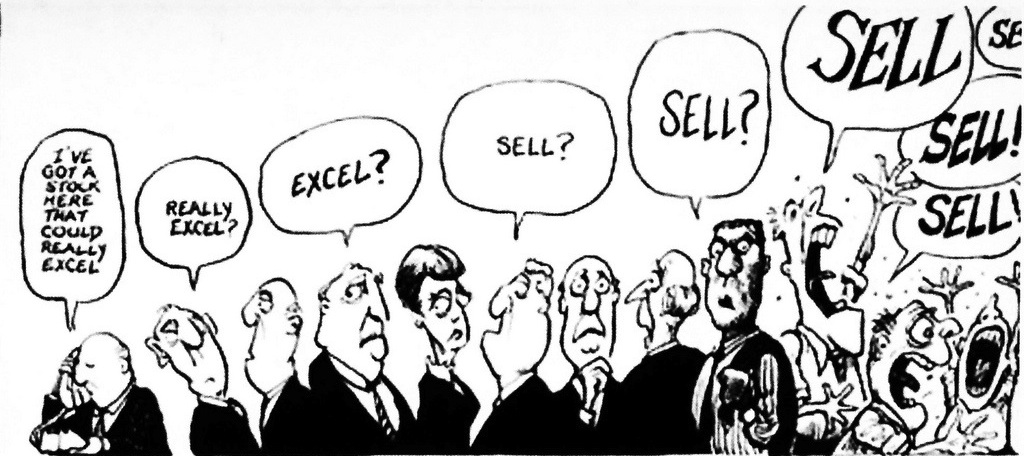
31. I’d get a bit cautious once ‘normal-average-everyday’ people, who’ve never bought stocks in their lives, are getting into the stock market because of a certain hot sector, or hot stock. Especially when they proclaim, “It can only go up” and “It’s so easy to make money right now”, without conducting any fundamental research. That’ll probably be a good sign that a peak is forming in the market (actually, reminds me of the Toronto housing market). But I also realize that markets can stay euphoric for far longer than I think. Regardless, I don’t cash out. I stick with great companies as long as they’re great. I don’t just sell when I think my stocks have become overvalued (unless they’ve crossed my 10% portfolio size threshold), or when the market is reaching its “peak”. Some people might never buy stocks because they’re always “too expensive”, and then miss out on every bull rally until they die.
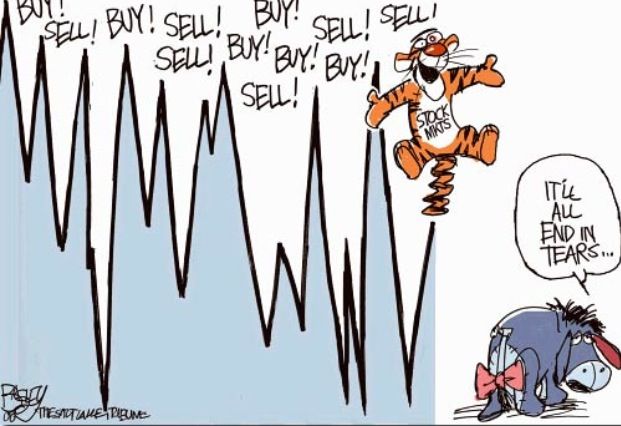
32. I know and accept that I’m not going to get rich quick. I control my greed. Because greed can lead to very bad decisions in the market. I don’t feel ‘smart’ when my stocks have gone up in a bull market. Because a rising tide lifts all boats. Conversely, I invest more in the market when I feel fearful, because that’s when most people are selling stocks, and driving down stock prices, so that they’re cheaper for more astute, and experienced investors.
33. I research small-cap and mid-cap companies as much as I can. And I read as much on the markets as possible. Everyday. I can truly have an informational edge in these oft-overlooked smaller-cap companies, with little-to-no institutional or analyst coverage. For the most part, everything is already priced into those liquid, well-known large cap companies. There’s no opportunity for me to generate alpha there.
34. I don’t care about any macro-economic trends. I don’t follow trends. I just invest in great non-cyclical companies that sell products in good and bad times.
35. When I pull up a company’s metrics on a 10-year table (I use Morningstar.com), I’ll know if I’ve found something special when the business is growing at a consistently high rate over time, and especially if it’s posted little downside during a recession. That’s important; I always check to see how a business performs through a recession.
36. A company’s stock price performance needs to match its underlying fundamentals overtime. My favourite companies have stock charts that rise steadily over time, in line with their intrinsic growth, with very little volatility in their stock prices. Just an almost perfect upward trend line. These are difficult to find. But Lassonde Industries comes to mind and is a good illustration.
37. When I first learn about a new company, I add it to my “watch list”, conduct further research, and follow it for some time before I decide to initiate a positon. I give myself a ‘cool-off’ period to avoid buying any stocks on emotions.
38. Only 90% of the Canadian stock market is investable in my opinion, with ~ 50 truly exceptional businesses, at any given time.
39. I get excited when I find a great company that issues black and white annual shareholder reports (without photos), has an outdated and amateur logo, and is still using a website that was designed in the early 2000s. These are the ‘gems’ that have yet to be fully discovered by the institutions and masses. Once companies get bigger, on the foundation of their success, they upgrade all of those things.
40. It’s usually best when management has a stake in the company and/or is an owner/operator. Because they’re shareholders too. They want the stock price to go up as much as you do. But management must also demonstrate operational excellence, combined with superb capital allocation, intelligence, and a strong drive to compete. Further, management needs to have an achievable vision for the company, with the ability to execute and realize that vision. And finally, management needs to have integrity. Why integrity? If management is caught with having committed a fraud, or breaking any laws, your investment in a company can quickly go to zero.
41. We’re at a point in time where every industry is getting disrupted by technology. It’s not just the technology companies anymore, like Apple (iPhone) eclipsing RIM (BlackBerry). Everything! Which is why I like to invest in companies that serve a need/want that can’t be easily disrupted by technology in the next 10 years. Food, and drinks, for example. Everyone will still be eating burgers, and drinking coffee, the same way they do today, in 10 years’ time. Technology won’t change that basic human behaviour.
42. If I don’t think a stock can become an “x-bagger”, I won’t invest in the company. For example, a 3-bagger means that a stock goes up 3 times from its initial investment. $100 invested would turn into $300. That’s why I like to invest in companies that are sized $100 million to $10 billion in market cap. More so on the smaller-end, because if a company “makes it”, I can potentially earn 100x my investment (wishful thinking, and rare, but heck, it could happen! Paladin Labs did it). But then because of the law of large numbers, once my stock grows into a large-cap, I’ll usually sell, and allocate capital into the new emerging opportunities on the stock market.
43. I favour stocks that have strong tailwinds, like demographic trends, de-regulation, or shifts in consumer taste, driving profits in certain companies that are already selling those ‘beneficiary’ products or services.
44. I don’t invest in companies that will just be ‘one-hit-wonders’. Growth companies can only maintain their high growth by investing in research and development, expanding their business into new product lines, services, and markets, and/or evolving with their customers, over time. Innovate or die.
45. As soon as any management blames their problems on external reasons, like bad weather (seriously, I’ve heard this… as if customers can’t shop online), media, consumer taste, etc. I will usually quickly sell the stock. Management needs to adapt to change and accept their issues before they become BIG problems. I still remember going to RIM’s annual shareholder conferences from 2009 – 2011, and listening to the CEOs explain that “people want long lasting batteries, great reception, and keyboards”…….
46. I closely watch a company’s gross margin over time. Declining gross margins are a sign that competition is driving down prices. And I only want to invest in businesses that have strong pricing power, which is a result of their competitive advantage.
47. Even great companies have minor setbacks. But the difficult part is separating the minor setbacks from the big problems. I always sell when there’s a big problem that will continually hurt the business going forward. In other words, I sell when my initial thesis to invest in the company is later broken. I don’t wait and see.
48. Because I invest in more illiquid small-cap and mid-cap stocks, I can stomach volatility; in other words, the ups and down in their stock prices. But that’s as long as the intrinsic growth trajectory of those businesses is up over time. Amazon didn’t go straight up. Successful investors had to have the wherewithal and confidence to withstand the ups and downs in its stock price.
49. I mostly focus on Canadian equities, which comprise 80% of my portfolio. I feel I have an edge as Canada is my home country. However, 20% of my portfolio is in U.S. equities. I was buying U.S. stocks when the Canadian dollar was at-parity and also above-parity. But I’ll buy U.S. stocks again once the CAD reaches 90 cents. I don’t invest in European or Asian equities, as I don’t believe many companies in those regions are controlled by strong shareholder-oriented managers. Plus, the North American companies that I invest in sell products and services into those regions. It’s a win/win.
50. It isn’t enough that my fundamental research checks out on each stock. Stock price momentum needs to also be in an upward trend line over time.
51. I verify net accumulation in a stock by checking its accumulation/distribution on StockCharts.com. If accumulation/distribution is rising, especially in a stock that’s consolidating (trading flat), than that’s a good sign. I want other people buying, and accumulating the stocks that I invest in too.
52. I do a new scan of North American stock markets – TSX, Venture, NYSE, and NASDAQ – every 3 months for new issues. Also, some stocks appear on my filter for the very first time because they’ve finally surpassed a metric benchmark, like return on capital. That way I’m always on top of the market.
53. I’ll use leverage/margin in my portfolio, but won’t surpass 20% of my portfolio’s total dollar value.
54. When I sell a declining stock, on the basis that my original investment thesis has been invalidated, I’ll invest the proceeds into one of my winners. The winners can make up for the losses and then some.
55. There’s no such thing as passive investing if you’re a stock picker. I’m checking my portfolio on a daily basis. If I wanted to ‘buy and forget’, I’d cash out and put all of my money into an Index Fund. But that also means accepting those returns.
56. Losing money has been the best lesson for me. I know what to avoid now; companies, and management teams that destroy shareholder value. And with experience I can more quickly identify and screen-out those bad companies. It’s surprising how many companies are superb at capital destruction. But I also study other people’s mistakes. It’s cheaper. That includes mistakes by hedge fund managers, and other “smart money”. Nobody’s right all the time. As James Altucher says, the investors and hedge fund managers who are successful all of the time are probably criminals (i.e., insider trading) or about to lose everything.
57. Think about all the assets (intangible and tangible) that a company owns, and not only each assets’ cash flow generating ability now, but its ability to generate cash flow in the future. Having a lot of assets on the balance sheet doesn’t mean anything if the company can’t generate a high return on those assets for its shareholders. I love companies with wonderful assets, like Disney. The worst management teams buy bad assets through acquisitions, at too high a price, and then write off their mistakes later. Management needs to be good stewards of capital.
58. I go to StockChase.com on a daily basis, and check the “Predefined Scans” section, to see the stocks hitting new 52 week-highs. If I see companies hitting new 52 week highs, I conduct further research and buy based on my aforementioned criteria. Why? Because that break-through price momentum is being fuelled by high demand (i.e., investors and institutions buying the shares). Similarly, stocks that have finally broken out of a consolidation phase (flat-line) are interesting to consider.
59. I never say, “I missed out on that stock”, if I see it’s gone up 500% in 5 years, for example. Especially if it’s still a small-cap or mid-cap company. Because I know that those great companies can compound many times more. They’re still small. I also never say, “It’s too expensive so I won’t buy the stock”, after simply looking at the P/E and nothing more.
60. I don’t quickly overlook companies that aren’t generating a profit. They may be the next winners on the market. Amazon, for example. By the time Amazon started to generate a profit, it had already become a $400+ billion dollar company, compounding many times over, and making their loyal shareholders incredibly wealthy.
61. When I hear that there’s a change of management in a company, it makes me take a second look, especially if I skipped over the company in the past.
62. I avoid companies that only grow through inorganic growth, i.e. acquisitions, fueled by debt. Because once the debt, or acquisition opportunities, dry up (and often it’s both), the stock will fall straight to the ground for value investors to scoop up. Acquiring companies, and doing just that, isn’t a business strategy.
63. I like to learn about how successful investors think. Their framework on why and how they pick stocks. You can read my book (Market Masters), or The Money Train, Market Wizards, and One Up On Wall Street, to get into the minds of top investors.
64. There’s little spread to be made in merger-arbitrage these days, because of high frequency trading, and easily accessible information. And when there is a juicy spread, the takeover could very well fall through. Just look at the failed Ontario Teachers Pension Plan/Bell Canada takeover case. Investors in that merger-arbitrage play got crushed. So, I’d rather invest in small cap companies that could soon be taken over. They’re my “speculative takeovers”. For example, I purchased shares in Rona, speculating that Lowe’s would return to attempt another takeover, having been blocked the first time. Lowe’s did and succeeded in their second takeover attempt, sending Rona’s stock up 100% in one day.
65. I’ve come to realize that the market is largely psychologically-driven. John Maynard Keynes described the stock market as a Keynesian Beauty Contest, where “it is not a case of choosing those [faces] that, to the best of one’s judgment, are really the prettiest, nor even those that average opinion genuinely thinks the prettiest. We have reached the third degree where we devote our intelligences to anticipating what average opinion expects the average opinion to be”. This can be demonstrated in what I’ll coin, in an homage to “the Nifty Fifty”, “The Sexy Six”: Facebook, Apple, Alphabet, Netflix, Tesla, and Amazon.
66. I compare my long ideas (stocks I want to buy) with current short positions (as a % of float), and the analysis by any prominent short sellers. I always look to see the reasons why others would want to short a stock. For instance, investors who were long Home Capital stock would have done themselves a big favour by reading what prominent short seller, Marc Cohodes, had to say about the company. But it’s certainly hard to sell when a stock has had a remarkable track record, high return on capital, and stellar share price performance. One thinks, “How could anything ever go wrong?…”
67. Usually the media headlines (e.g. “The Death of Equities” or “Sell Canada”) are most depressing exactly before the market starts to turn up again after a recession or bear market. Great buying opportunity. Which is why I keep cash on-hand (and still read news headlines).
68. If I’m buying stocks, and I see that other small-cap funds or hedge funds are buying too, that gives me some validation. But it doesn’t mean it’ll work out. Some of the funds that I follow, which also invest in small-and-mid cap stocks: Turtle Creek, Pender, Giverny Capital, Donville Kent, Adaly Trust, and Mawer New Canada Fund. I also follow analysts like Gerry Wimmer. My portfolio has a lot of overlap with these funds.
69. There’s always tail risk. Someday, some event will rock the stock market. But I’ll only know about it after-the-fact. Because of that fact (I’m not ALL-knowing after all), I don’t worry about things that I can’t control. I control risk by holding great stocks and controlling what I can in my portfolio.
70. The stock market exists to help companies raise capital, grow, and be successful. Why would I invest in bad companies that don’t grow? That’s what value investors do (or at least, try). But that’s not why the market exists. Remember, one of Warren Buffett’s best investments, GEICO, was a growth stock!
In summary, if I’m not beating the market’s long term return, (TSX ~10%), or beating it the majority of the time, then I should stop investing in individual equites and instead be putting my money into an index fund. It’s been 12 years (2005 – 2017) and I’m still actively picking stocks, with a 15% compound annual return. Hopefully I can keep it up. Because at ~ 15% compound annual returns, I can double my money about every 5 years, without taking on too much risk. I hope you enjoyed my 70 Investing Rules. If you did then I encourage you to also read my talk on “Capital Compounders”, which is from the Fairfax Financial Shareholders Dinner (2017). And also forward this email/newsletter to a family member or friend if you think it’ll help him or her be successful in the stock market.
***********************************************************************
Subscribe to my newsletter for more content like this. click here. It’s free!
***********************************************************************
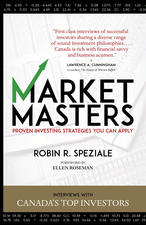
Robin Speziale is the national bestselling author of Market Masters, which is available at Chapters, Indigo, and Coles as well as Costco and Amazon.ca. He lives in Toronto, Ontario. Learn more about Market Masters.




 Subscribe Now to My Newsletter (Join 3,500 Subscribers!)



 Robin R. Speziale
You must be logged in to post a comment.