22 Investing Lessons From Jason Donville of Donville Kent Asset Management

Investing

Post - CC

SubscribeSubscribe Now to My FREE Newsletter (Join 5,000+ Subscribers!)

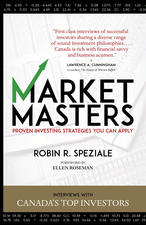
My full interview with Jason Donville of Donville Kent Asset Management can be found here and originally appeared in my national bestselling book, Market Masters, which is available at Chapters, Indigo, and Coles as well as Costco and Amazon.ca.

***

Jason Donville’s 22 Investing Lessons:

1) “You can get the macro thesis right but still not get the stock picks right.”

2) “If I’m adding to a position or subtracting from a position, I don’t want the market to know. Because I don’t want people to front-run me.”

3) “Where the growth of the world is coming from is new product development in knowledge-based industries. Whereas 99% of us already have chesterfields and maybe 1% of us are going to replace our chesterfield.”

4) “Think about the market as a baseball game. Let’s say there’s nine innings in the game. We’re now six years into this bull market. You never know until it’s over, but we’re probably in the seventh or eighth or ninth inning of the baseball game. That’s usually a bad time to own financials.”

5) “The time to buy financials is after the market’s been crushed.”

6) “We base decisions on adjusted ROE as opposed to stated ROE because the stated ROE doesn’t take into account the difference in the dividend policies of all these different companies.”

7) “First we look for companies with ROE greater or equal to 20%. Second, we look for companies in that high-ROE group that are sustainable based on the competitiveness of their products. Third, we assess management’s ability to allocate capital at those companies. Once we validate those three things, we typically find companies that we can invest in.”

SubscribeSubscribe Now to My FREE Newsletter (Join 5,000+ Subscribers!)

8) “Return on equity can be broken down into three pieces through DuPont analysis. You’ve got good ROE and bad ROE. We want to make sure that the ROE is good ROE.”

9) “You can fake good ROE in one year. But to achieve high ROE seven years in a row is tough. . . . So when I see a company that has achieved an ROE of 23, 22, 23, 24, 23, 22, over the past seven years, without even knowing what industry they’re in, I go, ‘Wow! There’s something in place here.’”

10) “If you’re thinking of investing in two companies and you run the numbers over the last seven years on both companies and you put them side by side, the good company will leap off the page at you.”

11) “The great enemy of a high-ROE company is competition.”

12) “Most of the companies we own have people running them that are very good capital allocators. Because if you can keep your ROE over 20% year after year, you almost by definition are a good allocator.”

13) “Our biggest tool for risk mitigation right now though is put options on the TSX. That’s an insurance policy. That won’t protect me from a 30% correction but it should protect me from a 10% correction.”

14) “In Canada, the mid-cap segment is probably the most inefficient part of the market.”

15) “Measuring growth in terms of return on equity and book value per share is a better methodological way than measuring growth in terms of earnings per share.”

16) “If you focus on companies where the net worth of the business is growing at a very steady clip then the share price chart will take care of itself as long as the ROE stays intact.”

17) “If you’re a good stock-picker, concentration works in your favour, and if you’re not, you should own an ETF instead.”

18) “We don’t buy turnarounds. It might be because we don’t have the muscle. We wouldn’t own enough stock to be able to push for a turnaround.”

19) “I continue to look for great companies that are fair price as opposed to cheap stocks.”

20) “If you want to be a great investor, then study the great investors and pick one that fits your style and then master that style.”

21) “Your style of investing has to fit your personality type.”

22) “I’m buying awesome companies and just hoping that they’ll be awesome forever. I get to hang out with the really great CEOs all the time as opposed to having argumentative discussions with mediocre CEOs who aren’t doing a very good job running their companies.”

SubscribeSubscribe Now to My FREE Newsletter (Join 5,000+ Subscribers!)

MarketMasters

Robin Speziale is the national bestselling author of Market Masters, which is available at Chapters, Indigo, and Coles as well as Costco and Amazon.ca. He lives in Toronto, Ontario. Learn more about Market Masters.

19 Investing Lessons From Francis Chou of Chou Associates

Investing

become_a_patron_button

Become a Patron Now to Access My Exclusive Content – Top Performers, Portfolio, Watchlist.

My full interview with Francis Chou of Chou Associates can be found here and originally appeared in my national bestselling book, Market Masters, which is available at Chapters, Indigo, and Coles as well as Costco and Amazon.ca.

***

Francis Chou’s 19 Investing Lessons:

1) Relating shopping in India to investing: “It was my job to make sure I was paying the lowest price for the best quality.”

2) “I contrast the current scenario to the scenario in 1981. Everyone is so bullish but I’m really negative.”

3) “I didn’t know the market was going to take off in six months [in 1981], but I knew you couldn’t get stocks any cheaper than their prices at the time.”

4) “When you read about great men and women of the past, it is like having a conversation about world affairs in your living room. It is not only educational but it builds perspective about life and business in general.”

5) “My first job is to check whether the company in question meets my investment criteria. It could be a good company, a bad company, or it could be a CRAP [cannot realize a profit].”

6) “I do screens, read a lot, and talk to other talented portfolio managers to see where they are seeing bargains. . . . [And] before you make a purchase, you should look for investors who are negative on the stock.”

7) “I just go wherever I can find bargains. For instance, in the years 2000 to 2002, I was basically in distressed bonds. I just go wherever I can find something undervalued.”

8) “Whenever the majority of investors are purchasing securities at prices that implicitly assume that everything is perfect with the world, an economic dislocation or other shock always seems to appear out of the blue. And when that happens, investors learn, once again, that they ignore risk at their peril.”

9) “We continue to diligently look for undervalued stocks and will buy them only when they meet our price criteria — in other words, when they are priced for imperfection.”

10) “Initially I analyze bottom-up and then I go top-down.”

11) “Most investors invest in terms of premium or discount to book value. That is a serious mistake. Let’s say the year was 2006. You examine the loan portfolio [of a bank] and see all the junk there. As a result, you wouldn’t touch a U.S. bank with a barge pole.”

12) “I’m trying to buy 80 cents for 40 cents. It does not matter whether they are good companies, bad companies, or distressed companies.”

13) “The first thing you have to do in this business is to make sure that your valuation is accurate. If your valuation is wrong . . . then you won’t make it in this business.”

14) “You’re a businessman . . . you ask, ‘If I were to buy this company, how much would I pay?’”

15) “I don’t know what will happen two years from now where there could and probably would be newer technology.”

16) “I don’t want to chase businesses where management is making decisions that don’t make economic sense.”

17) “Sustainable earning power, business moats, and competitive advantage relate more closely to intrinsic value and therefore are more important than just increases in book value.”

18) “Investments are most profitable when the selection process is most businesslike. Therefore, you must have the skill level to evaluate a business.”

19) “You have to go against the grain. You have to do your own independent work, your own analysis, and you stand on the merits of your own judgments.”

MarketMasters

Robin Speziale is the national bestselling author of Market Masters, which is available at Chapters, Indigo, and Coles as well as Costco and Amazon.ca. He lives in Toronto, Ontario. Learn more about Market Masters.

17 Investing Lessons From Jeff Stacey of Stacey Muirhead Capital Management

Investing

My full interview with Jeff Stacey of Stacey Muirhead Capital Management originally appeared in my national bestselling book, Market Masters, which is available at Chapters, Indigo, and Coles as well as Costco and Amazon.ca.

***

Jeff Stacey was waiting for me in the Gold Room at the Royal York Hotel, reading the Financial Times and sipping coffee from a white china mug. Nobody else was around him in the classically appointed room that brought to mind images of captains of industry from years past congregating to shape Canada’s economy. It’s hard to fathom now that the Royal York was once downtown Toronto’s tallest building.

It wasn’t officially spring just yet, but the sun was piercing the window onto the table at which Jeff and I would sit and chat. It was so bright that I would later draw the blinds. Jeff was visibly eager to talk to me about his passion: value investing. I was eager, too, as Jeff has been successfuly practising value investing since founding Stacey Muirhead Capital Management in 1994, and is a friend of Prem Watsa, a notable value investor. Days after our interview, he would host the question and answer segment of Prem Watsa’s Fairfax Financial Value Investing Dinner Gala.

Jeff Stacey has learned value investing from both the experiences and writings of super investors such as Benjamin Graham, Warren Buffett, and Sir John Templeton. Over time, he has identified the following enduring value investing principles, which he judiciously applies to all of his long-term investment efforts:

• Think about stocks as part ownership of a business
• Maintain the proper emotional attitude
• Insist on a margin of safety
• Do not diversify excessively
• Invest for the long term

Jeff looks for companies with outstanding business economics that are run by capable and honest managers and that are available at attractive prices. He describes this concept simply as “Great Business, Great People, Great Price.” Jeff also has some great stories on event-driven investments. Specifically, he explained how he profited from Starbucks’ acquisition of Teavana amidst the threat that that deal could have blown up.

Jeff Stacey’s 17 Investing Lessons:

1) “We’re trying to estimate intrinsic value, we’re trying to buy with a margin of safety to that intrinsic value, and we’re trying to be rational and patient in all that we do.”

2) “Event-driven transactions are the pursuit of profits from announced corporate events. So that’s liquidations, mergers, acquisitions, recapitalizations, tender offers, anything where you can say, ‘Okay, if this event happens we’re going to make this amount of money in this amount of time.’”

3) “We will consider bonds that are high-yield because there’s a perception that the companies aren’t going to be able to keep paying, so the analysis is all around why we believe that they’ll be able to keep paying.”

4) “We’re not afraid to let the cash build up when we have more money than good ideas.”

5) “We’re not trying to guess on which company is going to get taken over. It’s a matter of public record.”

6) “Every big merger is widely reported on. From an informational point of view there’s certainly more awareness about mergers than anything else.”

7) “If you knew as a certainty that something could grow 50% a year for a long period of time, of course it’s worth more than seven times earnings.”

8) “The deep-value guys will state, ‘I want to buy something at a discount to book with a dividend yield and a single-digit price earnings multiple.’ You know, that’s probably a great price for a rotten business. But if it’s a better business you can pay more.”

9) “Value depends on the quality of the merchandise. The trick in what we do is to invest in enduring, high-quality businesses that can last for a long period of time.”

10) “We spend a lot of time trying to understand the qualitative competitive advantage that a business has.”

11) “The mistake that the good business buyer will make is he’ll pay too much for something that he or she thought was a really great business that turned out not to be a really great business.”

12) “There could be hidden assets. For example, real estate that is on the books for next to nothing but could be sold to unlock huge value.”

13) “The asset-light management company is generating these recurring service fee revenues from this hotel. That’s a classic example of a business that from a balance sheet point of view doesn’t really have much in the way of assets but it has enormous economic value.”

14) “There is no question that the playing field has been levelled because of the availability and ubiquity of information. However, information is not the same thing as wisdom or knowledge, and so you still have to interpret that information.”

15) “The human condition is subject to cycles of both greed and excess optimism, or fear and excess pessimism.”

16) “You have to get out and you have to travel and you have to see what people are eating, what they are drinking, what they are smoking, what they are wearing, and so on.”

17) “Read the letter to shareholders in the annual report. Is management talking to you like an owner, or does it seem like it’s written by some PR person who really doesn’t know what the business is about?”

MarketMasters

Robin Speziale is the national bestselling author of Market Masters, which is available at Chapters, Indigo, and Coles as well as Costco and Amazon.ca. He lives in Toronto, Ontario. Learn more about Market Masters.

16 Investing Lessons From Gaelen Morphet

Investing

become_a_patron_button

Become a Patron Now to Access My Exclusive Content – Top Performers, Portfolio, Watchlist.

My full interview with Gaelen Morphet originally appeared in my national bestselling book, Market Masters, which is available at Chapters, Indigo, and Coles as well as Costco and Amazon.ca.

***

It was through a story in Canadian Business that I became aware of Gaelen Morphet. The magazine featured one of Gaelen’s largest and most successful holdings: Alimentation Couche-Tard. It’s a stock that she continues to hold today. Alimentation Couche-Tard has been such a high-flying stock that Gaelen’s been forced to sell portions of it over time, taking profits off the table, and reducing its position size in her portfolio.

In her role as chief investment officer at Empire Life Investments, Gaelen oversees a number of funds. The flagship, Elite Equity Fund, has returned 9.8% since its inception. The other funds comprise Empire Life’s “first family of mutual funds.” In total, Gaelen is responsible for approximately $9 billion in assets.

On top of having a knack for picking the right stocks, Gaelen has also been known to make superb calls on the direction of the market. One such call in 2012 turned out to be right on the money, so to speak. In a June 2012 article in the Morningstar Manager Monitor, Gaelen said, “We’re actually in a sweet spot right now. As a value investor, you try and capitalize on the emotionalism of the market to buy names when they’re cheap and sell them when they’re expensive. Almost every stock out there is a value stock right now.” And sure enough, after a broad market decline that started in 2011 and was perpetuated by the Euro Crisis, the TSX finally started to turn up in 2012, and continued to rally all the way into late 2014.

How does Gaelen make such bang-on calls? The answer is that she employs her margin of safety model. Gaelen scans the market on a weekly basis and measures the margin of safety (the difference between intrinsic value and market value) in individual stocks based on Graham and Dodd’s teachings about fundamental value investing. Gaelen then invests in stocks that are below their long-term or intrinsic value. She’s refined Graham and Dodd’s framework and models intrinsic value using a combination of current book value, return on equity, earnings per share for the next two years, projected book value, normalized return on equity, normalized earnings per share, and relative P/E ratio. She uses that information to determine the net present value of a company — in a similar way to the discounted cash flow model. You’ll learn more when you read through our conversation.

Gaelen was relaxed, composed, and open to sharing her stories with me. She removed her thick-rimmed glasses when she wanted to emphasize a point. We met in a large room at Empire Life that could probably have accommodated 20 people.

16 Investing Lessons From Gaelen Morphet:

1) “The markets run on a combination of finance and emotion. [But] investing is largely emotional. In order to get really good at it, you need to understand how you feel when your stock goes down 20% and what your reaction will be.”

2) “I follow the theory that all companies have an intrinsic value, and that stock prices fluctuate around that intrinsic value. I look for companies that build their intrinsic value over time. I . . . compare the intrinsic value to the current stock price and record the difference. I want stocks that are trading below their long-term or intrinsic value.”

3) “If . . . a problem emerges, investors tend to assume the worst and often move to something that isn’t having problems. Value managers often look at this as an opportunity to purchase the stock with the view that the stock will recover when the problem is solved.”

4) “If I know the company really well, I can make a judgment call on whether there’s permanent value destruction.”

5) “Before you know it, everybody’s piling in. That is the way the market works. It is dynamic and relative. It is not black and white.”

6) “You need to stay invested to build wealth over time. If you trade in and out of the market, you’ll miss the best moves. You need to buy high quality companies and let them appreciate in value over time.”

7) “When the market becomes more pessimistic I take advantage of that pessimism and add to my positions. Likewise, when markets become overly optimistic I will pare back.”

8) “I look at return on equity as a measure of profitability. It is important to look at ROE on a historical basis because it indicates how well that company has been run and the return it has delivered over time.”

9) “A longer time period allows you to evaluate the company’s performance over different economic periods, giving you a better indication of how the stock will react, regardless of the macro-economic picture.”

10) “I’m very focused on identifying value traps. Those are stocks that look cheap but are going to stay cheap forever. Some of the reasons a stock may be a value trap is because it has too much debt, doesn’t have good management, or lacks good corporate governance.”

11) “To create a successful portfolio, you need different types of stocks — some that deliver today and some that’ll deliver in the future. The portfolio should be a combination of stocks that are reaching their intrinsic value, trading below their intrinsic value, and some that are going through their intrinsic value.”

12) “My goal is have the portfolio appreciate while always protecting the downside. I do this through diversification and having exposure to many different industries and stocks. And by focusing on stocks that pay dividends.”

13) “If you’re always building wealth with a portfolio that’s less expensive than the market, when the market rolls over, you’ll have that margin of safety that other investors do not have.”

14) “To be a good investor you must go through some very difficult times where you really do question your abilities and your resolve.”

15) “As a value manager, I prefer stocks that have limited downside and plenty of upside.”

16) “When everybody’s playing the same stocks and the expectations are there, it’s difficult for companies to always meet investors’ expectations, and that’s where the volatility comes from. A great deal of investing is about meeting or exceeding expectations.”

MarketMasters

Robin Speziale is the national bestselling author of Market Masters, which is available at Chapters, Indigo, and Coles as well as Costco and Amazon.ca. He lives in Toronto, Ontario. Learn more about Market Masters.

11 Investing Lessons From Michael Sprung of Sprung Asset Management

Investing

My full interview with Michael Sprung of Sprung Asset Management originally appeared in my national bestselling book, Market Masters, which is available at Chapters, Indigo, and Coles as well as Costco and Amazon.ca.

***

Michael Sprung must have been both the shyest and smartest kid in class. You know, the kid who coasted through school with A-pluses without much effort. Well, Michael would go on to study actuarial science, which — based on what it takes to grasp and fulfill the curriculum — is right up there with rocket science as far as I’m concerned. After that he obtained an MBA and then qualified as a CFA. Today, Michael is still relatively shy. He looks exactly how you might expect an actuary to look: white shirt, black slacks, black shoes, and tidy white hair. The thick lenses of his glasses enlarge his eyes. He is soft-spoken. Our interview starts slowly, but Michael opens up as he gets more comfortable with me and the format. The more he talks about investing, the more he comes to life.

Investing happened to be Michael’s calling. He could have very well become a salaried actuary employee at an insurance company, tucked away into a neat little cubicle. Instead, he founded Sprung Asset Management, and as Sprung’s president, Michael’s got lots of interesting stories, insights, and forecasts on investing in the market. Reading the transcript of our interview later, I realized that of all the interviews I had conducted, his transcript was the most cohesive and succinct in its raw form. Michael is a man who thinks clearly and articulately, and who speaks the same way.

Michael Sprung is a student of value investing. Michael’s “school” was his first employer, Confederation Life, where he learned value investing and worked under value managers who would go on to storied careers of their own. “Anyone who went to Confederation Life would consider themselves value investors today,” said Michael during our meeting. Michael and I met in a small, spare meeting room. We pulled our chairs up close and then began with the click of the red button on my recorder.

Michael Sprung’s 11 Investing Lessons:

1) “Our core philosophy is trying to minimize downside risk. . . . Risk is a two-edged sword.”

2) “When you see that retail investors are all rushing in and that people are lining up to buy something, that’s usually a good time to sell out.”

3) “The whole key to value investing is to buy often when stocks are unpopular, when people do not recognize the inherent value in those companies.”

4) “There’s always the question of whether you are too early or too late [investing in a value stock], but as long as we are fairly convinced that a company has the wherewithal and good management to be a survivor, we don’t mind being too early.”

5) “If you buy a stock and all of a sudden it goes down 15% or more, the real question at that point becomes, were you wrong or is this an opportunity to buy more? We try not to look at the short term very much at all. We look at everything with a three- to five-year time horizon or more.”

6) “Around 1999, I made a bet with some portfolio managers that over the next four years Manulife would outperform Nortel, and they thought I was a fool. Nortel was trading at 120 times earnings. Anyway, Manulife outperformed in that period. I won the bet.”

7) “Look for those companies that have deteriorating leverage or margins relative to their competitors — that’s usually a sign that a value trap is going to develop.”

8) “‘A lot of investing is winning the loser’s game.’ You just try to make fewer mistakes than your competitors. And as long as your winners outweigh your losers, you’re doing well.”

9) “In the long term, Efficient Market Theory has some application. Though in the short term there are anomalies within the system where stocks do get mispriced. Hopefully you’re prepared enough to catch those anomalies.”

10) “The worst mistake that I see retail investors make is to become value investors when that’s popular, and then all of a sudden become growth investors when that’s popular. You get whipsawed on making changes between macro-economic sector rotation and micro-economic stock selection.”

11) “Investing success, like any other discipline or profession, is achieved through the rudimentary core knowledge that you need to know. It’s in the application — how you think, your discipline, and whether you can stick with that discipline.”

MarketMasters

Robin Speziale is the national bestselling author of Market Masters, which is available at Chapters, Indigo, and Coles as well as Costco and Amazon.ca. He lives in Toronto, Ontario. Learn more about Market Masters.

What I Learned From Benj Gallander

Investing

become_a_patron_button

Become a Patron Now to Access My Exclusive Content – Top Performers, Portfolio, Watchlist.

My full interview with Benj Gallander of Contra the Heard originally appeared in my national bestselling book, Market Masters, which is available at Chapters, Indigo, and Coles as well as Costco and Amazon.ca.

***

The key lesson to take from Benj Gallander is that you should constantly question yourself and the broader market. Do not be swayed by heuristics, preconceived notions, or sentiment. Logic should pierce through every investment decision that you make. There’s no doubt, though, that it’s tough to go against the herd. As Benj says in his book The Contrarian Investor’s 13, “Being a contrarian, at heart, is a matter of character. It is by no means for everyone, but for the person who is willing to be disciplined when the common view says, ‘You’re wrong, buddy; don’t you think the time has arrived to see reality?’”

While I do greatly respect Benj’s contrarian approach to investing and have seen how well it works for him, those kinds of stocks do not make up the core of my own investment portfolio. Only about 10% of my portfolio is comprised of contrarian stocks, as I found that over time I was being burned by “dog” stocks — those stocks that got beaten up but then
never turned around or got taken over. Clearly, I am not as good a contrarian as Benj.

Ultimately, you must be the judge as to whether being a contrarian investor works for you. Benj does admit that it can be tedious. “The valuation cycle — from an undervalued, out-of-favour stock at the time of purchase, through the period of recovery to full value and our sale — is irregular. Quite often, the market is slow to appreciate the improvements
in a company’s fundamentals — but when sentiment shifts, it often does so dramatically, as institutions and brokers gravitate towards strong performers and propel them even higher. For this reason, turnaround situations often more closely resemble the so-called J-curve of successful venture capital funds than the more linear progression of their big-cap, ‘growth’ brethren.” Even when the contrarian approach is working itself out, one must be patient and wait for pops in stocks or erratic upward price movements. Contrarian investing can be frustrating and unrewarding for those who do not share Benj’s cool temperament.

Interestingly, Benj tells me that some of his biggest profits have come from takeovers. “At any point in time, the companies in our portfolio will be at different points in this valuation cycle. When it happens that a large proportion of these stocks are toward the end of this process and are appreciating rapidly, we end up with another of those banner years. This natural variability is amplified by the effect of takeovers. Often these occur at substantial premiums and they are responsible for some of our best profits.” Perhaps you can focus more on takeover opportunities than on “undervalued” turnaround opportunities in your own portfolio.

Throughout my interview with Benj I could sense that while he was happy to talk about his achievements in the market, perhaps his heart had shifted to a different place over the years — his wife, two kids, and other endeavours such as being a playwright. But make no mistake, this has not hindered Benj’s performance in the market.

The following is an excerpt from Contra the Heard’s investment philosophy:

  • Concentrate on turnaround situations and stocks which are currently unpopular but are likely to regain their lustre
  • Focus on stocks that have the ability to increase in value by a minimum of 50%
  • Carefully analyze corporations’ financial statements, concentrating on debt ratios and book values
  • Analyze management’s ability to achieve stated goals Invest only in organizations that have existed for at least 10 years
  • Pick takeover candidates well before takeovers occur, for near-optimal returns
  • Normally sell a minimum of 50% of a stock upon achievement of our target, while “market timing” the remainder
  • Practice patient investing while ignoring the daily pulse of the market
  • Advocate diversification
  • Remain independent of any broker, corporation, or financial institution
  • Put our money where our mouth is by notifying readers of the Contra the Heard investment letter only of stocks that we actually buy
  • Appreciate stocks that pay regular dividends

MarketMasters

Robin Speziale is the national bestselling author of Market Masters, which is available at Chapters, Indigo, and Coles as well as Costco and Amazon.ca. He lives in Toronto, Ontario. Learn more about Market Masters.

How I Built a $300,000 Stock Portfolio Before 30 (And How You Can Too). My 8-Step Wealth Building Journey

Investing

SubscribeSubscribe Now to My FREE Newsletter (Join 5,000+ Subscribers!)

**************

Welcome! If this is your first time on my blog, check out these top blog posts, too:

  1. My Interview with Francis Chou
  2. 22 Investing Lessons From Jason Donville
  3. How to Find Tenbaggers
  4. Beating the TSX (BTSX)
  5. How I Pick Winning Stocks
  6. Canadian Capital Compounders
  7. Next Capital Compounders
  8. Small Companies; Big Dreams – Future 60 MicroCaps

***PLUS Email Me Now for a FREE copy of my new book – Capital Compounders***

**************

How I Built a $300,000 Stock Portfolio Before 30 (And How You Can Too). My 8-Step Wealth Building Journey

youtube_32 >>>You can also listen to my 8-Step Wealth Building Journey on My YouTube Channel

When I was 12 years old I made a decision. I was going to be rich. I looked up to successful people and wanted what they had: financial freedom. They seemed to be happier than everyone else. But who was I kidding? Becoming rich would be an uphill battle. I was from a middle-class family of humble means. There was no trust fund. And my parents didn’t have work connections to land me my first job. The odds were stacked against me. But I still made the decision to be rich and started on my wealth-building journey. And the path I chose to get me there: do-it-yourself investing “DIY Investing”.

Today, I manage a $300,000 stock portfolio. I’m 29 (almost 30). And my stock portfolio grows by the day. My goal is $1,000,000 in stocks by the time I’m 35 years old. I’ll show you my 8-step wealth building journey and share how you can build wealth by investing in stocks too. Read on…

When I was 12 years old I made a decision. I was going to be rich

SubscribeSubscribe Now to My FREE Newsletter (Join 5,000+ Subscribers!)

How I Became a Do-It-Yourself (DIY) Investor:

1) Study Successful Investors

I realized that if I wanted to make money by investing in stocks I had to study successful stock investors. Common sense, right? Isaac Newton said it best:

“If I have seen further than others, it is by standing upon the shoulders of giants.”

So, from age 12 to 18, I read around 50 books on the topic.

These were the six most important investing books for me:

  • The Intelligent Investor – It was through Benjamin Graham’s The Intelligent Investor that I was introduced to value investing, and the important concepts of Margin of Safety, Mr. Market, and Intrinsic Value. Warren Buffett called it “the best book on investing ever written”.
  • Common Stocks and Uncommon Profits – Philip Fisher opened up my world to growth stocks. It was after I read Common Stocks and Uncommon Profits that I started paying more for stakes in higher quality, and faster growing businesses.
  • One Up On Wall Street – There are so many easy-to-implement lessons shared in One Up On Wall Street. But what really stuck with me was Peter Lynch’s focus on ‘buying what you know’. That has saved me from many dog stocks in the market.
  • Market Wizards – Jack D. Schwager introduced me to some of America’s top traders in Market Wizards. But instead of telling us their favourite stock picks (what they buy) he explained their investment frameworks (why/how they buy).
  • Buffettology – There are many books that endeavor to explain how Warren Buffett invests in stocks but most come up short. Buffettology is the book that gets it right.
  • The Money Masters – A classic that is fun to read. The Money Masters shares winning strategies from some of the world’s best investors who ever lived. It’s a book that I’ll read every couple of years to brush up on investing essentials.

I would also study Forbes’ list of the 500 Richest People in the World and Canadian Business’ Richest Canadians. It then all became very clear to me. I could become rich by earning money, saving the proceeds, and investing in stocks as other rich people, such as Warren Buffett, had done before me.

SubscribeSubscribe Now to My FREE Newsletter (Join 5,000+ Subscribers!)

It then all became very clear to me. I could become rich by earning money, saving the proceeds, and investing in stocks

2) Earn and Save Money When You Are Young

I had opened my first bank account when I was about 8 years old. As you can imagine there wasn’t much there; cash from birthdays, Christmas, and some chores. Maybe $500 in total from what I can remember. I had to earn/save more money fast! So I did what Warren Buffett had done at my age – delivered newspapers. At 12, I joined PennySaver and became a paperboy for three neighborhoods in my hometown of Mississauga. I deposited each paycheque, along with any other money, straight into my savings account.

3) Understand How to Compound Money

Once I turned 14, and just started high school, my savings account had grown to about $5,000. At that point, I wanted to invest in stocks. But because of my age I wasn’t eligible to open a brokerage account. So I started with bonds. After returning home from the bank, I placed those newly purchased Canadian Savings Bonds into a small but sturdy wooden box, hiding it safely under my bed. I was so proud. I knew that my bonds would generate interest for me on the principal amount ($5,000). “Compound interest is like magic”, I thought. “And the earlier I started investing money the longer my money would compound (‘work’) for me”. Throughout high school, I would work several odd-jobs (mechanic shop janitor, meat department clerk, and Best Buy associate), all the while saving money from each paycheque, and then buying more bonds to further compound my money.

“Compound interest is like magic”, I thought. “And the earlier I started investing money the longer my money would compound (‘work’) for me”

4) Invest in Stocks for the Long Run

I turned 18, and was ready to enter University (party time! — NOT). In September, 2005, I moved into my “cozy” on-campus dorm room at the University of Waterloo. But even more exciting was that I finally opened my first brokerage account. By investing in stocks I could compound returns through both capital appreciation (i.e., stock price goes up) and dividend income (i.e., quarterly dividends from companies). I had already cashed out of my bonds; $10,000. So I invested that money evenly into 5 stocks, owning a $2,000 stake in each company. I felt like a true capitalist. This is how my idols, Benjamin Graham, Philip Fisher, Peter Lynch, and Warren Buffett, got rich; by investing in stocks. As I earned money though UW co-op job placements (which I recommend to every young person!), and bought more stocks, my portfolio grew, and grew, and grew. I was on top of the world. And then the financial crisis (’08) happened…

SubscribeSubscribe Now to My FREE Newsletter (Join 5,000+ Subscribers!)

By investing in stocks I could compound returns through both capital appreciation (i.e., stock price goes up) and dividend income (i.e., quarterly dividends from companies)

5) Capitalize on Crises in the Market (i.e., Buy Low When You Can)

I was 21 years old when the entire world ended in 2008 (or so most people thought at the time). The financial crisis thrust economies around the world into recession. Stock markets collapsed. And my stock portfolio imploded. I suffered around a 50% decline from peak to trough. The financial press was all doom and gloom. “Sell! Sell! Sell!” Most people were scared and converted their stocks to cash. So I invested all of my savings into my existing stock holdings (crazy, right?). When I pulled the trigger I was scared stiff. But I’m glad I made that move as my stocks would soon rebound, pushing above pre-financial crisis highs into the years to come. I bought quality stocks on sale. 50% off! Was I a young genius; able to time the market? Nope. I simply learned from Benjamin Graham, the father of value investing, that economies and markets operate in cycles. Therefore, an investor could capitalize on manic markets, rather than become fearful and flee.

When I pulled the trigger I was scared stiff. But I’m glad I made that move as my stocks would soon rebound, pushing above pre-financial crisis highs

Indeed, 2009 was a great year to be a value investor. I would make a similar move in February, 2016 to capitalize on a bear market in Canadian stocks where the TSX declined close to -25% from its high in September, 2014. Why so confident? I know that the average bear market (on the TSX) has declined -28%, lasting 9 months, while the average bull market has advanced +124%, lasting 50 months. Based on this historical evidence then since 1956, I should eventually be rewarded in the long run when I take on “risk” (i.e., investing in cheaper stocks) during bear markets. As Warren Buffett said:

“Be fearful when others are greedy and greedy when others are fearful.”

6) Manage and Refine Your Stock Portfolio

In 2010, upon graduating from the University of Waterloo, I had about $50,000 in my stock portfolio. More money than any of my friends. This was certainly an inflection point for me as the magic of compounding started to take real effect and I was just about to enter a full time career and earn a much bigger paycheque (plus bonus), which meant more money for stocks. By 2013, three years into my first full time job, my portfolio had grown to about $125,000. However, I realized that I could build wealth faster if I compounded returns at a greater rate. So, at 25, I made it my mission to build a portfolio that actually beat the market. I started watching BNN Market Call, re-reading the best investing books, and magazines (Money Sense, Canadian MoneySaver, and Canadian Business) and following the top investors from around the world. From that I re-structured my portfolio into one that I’ve comfortably maintained since.

Here’s how my stock portfolio breaks-down:

  • Mispriced Large Caps
  • Speculative Takeovers
  • Small/Mid-Cap Capital Compounders

Mispriced Large Caps

For example, I started loading up on Starbucks stock in 2008 at around $15/share, at a time when Starbucks was oversaturating themselves in the market, with most “experts” doubting their strategy of selling high-priced coffee, especially with the financial crisis looming, and new entrants in the coffee business, such as McDonalds. However, when I bought Starbucks stock, after their huge decline on the market, I never witnessed a drop in traffic among the stores nearby me. Starbucks had huge competitive advantage then and now. I thought, “If Starbucks goes out of business, that’s probably when the world will end”. And, seriously, do you think business people would ever switch their coffee meetings from Starbucks to McDonalds?

SubscribeSubscribe Now to My FREE Newsletter (Join 5,000+ Subscribers!)

Speculative Takeovers

I also dabble in speculative takeovers. When Lowe’s first bid for Rona fell through, I bought a stake in Rona, and just sat on the position. I speculated that Lowe’s, or another company (maybe Home Depot), would eventually scoop up Rona, with the Quebec Government’s approval of course. When Lowe’s came back years later, bid on Rona a second time, and won approval to buy them out, my Rona shares shot up ~100% in one day. Well worth the wait.

Small/Mid-Cap Capital Compounders

But the most successful ‘bucket’ in my portfolio is the Small/Mid-Cap Capital Compounders. Why? I find that as long as the intrinsic value of these businesses grow every year, so does the price of the stock. I’m actually upset when one of my ‘capital compounder’ stocks get bought out, because most of the time there’s so much more potential for growth. It forces me to go out hunting for an equally remarkable capital compounder to replace the buy-outs. You can learn more about the criteria I look for in capital compounder stocks by reading How I Pick Winning Stocks.

7) Stick to Your Investment Strategy

From my ‘quarter life crisis’ (age 25) and onwards, I continue to earn, save, and invest in stocks using the same strategy. Now, at age 29, I have built a $300,000 stock portfolio. With a bigger capital base, it’s amazing how much more rapidly my portfolio can compound. For example, a 10% return will thrust my portfolio to $330,000 next year, without adding additional capital. I say “10%” because over the long run (since 1934), the TSX has delivered a 9.8% annual compound return, despite recessions, bear markets, and world crises. But there’s no guarantee. Nevertheless, $1,000 invested in the Canadian index in 1934 would have grown to $1,595,965 by 2014 with 9.8% compound returns. That’s “magic”, in my world.

$1,000 invested in the Canadian index in 1934 would have grown to $1,595,965 by 2014 with 9.8% compound returns. That’s “magic”, in my world.

8) Always Learn and Grow as An Investor

My DIY investing journey has been fulfilling so far. But I also know that I can further improve my odds of success by continuously learning, and improving my investing craft. This is why I recently met with some of Canada’s Top Investors. 28 in total. Those Top Investors told me how they invest in stocks, bonds, and options; sharing their proven investing strategies. It was enlightening. So I decided to put all of their investment advice into a book – Market Masters. You can now purchase Market Masters in Chapters, Indigo, and Coles stores across Canada as well as online on Amazon.ca and Indigo.ca.

I recently met with some of Canada’s Top Investors. 28 in total. Those Top Investors told me how they invest in stocks, bonds, and options; sharing their proven investing strategies.

SubscribeSubscribe Now to My FREE Newsletter (Join 5,000+ Subscribers!)

My 8-Step Wealth Building Journey (Re-cap):

1) Study Successful Investors

2) Earn and Save Money When You Are Young

3) Understand How to Compound Money

4) Invest in Stocks for the Long Run

5) Capitalize on Crises in the Market (i.e., Buy Low When You Can)

6) Manage and Refine Your Stock Portfolio

7) Stick to Your Investment Strategy

8) Always Learn and Grow as An Investor

**************

SubscribeSubscribe Now to My FREE Newsletter (Join 5,000+ Subscribers!)

If this is your first time on my blog, check out these top blog posts, too:

  1. My Interview with Francis Chou
  2. 22 Investing Lessons From Jason Donville
  3. How to Find Tenbaggers
  4. Beating the TSX (BTSX)
  5. How I Pick Winning Stocks
  6. Canadian Capital Compounders
  7. Next Capital Compounders
  8. Small Companies; Big Dreams – Future 60 MicroCaps

**************

Robin Speziale is the national bestselling author of Market Masters, which is available at Chapters, Indigo, and Coles as well as Costco and Amazon.ca. He lives in Toronto, Ontario. Learn more about Market Masters.

16 Investing Lessons From Ross Grant of Beating the TSX (BTSX)

Investing

Post - CC

SubscribeSubscribe Now to My FREE Newsletter (Join 5,000+ Subscribers!)

My full interview with Ross Grant of Beating the TSX (BTSX) from the Canadian MoneySaver originally appeared in my national bestselling book, Market Masters, which is available at Chapters, Indigo, and Coles as well as Costco and Amazon.ca.

***

Ross Grant has just inherited the “Beat the TSX” model. Lucky guy. After 28 years of beating the TSX, David Stanley, Ph.D. and long-time contributing editor to the Canadian MoneySaver, is retiring from his post and passing the torch to Grant, who followed the model for years and achieved financial independence early in life. This is a significant milestone, since Beat the TSX has proven itself to be a successful investment model, albeit
an extremely boring one. Boring because the concept is simple and the application easy for any investor to create wealth in the market. In this case, boring = good.

At a Toronto Money Show presentation, David Stanley explained the history of where and how Beat the TSX originated:

In 1991 Michael O’Higgins wrote a book called Beating the Dow. His “Dogs of the Dow” uses an emotion-free method to select high-dividend stocks. From 1974 till 2012 (38 years) BTD has averaged 11.7% vs. 9.1% for the S&P 500 index, an increase of 29%. O’Higgins’s book became an instant investment classic and served to get me interested in investing. After I took early retirement in 1995 I looked at the stock price and total return data for the TSE 35 bluechip index. I was struck by how much the total return index with its reinvested dividends had outperformed share price appreciation. I adapted the structured decision-making process of BTD to the TSE and wrote my first “Beating the TSE” column in 1996.

In the presentation, David Stanley explained how to implement the Beat the TSX strategy: “The list of S&P/TSX 60 stocks is ordered from high to low by dividend yield, the top 10 stocks are then ordered from low to high price. Stocks are purchased in equal dollar amounts and held for one year or more. Investors build up a portfolio of high-quality stocks purchased at a reasonable cost. No secret sauce, hocus pocus, animal spirits, etc.”

BTSX is both a contrarian and passive strategy: buying into those high-dividend yields implies that those stocks have declined in the market in the current year, and will theoretically revert to their means since they are Canada’s largest and most prominent companies by market capitalization. The BTSX strategy has racked up high annual compound returns, and yes, it has actually beaten the market. Over its 20-year history, BTSX has achieved a 12.26% compound annual return versus the index’s 9.83%. BTSX beat the index by 25%. However, as David explains in his final column for Canadian Money, “BTSX: The Last Hurrah,” this data only reflects the annual average total return. “The strong point of the BTSX system is the influence of compounded reinvested dividends. Those results are much more convincing: $1,000 invested in both the BTSX portfolio and the total return index (benchmark) would now be worth $18,056 for our portfolio versus $10,409 for the index.”

Ross Grant will carry on the BTSX tradition going forward and report its progress. Peter Hodson, owner and editor of Canadian MoneySaver, said to Ross in the editorial piece for David Stanley’s final issue: “Ross, you have some big shoes to fill. But since David hand-picked you for the task, we are sure you will do just fine.” Peter may well be right: at 22, Ross calculated what it would take to retire early, and 21 years later, he reached his goal of financial independence at age 43. Beat the TSX is a strategy that you can easily employ. But before you do, Ross has some additional refinements to the BTSX model that you should follow.

Ross Grant’s 16 Investing Lessons:

1) “The amount you need to live on every year grows, but what you set aside hopefully grows faster.”

2) “Eventually at some point in the future you get to the point where you can take out 4% a year to live on, and still have some money left when you die many years later.”

3) “So for every $40,000 that you want in income, you would need $1 million in your nest egg.”

4) “When you first start, the main growth in your nest egg is due to the annual savings you contribute . . . this balance changes as the nest egg grows in size relative to the annual contributions.”

5) “My 14-year average annual return for Beat the TSX stocks is 12.6%. The simplicity of the process is really what attracted me to it.”

6) “The key aspect of these [BTSX] stocks is the steady and often growing income stream.”

7) “Blue-chip means a well-established company that is paying consistent dividends, and they’ve been consistent dividend payers over time. They also regularly increase their dividends. And they are well diversified in their product line.”

8) “So every January 1, or December 31, you look at the closing prices of the stocks in the index. The index we’re trying to beat is Standard & Poor’s TSX 60, so there’s 60 stocks in it. You rank those 60 stocks by their dividend yield. You put the highest-dividend-yielding stocks at the top and sort them down to the lowest at the bottom. Then you remove the previous income trusts as you find that most of them are all energy stocks. They’re not as stable as your blue-chip companies. You take the top 10 that remain and you invest 10% in each of those 10 stocks. You let them sit there for a year and do it again the next December 31.”

9) “I feel that there’s two aspects that make the BTSX strategy work really well. One is that you limit yourself to big blue-chip companies, which are relatively stable, [and two] there can be some significant capital gains generated in the group of 10 stocks that are purchased.”

10) “A lot of the capital gains from Beat the TSX often come from stocks that are in the lower positions, and a higher percentage of your dividend yield comes from positions one, two, and three.”

11) “If I’m being given 4% in dividends, it is just like ‘money in the bank.’”

12) “If you were getting a dividend of 4% and then it increased by 10% it is like you are making a 4.4% yield on your initial investment.”

13) “What I’ve seen with the BTSX stocks is that their variability is less than the index, which is something that, as an investor who’s been investing for income, I would certainly be looking for and appreciate.”

14) “‘Why don’t other Canadians do it?’ [i.e., early financial independence] I wonder if they don’t know that it’s possible. I know it is a long-term plan and it took me over 20 years to achieve. It’s not a get-rich-quick scheme by any means, and you’ve got to have a lot of discipline.”

15) “First, the most important step was having a plan. Second, starting early. Third, getting above-average market returns. Fourth, minimizing taxes through RRSPs and the dividend income tax credit. And now we have the Tax-Free Savings Account, which is an incredible tool.”

16) “Buying index exchange-traded funds is better than mutual funds, because you don’t have the MER that’s dragging down the return.”

SubscribeSubscribe Now to My FREE Newsletter (Join 5,000+ Subscribers!)

MarketMasters

Robin Speziale is the national bestselling author of Market Masters, which is available at Chapters, Indigo, and Coles as well as Costco and Amazon.ca. He lives in Toronto, Ontario. Learn more about Market Masters.
13 Investing Lessons From Bill Ackman

Investing

become_a_patron_button

Become a Patron Now to Access My Exclusive Content – Top Performers, Portfolio, Watchlist.

My full interview with Bill Ackman of Pershing Square originally appeared in my national bestselling book, Market Masters, which is available at Chapters, Indigo, and Coles as well as Costco and Amazon.ca.

***

I know what you’re thinking: “Bill Ackman doesn’t belong in this book; he isn’t Canadian.” In my mind, though, Bill is almost an honorary Canadian, since he’s been heavily involved in the Canadian market through three large and notable plays: Wendy’s/Tim Hortons, Canadian Pacific Railway, and Valeant. While each of those Canadian investment plays is unique, they all underscore Bill’s multi-faceted activist methodology at Pershing Square Capital Management. The first, Wendy’s/Tim Hortons, was a breakup play. The second, Canadian Pacific Railway, was a turnaround play. The third, Valeant, is a growth or “platform” play.

Bill capitalized on all three of his Canadian investments, which is why in my first email to him, I asked, “Do you have a love affair with Canadian companies?” Honestly, I didn’t expect to hear back from the man who heads Pershing Square Capital Management, with close to $20 billion in assets under management. Bill’s one of the most high-profile hedge fund managers in the world, and it seemed unlikely he would take time to talk to a kid from Toronto rather than U.S. media outlets like CNBC or Bloomberg. Not to mention I had emailed Bill during a period in which his Herbalife short had attracted the attention of the media, the FBI, and the SEC. He must have been busy. But since my mantra is “Don’t fail to try. Try to fail,” I went for it. Just two minutes after I sent Bill my “Canadian love affair” email to ask if he would be willing to be interviewed, he responded: “Sure.”

As I prepared for the interview, I started to think that while Bill’s Canadian investments are excellent market case studies, the way in which he invests and then realizes value in companies is out of reach to most, if not all, common investors. Bill is an activist investor with deep pockets and strong influence. He can and does push the board of directors and management at companies to make changes that will positively affect operations, and as a result, raise stock prices. Take Canadian Pacific Railway, for example. Yvan Allaire, executive chair of the board of directors for IGOPP, the Institute for Governance of Private and Public Organizations, summed up Bill’s CP play quite eloquently in the Financial Post: “In 2011, Pershing Square Capital Management, an activist hedge fund founded by William (Bill) Ackman, acquired some 14.2% of Canadian Pacific Railway’s outstanding shares and proceeded to require several changes in the management and governance of the company. The CP board resisted fiercely his entreaties. A memorable proxy fight ensued, which was won by Pershing and resulted in a new CEO, new board members, and a new strategy for CP. Results of this palace revolution were, in share price terms at least, remarkable — astounding, actually. From September 2011 to December 31, 2014, CP’s stock jumped from less than $49 to north of $220, a compounded annual rate of return of 62% (including dividends).” The average investor won’t be able to accomplish something of that magnitude. So, I asked Bill how an investor with limited resources could replicate the activist approach, to which he replied, “You can ride the coattails of shareholder activists.” Investors can indirectly employ the activist approach, by directly buying the stocks that successful activist investors hold in their portfolios, along the lines of Som Seif’s Best Ideas Fund. In fact, Som includes Bill Ackman’s highest-conviction positions in that fund.

Bill is a busy man, and he occasionally had to pause our telephone interview (Bill’s office is in Manhattan), to address people as they came into his office. However, Bill is a talented enough multitasker that he was able to hold the thread of the conversation while carrying out his business. He was archetypal Bill Ackman: confident, articulate, and to the point — everything I had come to expect about Bill from his television appearances. I highly recommend that you watch the CNBC clip “Billionaire Showdown: Bill Ackman vs. Carl Icahn,” to get a better picture of Bill’s attitude, demeanour, and train of thought.

Bill Ackman’s 13 Investing Lessons:

1) “I was a passive investor, and then I saw an opportunity for a company to do something that would create more value, and that made me into a shareholder activist, which wasn’t planned.”

2) “For us the most important thing is what we call ‘business quality.’ We’re looking for a simple, predictable free cash flow generative dominant company.”

3) “The moat is usually created by brands, unique assets, long-term contracts, market position, or perhaps some combination of all of these factors.”

4) “We’ve done a couple of real turnarounds, but in most cases it’s about optimizing a business as opposed to completely transforming it.”

5) “With most of our investments we’re investing in a great business that has perhaps gotten a bloated cost structure, or that has not thought about its business correctly and maybe over-invested in parts of the business or has not allocated capital correctly, or perhaps has lost focus and owns assets it should sell.”

6) “In a market, most stocks are based on people’s estimates of next year’s earnings: analysts’ estimates.”

7) “If there’s one business making $2 billion and another business, or another subsidiary, losing $1 billion, people will look at it and say, ‘Oh, it’s got $1 billion of earnings.’ But that’s not the right way to think about it.”

8) “If you take a more skeptical view, CEO compensation tends to be correlated with the size of the company that you’re running, so you get to be paid more if you’re running a bigger business. You can also justify a bigger airplane.”

9) “[Turnaround strategy:] The key things are, one, finding a good target. A good target is a great business that’s undervalued because of under-management. Two, figuring out and finding the right person to run the company. And then a big part of the execution, which is three, is getting ourselves in a position where we can install that management and have meaningful influence going forward over the company.”

10) “We’ve had a very favourable experience in Canada in pretty much everything we’ve done.”

11) “You can’t necessarily buy at the activists’ price, but once they announce the investment you can invest in it alongside them. And oftentimes stocks don’t go straight up, so there’s an opportunity to buy it again at a cheaper price.”

12) “We’ve avoided businesses that are hard for us to predict with a high degree of confidence.”

13) “I would really encourage people to invest in the highest-quality businesses that they can identify in the market. Make sure you buy them at attractive prices. And hold them for the long term.”

MarketMasters

Robin Speziale is the national bestselling author of Market Masters, which is available at Chapters, Indigo, and Coles as well as Costco and Amazon.ca. He lives in Toronto, Ontario. Learn more about Market Masters.

16 Investing Lessons From Bill Carrigan of Getting Technical

Investing

become_a_patron_button

SubscribeSubscribe Now to My Newsletter (Join 3,500 Subscribers!)

My full interview with Bill Carrigan of Getting Technical originally appeared in my national bestselling book, Market Masters, which is available at Chapters, Indigo, and Coles as well as Costco and Amazon.ca.

***

“I’ll be the old guy with the black jacket on,” said Bill Carrigan the day before we met at the Grimsby food court for our interview. In hindsight, the Grimsby food court was not the ideal location for our interview — it was small, noisy, and busy. So, before the interview got started, I asked Bill to raise his voice and talk as close to the recorder as he could throughout our conversation. He complied, but not until he got a cold-cut sandwich from Mr. Sub, and a double double from Tim Hortons, both of which he ate and drank through the first half of the interview. I didn’t mind the munching or the noisy atmosphere, though. This was pure, unadulterated Bill Carrigan, the “straight shooter.” He was honest, brash, and, above all, chock-full of bang-on observations about the market. I was able to watch some of Bill’s astute predictions from our interview play out in the stock market over the next couple of months. I was awe-struck. Bill is a genius — although, to the people around us in the food court, Bill probably came across as just an old guy with a black jacket on.

Bill is very pessimistic about both the markets and the investment industry, questioning the way in which they operate. To illustrate, his Twitter bio reads, “With 30 years’ experience in the investment industry I have learned to never get sucked into a compelling story — leave it for the Investment Sheep. Baahhh humbug.” During our interview, he expounded upon the compelling story of the month: Patient Home Monitoring (PHM). Sarcastically he said, “We’re all going to be rich, we’re all going to make a fortune. Nobody’s going to lose buying that stock.” I guess that’s the opinion of Bill’s Investment Sheep. Clearly, PHM ranks high on Bill’s shitstorm meter.

If it doesn’t become obvious during the interview, Bill is also a fan of the immensely popular Canadian mockumentary TV show Trailer Park Boys, where the character Jim Lahey often uses “shitstorm” in reference to any dire situation fuelled by Ricky, Julian, or Bubbles, the trailer park’s hellions. Truth be told, I was against any form of technical investing in my early days of investing. Today, while I don’t use technical investing to ultimately inform my final stock selection, it does help me validate my investment decisions. I leverage technical analysis to assess a stock’s relative strength, as well as monitor its moving-day averages, and support or resistance levels. Bill has lots more technical indicators to share, many of which could very well become key inputs into your stock selection process. What’s especially intriguing about his technical investing framework is that he combines technical indicators to uncover future takeover plays.

Bill was a technical sub-advisor to Stonebrooke Asset Management Ltd., which manages the Hybrid Investment Program under the Elite Wealth Strategies for Union Securities Ltd. During his time there, Bill made five astute technical selections that were eventually the subject of takeover bids: Gerdau Ameristeel, El Paso Corp., Biovail Corp., Viterra Inc., and ShawCor Ltd. He has been writing a business column on technical investing in the Toronto Star since 1997, and continues writing the Getting Technical Market Newsletter, which he founded in December 1998.

Bill Carrigan’s 16 Investing Lessons:

1) “Usually when the compelling story gets very compelling, the stock has pretty well peaked. . . . The biggest mistake investors make is getting sucked in by a compelling story.”

2) “If you buy into a long base [i.e., consolidation] and it’s a decent stock, and it’s overlooked, the worst thing that can happen to you is nothing.”

3) “If a stock’s going sideways, but the accumulation distribution lines are still slightly rising, that tells me that there’s smart money buying the stock.”

4) “Never sell a stock just because it’s ‘expensive.’ Because, oftentimes, expensive stocks simply get more expensive.”

5) “The stocks that are cheap, they just keep getting cheaper. ‘Cheap’ means it’s cheap for a reason.”

6) “Basically anything in a bear market should make a new low within a six-month window of twenty-six weeks. To me that’s the definition of a bear. So if you have a market that trades down, makes a correction, and then doesn’t take that low within six months, then it’s not a bear.”

7) “Half of the activity of the stock can often be [the money manager’s] money, so the stock’s rise can be a self-fulfilling prophecy. He’s the one driving the stock higher. But then eventually it comes time to sell. And when everybody wants to sell, who’s left to buy?”

8) “If you think there’s money going into the group [of stocks], you want to be there early. However, if there’s an exchange-traded fund that covers the group, you’d be better off to buy the exchange-traded fund.”

9) “I like to deduce the signals that are not popular. Very corny and old-fashioned signals. The most old-fashioned signal is a trend line. It’s hardly ever used today. . . . Is it going up or going down? All a technician wants to know is, is it going up, is it going down?”

10) “I never use the [death] cross. What I use is the difference — when the 50-day moving average gets too far above or too far below the 200-day moving average, that’s all I care about.”

11) “One of the rules of the dominant theme is that it persists for a generation or more and it also has to be investible. [Also], dominant themes can pop and return in different forms.”

12) “When you buy options, you need to get three things right: which way’s it going to go [direction], when it’s going to do that [time], and to what extent it’s going to do that [magnitude].”

13) “Point-and-figures are . . . very reliable, but hardly anybody uses them. So when you have a tool that works that hardly anybody else uses, then use that tool.”

14) “Usually when a stock is going up, you’ll see one press release a week. And then when things start to go bad, you get almost one press release every day. When the press release machine really starts to crank, you’ve got to be really careful.”

15) “The financial press is looking for headlines or news that people are going to be interested in reading. They really like to focus on a crisis. Usually the crisis occurs at the end of a move, not at the beginning.”

16) “Roll-ups have these tremendous growth acquisition stories. But they’re using their stock prices as currency. Eventually these stories come to an end.”

MarketMasters

Robin Speziale is the national bestselling author of Market Masters, which is available at Chapters, Indigo, and Coles as well as Costco and Amazon.ca. He lives in Toronto, Ontario. Learn more about Market Masters.